Davos 2026: Elon Musk Predicts Robot-Dominated Future in Davos Debut
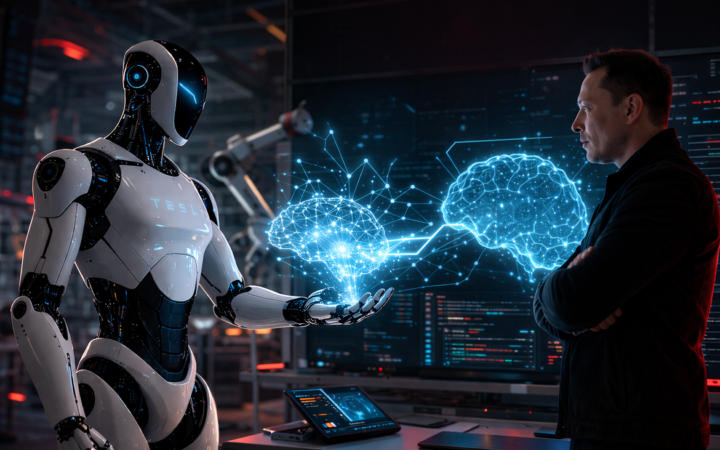
Elon Musk told World Economic Forum attendees that humanoid robots could outnumber humans and enter mass markets as early as 2027, reshaping labor, economics, and daily life.
Humanoid robots are robotic systems designed with a human-like form factor, enabling them to move, manipulate objects, and operate in environments built for people. Unlike traditional industrial machines, humanoids aim to combine mobility, dexterity, and embodied intelligence to perform a wide range of physical tasks. This topic covers advances in locomotion, balance, manipulation, perception, and AI-driven control systems, as well as real-world deployment in manufacturing, logistics, healthcare, and service roles. It also examines the technical, economic, and safety challenges of scaling humanoid platforms beyond research and pilot programs. As hardware matures and AI models improve, humanoid robots are increasingly positioned as general-purpose systems for complex, unstructured environments.
Elon Musk told World Economic Forum attendees that humanoid robots could outnumber humans and enter mass markets as early as 2027, reshaping labor, economics, and daily life.
Airbus has placed a six-figure order for humanoid robots from UBTech, marking one of the largest industrial deployments of humanoid robotics in aerospace manufacturing to date.
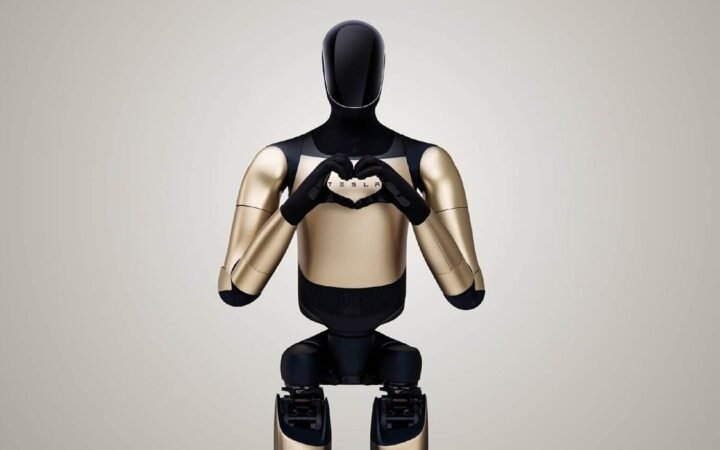
Elon Musk says Tesla’s humanoid robots could eventually become more valuable than its electric vehicle business, positioning robotics as the company’s long-term growth engine.
NEURA Robotics and Bosch have formed a strategic partnership to industrialize humanoid robots and physical AI in Germany, combining real-world data collection with large-scale manufacturing expertise.
Skild AI raised nearly $1.4 billion in a funding round led by SoftBank, valuing the robotics AI company at more than $14 billion as it scales a unified foundation model for robots.
CES 2026 marked a turning point for Physical AI, as humanoids, autonomous machines, and AI-driven platforms moved from experiments to scalable, real-world systems.
London-based startup Humanoid moved from concept to a functional alpha prototype of its HMND 01 robot in seven months, compressing a development cycle that typically takes up to two years.
Mobileye agreed to acquire humanoid robotics startup Mentee Robotics for $900 million, expanding its autonomy technology from vehicles into Physical AI and general-purpose humanoid robots.
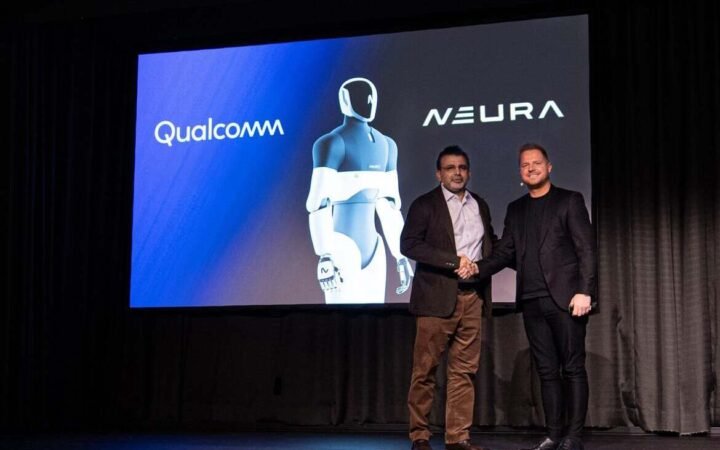
Qualcomm introduced a comprehensive robotics technology stack at CES 2026, unveiling new processors and partnerships aimed at scaling Physical AI from service robots to full-size humanoids.
Boston Dynamics and Google have renewed their collaboration at CES 2026, combining advanced AI with the next generation of the Atlas humanoid robot.