SAP, Humanoid, and Martur Fompak have completed a live warehouse trial linking enterprise AI agents to a humanoid robot. The test highlights how software-driven decisions can directly control physical labor systems.
By Rachel Whitman | Edited by Kseniia Klichova
Published:
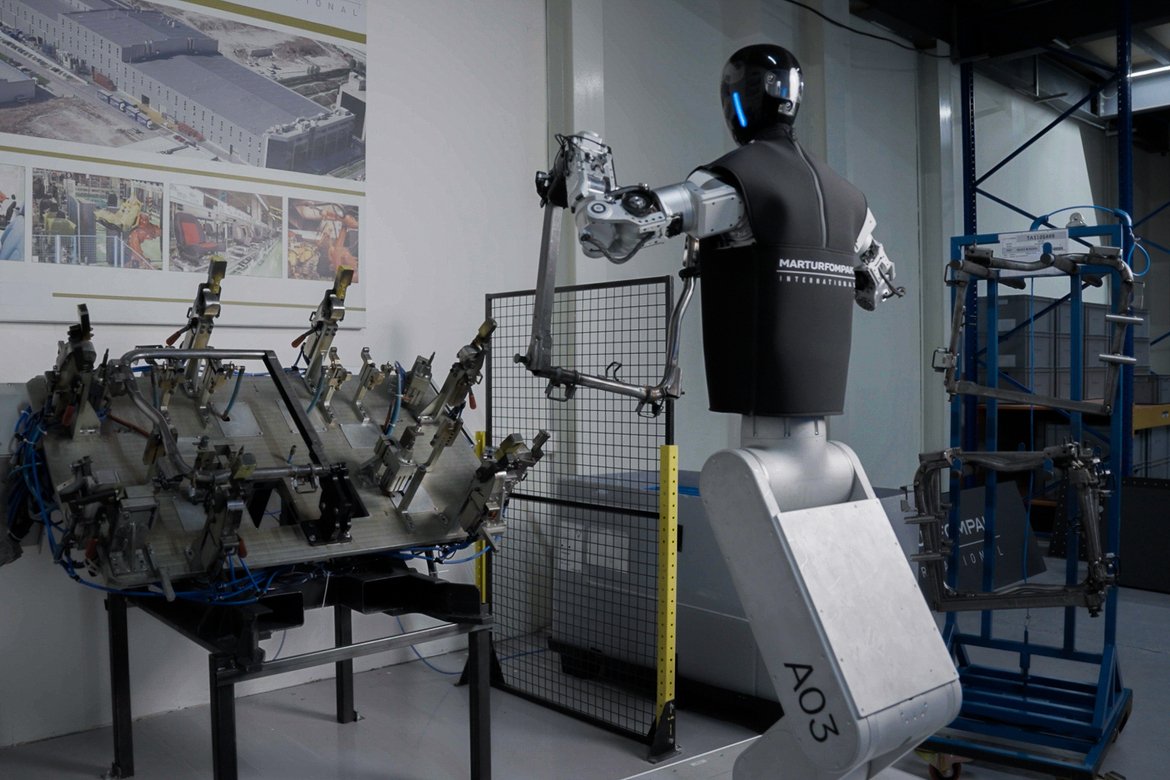
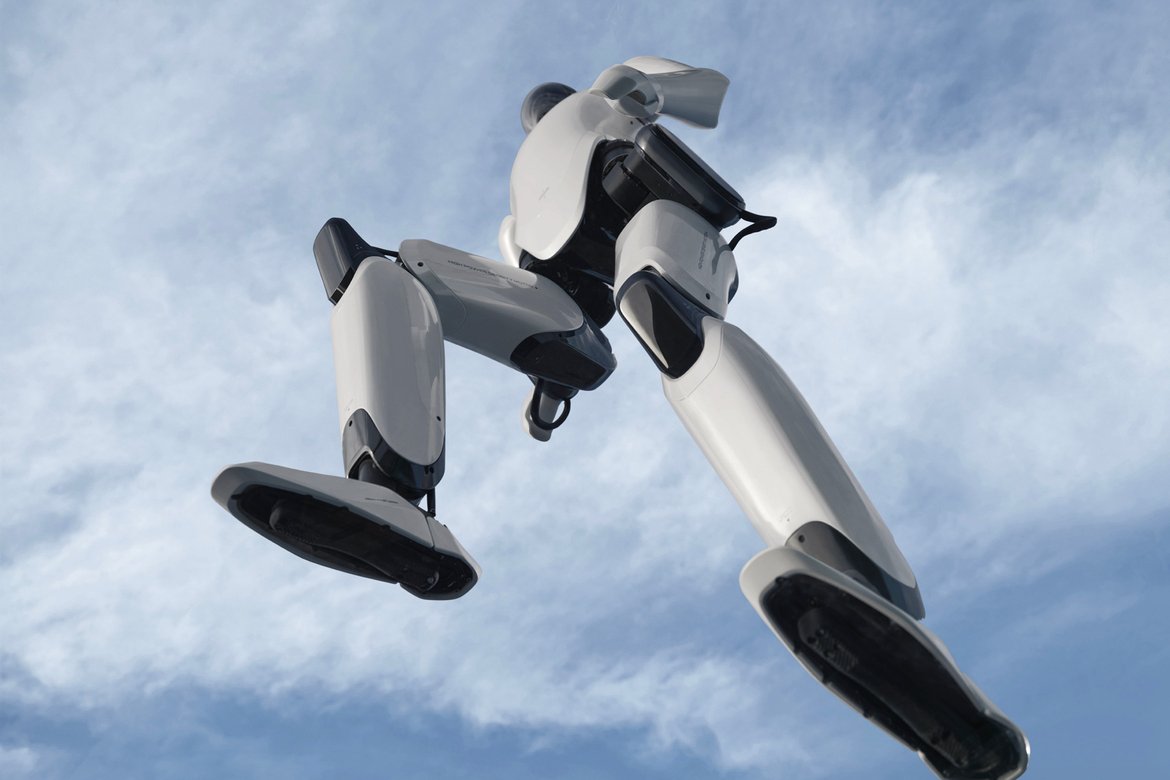
A humanoid robot executes warehouse picking tasks directed by an enterprise AI agent during a live trial, illustrating the convergence of digital decision-making and physical automation. Photo: Humanoid
A live warehouse trial involving SAP, robotics firm Humanoid, and automotive supplier Martur Fompak is offering a clearer view of how enterprise software systems may begin to directly control physical labor. The project connects SAP’s AI agent framework with a mobile humanoid robot, enabling task execution that originates from business logic rather than pre-programmed robotic routines.
The result is less about a single robot completing a task and more about a shift in system architecture. For decades, enterprise software has optimized operations in the digital layer, while robots have executed fixed workflows on the factory floor. This trial suggests those layers are beginning to merge.
From Enterprise Decisions to Physical Actions
At the center of the integration is a connection between SAP’s Joule AI agent and Humanoid’s KinetIQ robotics stack. In the proof of concept, a cloud-based software agent generated instructions based on operational needs and dispatched them directly to a physical robot.
The HMND 01 Alpha Wheeled robot then executed a logistics workflow inside a warehouse environment. It autonomously navigated to a designated pallet, retrieved a standardized container, and delivered it to a trolley as part of an order fulfillment cycle. The robot repeated the process across multiple iterations, handling different container types and operating within existing facility constraints.
This model differs from traditional automation, where tasks are predefined and robots follow rigid sequences. Instead, the system treats the robot as an endpoint of enterprise decision-making, allowing workflows to adapt dynamically based on business inputs.
SAP described the approach as embedding business context into robotic behavior, enabling machines to respond to operational priorities in real time rather than executing isolated tasks.
Embodied AI Moves into Enterprise Infrastructure
The trial reflects a broader convergence between two previously separate domains: enterprise AI and embodied AI. Software agents have long been capable of making decisions across functions such as procurement, scheduling, and inventory management. What has been missing is a direct link between those decisions and physical execution.
By connecting an enterprise agent to a humanoid system, the project demonstrates how digital instructions can translate into real-world actions without human mediation. In this case, warehouse picking becomes an extension of enterprise planning systems rather than a standalone robotic function.
The robot operated with a dual-arm payload capacity of 8 kilograms and was tested under real operational conditions over a multi-week deployment. The structured rollout included simulation and physical twin development, followed by on-site setup, training, and optimization, reflecting a methodology closer to enterprise software deployment than traditional robotics testing.
Executives involved in the project framed the outcome as a transition point. The ability to integrate robots into enterprise systems, measure them against operational metrics, and deploy them within existing workflows suggests that humanoid platforms are moving beyond experimental pilots.
A Bridge Between Pilots and Scaled Deployment
Despite the progress, the trial remains a proof of concept. The next phase will focus on extended validation in live production environments, where reliability, uptime, and integration complexity become more visible.
Still, the implications are notable. If enterprise systems can reliably orchestrate fleets of robots as extensions of digital processes, automation could shift from task-specific deployments to system-wide coordination. In such a model, robots are not programmed individually but managed as part of a broader computational infrastructure.
For Humanoid, the project provides evidence that its platform can operate within industrial constraints. For SAP, it demonstrates a pathway to extend enterprise AI beyond software into physical operations.
More broadly, the trial highlights an emerging pattern in robotics: the value of a robot is increasingly tied not just to its hardware capabilities, but to how seamlessly it integrates into existing digital systems. As that integration improves, the boundary between decision-making and execution may continue to narrow.
Xiaomi has introduced a redesigned bionic hand for its CyberOne humanoid robot, improving dexterity, tactile sensing, and durability. The upgrade reflects a broader push toward human-level manipulation in industrial robotics.
By Laura Bennett | Edited by Kseniia Klichova
Published:
Xiaomi’s upgraded CyberOne hand integrates human-scale design, tactile sensing, and active cooling, signaling progress toward practical humanoid manipulation in industrial settings. Photo: Xiaomi
Xiaomi has introduced a redesigned bionic hand for its CyberOne humanoid robot, marking a step forward in one of the most technically challenging areas of robotics: human-level manipulation. The upgrade combines mechanical redesign, tactile sensing, and thermal management, reflecting how leading robotics programs are shifting from demonstration toward operational capability.
While much of the humanoid robotics conversation has focused on locomotion and general intelligence, manipulation remains a bottleneck for real-world deployment. Xiaomi’s latest iteration suggests that progress is increasingly coming from integrated system improvements rather than single breakthroughs.
Human Scale Design Meets Industrial Precision
A central change is the reduction of the hand’s size by roughly 60%, bringing it closer to the proportions of a human hand. This shift is not cosmetic. Matching human-scale geometry allows robots to interact more naturally with existing tools, components, and environments that were not designed for machines.
At the same time, Xiaomi has expanded the hand’s degrees of freedom, enabling more precise articulation and grip control. The result is a system better suited for tasks that require fine motor skills, such as component handling or in-hand manipulation.
This aligns with a broader industry direction. Rather than redesigning factories around robots, companies are increasingly trying to build robots that can operate within human-centered infrastructure. Achieving this requires not only mobility, but also dexterity that approaches human capability.
Tactile Sensing and Data as a Core Layer
Beyond mechanical improvements, Xiaomi has significantly expanded tactile sensing across the hand. The system now covers approximately 8,200 mm² across fingertips, finger pads, and the palm, allowing the robot to detect pressure and contact in a more distributed and nuanced way.
This is particularly relevant in scenarios where vision alone is insufficient. Occlusions, variable lighting, and complex object interactions often limit camera-based perception. Tactile feedback provides an additional channel for control, enabling more reliable grasping and manipulation.
To support training, Xiaomi is also using haptic gloves to capture human interaction data. This approach allows operators to transfer real-world tactile signals directly into training datasets, accelerating learning cycles. It reflects a growing emphasis on data pipelines in robotics, where physical interaction data is becoming as important as simulation.
Durability and Thermal Management Signal Deployment Focus
The company has also addressed one of the less visible but critical barriers to deployment: reliability. Earlier versions of the hand reportedly failed after fewer than 10,000 repetitive operations. The updated design extends this to over 150,000 grasping cycles, a threshold more consistent with industrial use.
In parallel, Xiaomi introduced a bionic “sweat gland” system for active cooling. Using liquid channels embedded within the structure, the system dissipates heat generated during continuous operation. Thermal management is often overlooked in robotics discussions, but it becomes essential when systems move from short demonstrations to sustained workloads.
These improvements build on prior internal testing, where the robot demonstrated multi-hour operation in factory-like conditions with a reported success rate above 90%. While still early, such metrics indicate a transition toward measurable performance benchmarks.
Taken together, the upgrades to CyberOne’s hand highlight a broader shift in humanoid robotics. Progress is no longer defined solely by headline capabilities, but by incremental advances in reliability, sensing, and integration.
For Xiaomi, the development signals a deeper commitment to robotics beyond consumer electronics. For the industry, it reinforces a key reality: achieving human-level manipulation will depend less on singular breakthroughs and more on the convergence of mechanical design, sensory feedback, and scalable data systems.
New research suggests increased robotics adoption could add AUD $201 billion to Australia’s GDP by 2040, but commercialization and deployment remain key challenges.
By Daniel Krauss | Edited by Kseniia Klichova
Published:
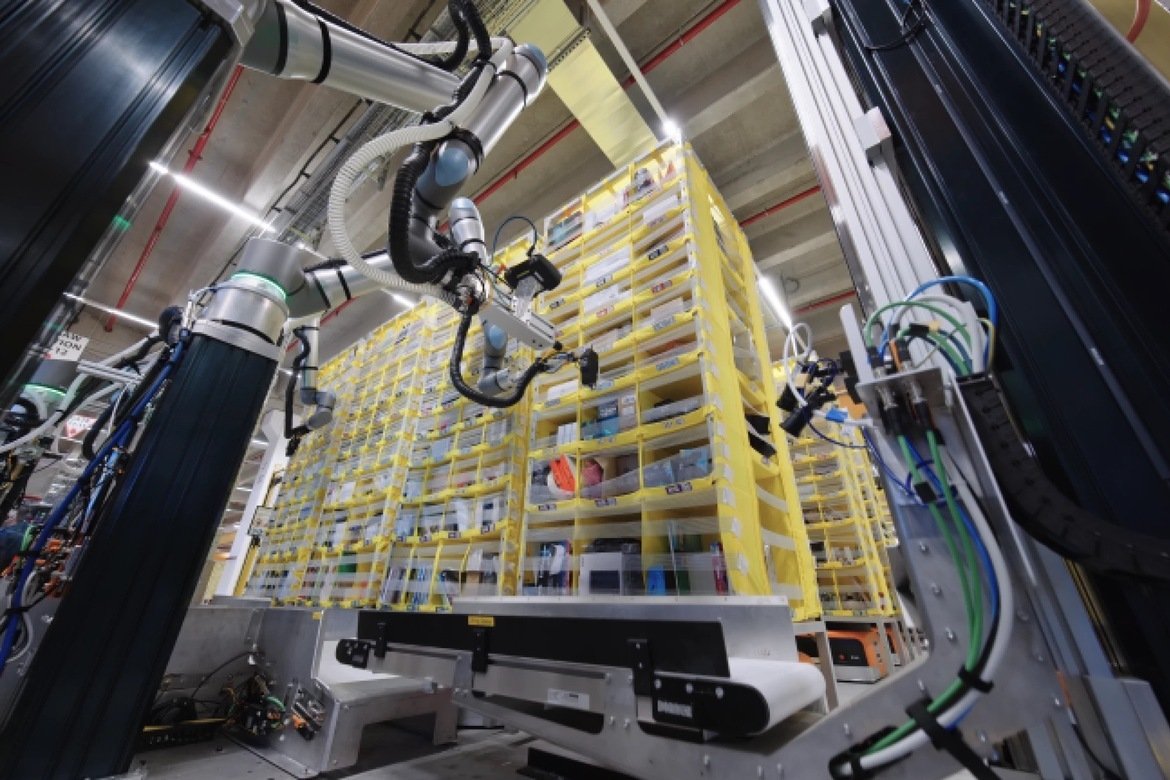
Robotics adoption in sectors such as logistics, manufacturing and agriculture could significantly boost Australia’s productivity and economic output. Photo: Amazon
Australia could unlock up to AUD $201 billion in additional economic output by 2040 through greater adoption of robotics, according to new modeling – but realizing that potential will depend less on technology breakthroughs than on closing persistent gaps in deployment.
The analysis, commissioned by Amazon Australia and conducted by consulting firm ACIL Allen, suggests that relatively modest increases in robot usage across industry and services could generate economy-wide productivity gains, higher wages and new employment opportunities.
The findings add to a growing global narrative: robotics is no longer just a tool for individual firms, but a macroeconomic lever shaping national competitiveness.
Productivity Gains Beyond Manufacturing
The report outlines a scenario in which Australia doubles its industrial robot density while increasing service robot adoption by around 15% in non-manufacturing sectors.
Under those conditions, average incomes could rise by roughly AUD $6,500 per person annually, while the economy could support nearly 129,000 additional jobs each year.
The benefits are not limited to traditional automation sectors.
While industries such as mining and agriculture already make significant use of robotics, the report highlights untapped potential in areas like logistics, retail and services – sectors where automation has historically been slower to scale.
Amazon’s own operations illustrate the shift. In its fulfillment centers, mobile robots are used to transport heavy inventory, reducing physical strain on workers and allowing employees to transition toward oversight, maintenance and system management roles.
At the same time, software systems are becoming increasingly important. The company points to AI-driven fleet management tools that optimize robot movement, improving efficiency across large-scale operations.
The Commercialization Bottleneck
Despite strong research capabilities, particularly in field robotics, Australia continues to lag behind other markets in adoption, production and robotics-related employment.
The report identifies a familiar challenge: translating academic innovation into commercial deployment.
Bridging that gap requires more than investment in research. It depends on building connections between universities, industry and end users, along with creating environments where technologies can be tested, refined and scaled.
Robotics adoption also involves a complex ecosystem. Businesses must invest not only in hardware but also in software integration, workforce training and ongoing maintenance – factors that can slow uptake even when the underlying technology is mature.
The result is uneven adoption, with robotics concentrated in sectors where the return on investment is clear, while other industries remain cautious.
A National Competitiveness Question
The modeling suggests that even incremental progress could have broad economic effects, amplifying productivity across sectors rather than delivering isolated gains.
This scaling effect is central to the argument for robotics investment: improvements in automation can ripple through supply chains, labor markets and service industries.
At the same time, the findings highlight a strategic question for policymakers.
Countries that successfully integrate robotics into their economies may gain advantages in productivity, wages and industrial competitiveness. Those that lag risk falling behind as automation becomes a standard component of global business operations.
Australia’s position reflects both opportunity and constraint.
The country has strong research foundations and sector-specific expertise, particularly in challenging environments such as mining. But without stronger pathways to commercialization and wider adoption, those advantages may not translate into economic impact.
The report’s conclusion is cautious but clear: the potential gains from robotics are substantial, but they will depend on execution – not just innovation.
LimX Dynamics has introduced its new humanoid robot Luna at a consumer-facing event, signaling a shift from industrial robotics toward public interaction and lifestyle applications.
By Daniel Krauss | Edited by Kseniia Klichova
Published:
Oli and Luna are the first full-sized humanoid duo in VOGUE – a new moment for robotics on the global fashion stage, and winners of Cyber Fashion Pioneer Robot of the Year at Taobao Influencer Night. Photo: LimX Dynamics / X
Humanoid robots are beginning to step out of factories and into the spotlight.
Shenzhen-based LimX Dynamics has unveiled its latest humanoid robot, Luna, at a consumer-facing event in China, marking a notable shift in how robotics companies are positioning their machines – not just as industrial tools, but as interactive systems designed for public environments.
The robot made its debut at the Taobao Influencer Festival, where it performed a catwalk demonstration, showcasing balance, coordination and fluid motion rather than task-specific industrial capabilities.
The choice of venue underscores a broader trend: robotics companies are increasingly targeting applications that involve direct human interaction, from retail and entertainment to hospitality and public services.
From Industrial Platforms to Lifestyle Robots
LimX’s earlier humanoid platform, OLI, was built for industrial use, focusing on durability and operation in demanding environments such as construction sites.
Luna represents a departure from that approach.
With a more refined design and human-like proportions, the robot is intended for environments where appearance, movement and interaction matter as much as functionality. The system features 33 degrees of freedom, enabling more complex motion patterns and smoother walking dynamics.
During its public demonstration, Luna executed a controlled catwalk and an “illusion turn”, a movement designed to test dynamic balance and coordination.
These demonstrations, while not tied to specific industrial tasks, highlight the importance of mobility and expressiveness in robots designed for shared human spaces.
Hardware Meets Human Interaction
Under the surface, Luna builds on the same computing architecture as LimX’s industrial robots.
The system integrates multiple perception technologies, including depth cameras, RGB vision and LiDAR, combined with simultaneous localization and mapping (SLAM) to navigate dynamic environments.
Its software stack is based on ROS 2 and runs on high-performance edge computing hardware, enabling developers to build custom behaviors and applications.
This combination of advanced hardware and flexible software reflects a broader shift in robotics toward platforms that can be adapted for multiple use cases.
Rather than designing robots for a single task, companies are increasingly building general-purpose systems that can operate across different environments with appropriate software layers.
A New Phase for Humanoid Robotics
The unveiling of Luna comes at a time when humanoid robotics is expanding beyond early industrial pilots.
Companies are experimenting with applications that require not only physical capability but also social presence – guiding customers, interacting with audiences or participating in public events.
This shift introduces new challenges.
Robots operating in public spaces must meet higher expectations for safety, reliability and human-like behavior. Movement quality, appearance and interaction design become critical factors in user acceptance.
LimX’s recent funding round suggests that investors are backing this broader vision, betting that humanoid robots will find roles beyond traditional automation.
For now, demonstrations like Luna’s catwalk remain symbolic. But they point to an evolving industry where the success of humanoid robots may depend as much on how they move and interact as on what tasks they perform.
Sharpa has unveiled a humanoid robot capable of peeling an apple autonomously, highlighting advances in dexterous manipulation powered by multimodal AI systems.
A humanoid robot peeling an apple may appear trivial, but for robotics researchers it represents a significant milestone.
Singapore-based Sharpa has demonstrated a system capable of autonomously performing the task using two human-like hands, addressing one of the most difficult challenges in robotics: precise, contact-rich manipulation.
The achievement highlights a broader shift in the field, where advances in artificial intelligence are beginning to unlock levels of dexterity previously limited to humans.
Moving Beyond Pick-and-Place
Robotic manipulation has improved rapidly in recent years, particularly with the rise of Vision-Language-Action (VLA) models that allow machines to interpret visual input and execute tasks.
However, most systems remain constrained to relatively simple actions such as picking up objects or sorting items. Tasks that require continuous adjustment – like peeling an apple – introduce additional complexity.
These actions demand coordination across multiple degrees of freedom, precise force control and the ability to adapt to subtle changes in the object being handled.
Sharpa’s system addresses these challenges through a combination of hardware and software innovations.
Its dexterous hand, featuring 22 active degrees of freedom, is designed to approximate the flexibility of human hands. But the key advancement lies in how the system coordinates movement.
A New Approach to Dexterity
The company’s framework, known as MoDE-VLA (Mixture of Dexterous Experts), integrates multiple sensory inputs – including vision, touch and force – and processes them through specialized AI modules.
Rather than relying on a single model to handle all aspects of a task, the system dynamically activates different “experts” depending on the situation. For example, one component focuses on detecting contact events, while another manages force control.
This is paired with a secondary system, described as a “copilot”, which handles fine motor control.
In practice, humans provide high-level guidance during training, while the AI manages the detailed coordination required for finger movements and object manipulation.
The result is a system capable of executing complex sequences – such as peeling and rotating an apple – with greater stability and precision than previous approaches.
In testing, the robot achieved a peel completion rate of 73 percent, significantly outperforming baseline models and doubling success rates in contact-rich tasks.
Toward Human-Level Manipulation
The implications extend beyond a single demonstration.
Dexterous manipulation is widely seen as one of the last major barriers to deploying robots in unstructured environments such as homes, kitchens and workshops.
Tasks like cooking, cleaning or assembling delicate components require a level of adaptability and sensitivity that robots have historically struggled to achieve.
Sharpa’s approach suggests a path forward: combining multimodal sensing with modular AI systems that can specialize in different aspects of manipulation.
The system has also demonstrated improvements in other tasks requiring high precision, such as inserting connectors – an operation that demands millimeter-level accuracy and careful force application.
Still, challenges remain.
Achieving consistent performance across diverse real-world conditions will require further advances in data collection, training and system robustness. The current results, while promising, highlight how far the field still needs to go to match the full range of human dexterity.
Even so, the ability to peel an apple autonomously marks a step toward a broader goal: robots capable of performing everyday tasks with the fluidity and precision of human hands.
Startup Icarus Robotics is preparing to test autonomous free-flying robots aboard the ISS, aiming to automate routine tasks in space operations.
By Laura Bennett | Edited by Kseniia Klichova
Published:
Updated:
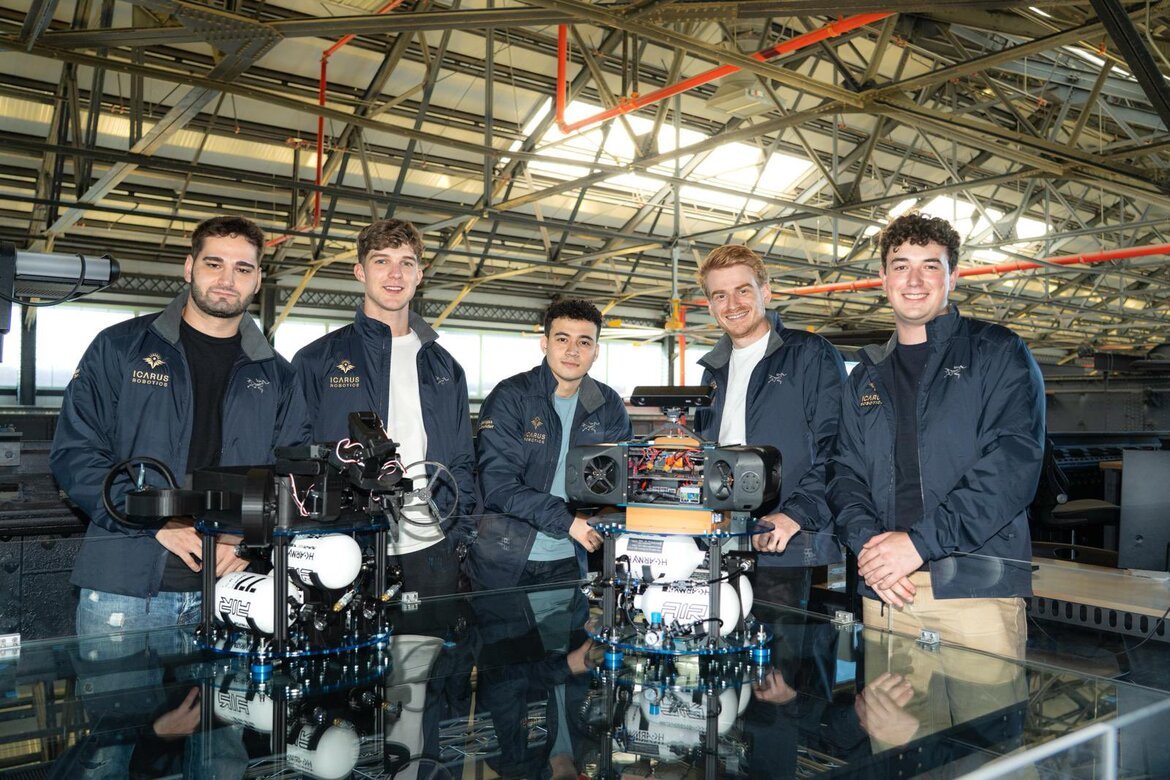
Icarus Robotics is developing free-flying robots designed to assist astronauts by performing routine tasks aboard space stations. Photo: Ethan Barajas / X
A new generation of robotics companies is turning its attention beyond Earth’s surface.
Icarus Robotics, a startup co-founded in 2024, is preparing to test autonomous robots aboard the International Space Station (ISS), marking a step toward deploying robotic labor in orbit. The mission, planned for early 2027, will evaluate how free-flying robots can operate in microgravity environments and support routine space operations.
The effort reflects a broader shift in robotics: extending automation into domains where human labor is constrained by cost, risk or physical limitations.
Building a Workforce for Orbit
Rather than developing humanoid systems, Icarus is focusing on a different form factor tailored to space.
Its platform, known as Joyride, is a fan-propelled, free-flying robot equipped with articulated arms and grippers. The system is designed to move independently within spacecraft and handle tasks such as unpacking cargo, organizing equipment and assisting with routine operations.
These activities, while essential, consume significant astronaut time and attention.
By offloading repetitive or time-consuming work to robots, space missions could become more efficient and allow human crews to focus on higher-value tasks such as research and mission planning.
The upcoming ISS mission will test key capabilities including autonomous navigation, maneuverability and operational reliability in a live orbital environment.
From Concept to Flight Heritage
To execute the mission, Icarus has partnered with Voyager Technologies, a company with extensive experience in managing space missions across government and commercial programs.
Voyager will support integration, safety certification, launch coordination and in-orbit operations – a critical step in moving the technology from prototype to flight-proven system.
In the space industry, demonstrating reliability in orbit – often referred to as achieving “flight heritage” – is a prerequisite for wider adoption.
For startups like Icarus, successful deployment on the ISS could open the door to future contracts in areas such as space station operations, satellite servicing and in-orbit manufacturing.
The company has already raised early funding to support development, reflecting investor interest in commercial space infrastructure and robotics.
Robotics Expands Beyond Earth
The planned mission highlights how robotics is becoming integral to the emerging space economy.
As activity in Low Earth Orbit increases – driven by commercial space stations, satellite networks and research initiatives – the demand for automation is expected to grow.
Robots offer a way to scale operations without proportionally increasing human presence, which remains expensive and resource-intensive.
Unlike terrestrial robotics, however, space systems must operate under unique constraints, including microgravity, limited communication and strict safety requirements.
This makes reliability and autonomy particularly important.
Icarus’s approach – focusing on task-specific, non-humanoid robots – reflects a pragmatic strategy aligned with near-term operational needs.
While humanoid robots often dominate public attention, specialized systems may be better suited to environments like space, where efficiency and adaptability matter more than human-like form.
If successful, the ISS demonstration could mark an early step toward a future where robotic labor becomes a standard component of space missions.
Comtech is building a global ecosystem linking chips, software and robotics companies, aiming to accelerate commercialization of embodied AI systems.
By Laura Bennett | Edited by Kseniia Klichova
Published:
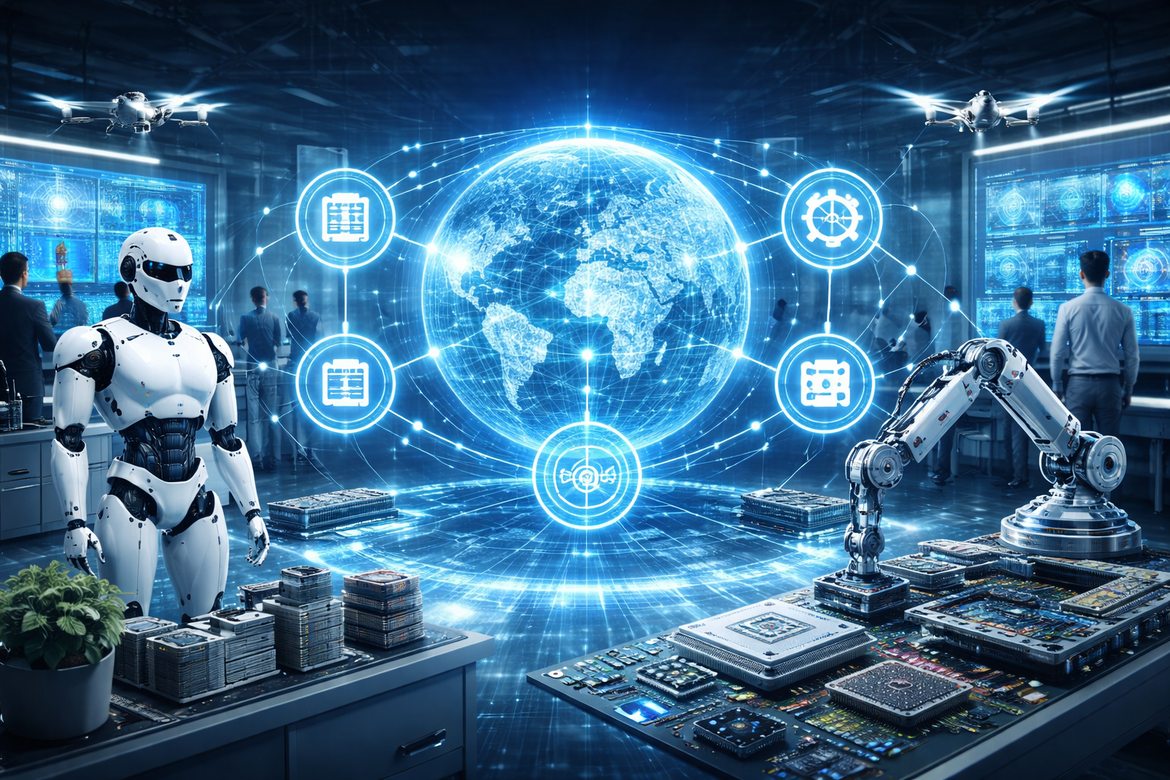
Comtech is building a global ecosystem connecting chipmakers, AI platforms and robotics companies to accelerate deployment of embodied AI systems. Photo: Kseniia Klichova / RobotsBeat
As robotics shifts from prototypes to scaled deployment, a new battleground is emerging not around individual machines, but around the supply chains that make them possible.
Chinese firm Comtech is positioning itself at the center of that transition, describing its role as a “super connector” linking chipmakers, software providers and robotics companies into a unified ecosystem for embodied AI.
The strategy reflects a growing recognition across the industry: building robots is no longer just a hardware challenge, but a systems integration problem spanning semiconductors, AI models, simulation and global distribution.
Building the Infrastructure Behind Robots
Comtech operates as both a distributor of electronic components and a platform for integrating AI technologies into physical systems.
The company works with more than 100 global chip suppliers – including major U.S. firms – while serving a wide range of Chinese robotics developers across industries such as humanoids, drones and autonomous vehicles.
Its role is to bridge these layers.
According to company executives, developing a robot involves far more than assembling parts. It requires simulation tools, 3D modeling, embedded AI models and integration across hardware and software systems before a product can be deployed.
Comtech’s ecosystem approach aims to streamline that process by connecting companies that would otherwise operate in isolation.
The company is also a key distributor for Nvidia’s Jetson edge AI platform in China, which is widely used for robotics and embedded AI applications.
From Fragmented Demand to Scalable Markets
One of the challenges in robotics today is the fragmented nature of demand.
Unlike mature industries, where large volumes of standardized products drive economies of scale, robotics often involves small production runs across diverse use cases.
This makes it difficult for individual companies – particularly startups – to build efficient supply chains and reach global markets.
Comtech’s model attempts to address that gap by aggregating demand and providing shared access to components, integration expertise and distribution channels.
At a recent industry forum, the company signed agreements with partners across sectors including drones, media and robotics services, while also showcasing collaborations in areas such as brain-computer interfaces and embodied intelligence.
The company is also expanding internationally, working to help Chinese robotics firms establish sales and service networks in North America and other markets.
The Next Phase: Commercial Viability
While the ecosystem approach may accelerate development, the industry still faces significant hurdles in commercialization.
Experts at the forum emphasized that technical capability alone is not enough. For robots to succeed in real-world environments, they must meet practical benchmarks for reliability, cost and return on investment.
In industrial settings, companies are increasingly evaluating robots based on payback periods, with some investors suggesting that systems must justify their cost within relatively short timeframes to gain adoption.
Data availability is another constraint. Training embodied AI systems requires large volumes of real-world interaction data, which remains limited compared with software-based AI.
Despite these challenges, investment in robotics continues to rise, with hundreds of funding deals already recorded this year.
Comtech’s strategy suggests that the next phase of competition may not be won solely by the companies building robots, but by those capable of orchestrating the complex networks required to bring them to market.
As embodied AI systems become more sophisticated, the ability to connect components, data and distribution channels into a cohesive ecosystem could prove as critical as the robots themselves.
Chinese robotics and automation firm Inovance is preparing a Hong Kong listing that could raise up to $2 billion, highlighting growing investor appetite for industrial and embodied AI technologies.
By Daniel Krauss | Edited by Kseniia Klichova
Published:
Inovance’s industrial robotics and automation systems are used across manufacturing sectors, as the company prepares a potential multi-billion-dollar Hong Kong listing. Photo: Inovance
Shenzhen-based automation and robotics company Inovance Technology is preparing a Hong Kong listing that could raise up to $2 billion, in what would be one of the largest robotics-related capital raises of the year.
The company has reportedly selected a group of global and Chinese investment banks – including Bank of America, Morgan Stanley and China International Capital Corp – to lead the offering, according to people familiar with the matter. The listing plans are still under consideration and could change in size or timing.
If completed, the deal would underscore how robotics and industrial automation are becoming central to the next phase of global AI investment.
Capital Flows Into Physical AI
The planned listing comes as investors increasingly shift attention from software-based AI to systems that operate in the physical world.
Inovance, which is already publicly traded in Shenzhen, develops industrial automation equipment and robotics systems used in sectors such as packaging, plastics and steel production. Its technologies form part of the infrastructure that enables automated manufacturing.
The company’s potential Hong Kong listing reflects a broader trend: mainland Chinese firms are turning to international markets to raise capital for expansion, particularly in high-growth sectors like robotics.
Hong Kong has re-emerged as a key venue for such offerings. Listings by mainland companies accounted for a large share of the exchange’s proceeds in 2025, as companies sought to tap global investors while maintaining access to Asian markets.
For robotics firms, access to capital is especially critical. Unlike software startups, companies building physical systems must invest heavily in manufacturing, supply chains and hardware development.
Scaling Industrial Robotics
Inovance’s business sits at the intersection of traditional industrial automation and newer forms of embodied AI.
While much of the current attention in robotics is focused on humanoid systems, industrial robots remain the backbone of automation in sectors such as manufacturing and logistics.
These systems are evolving as AI capabilities are integrated into control systems, enabling machines to operate with greater flexibility and adapt to changing conditions.
China has made robotics a strategic priority as part of its broader push to strengthen high-tech manufacturing. Companies like Inovance play a key role in that effort by supplying the components and systems that underpin automated production lines.
At the same time, newer robotics companies – including humanoid developers – are emerging alongside established industrial players, creating a layered ecosystem of automation technologies.
A Competitive Global Landscape
The potential IPO also highlights intensifying global competition in robotics.
Chinese firms are scaling rapidly, supported by domestic demand and government-backed initiatives. At the same time, companies in the United States and Europe are investing heavily in next-generation robotics platforms, including humanoid systems.
Capital markets are becoming a battleground in this competition. Large funding rounds and public listings provide the resources needed to scale manufacturing, expand internationally and invest in research and development.
For investors, the appeal of robotics lies in its potential to reshape industries ranging from manufacturing to logistics and services. But the sector also carries risks, particularly given the capital-intensive nature of hardware development and the long timelines required to achieve profitability.
Inovance’s planned listing reflects both sides of that equation: strong demand for robotics-driven automation and the substantial investment required to deliver it at scale.
As the industry evolves, access to capital may prove as important as technological innovation in determining which companies emerge as global leaders in physical AI.
MegazoneCloud and Japan’s AVITA are partnering to integrate AI avatars with autonomous robots, aiming to bring conversational physical AI systems into real-world industries.
By Rachel Whitman | Edited by Kseniia Klichova
Published:
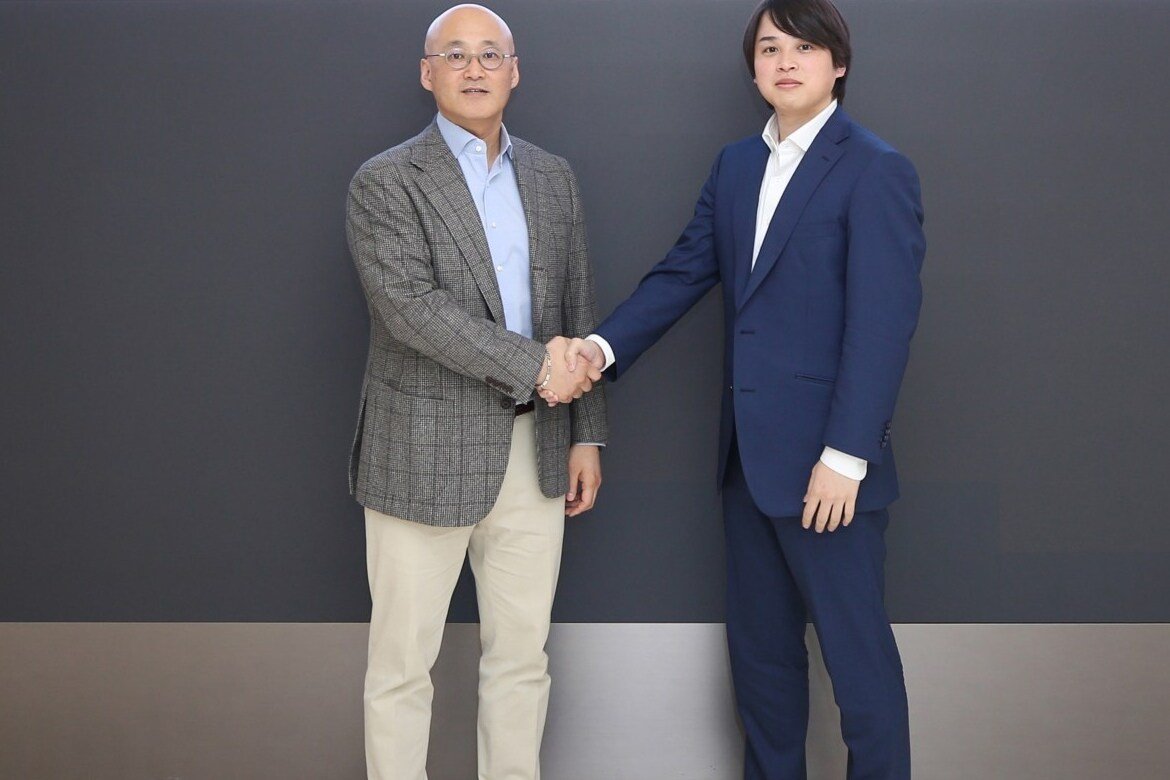
Forging the future of physical AI: MegazoneCloud CEO Doug Yeum [Left] and AVITA COO & CFO Shogo Nishiguchi [Right] finalize their strategic partnership at MegazoneCloud's Seoul headquarters. Photo: MegazoneCloud
MegazoneCloud and Japanese AI avatar company AVITA have announced a strategic partnership to bring “physical AI” systems into real-world deployment, combining conversational digital avatars with autonomous robots.
The collaboration reflects a growing shift in the robotics industry: moving beyond machines that can act in the physical world toward systems that can also communicate, guide and interact with humans in more natural ways.
By integrating cloud-based AI infrastructure with avatar-driven interaction models, the companies aim to deploy robots capable not only of performing tasks but also of engaging directly with customers across industries such as retail, finance and public services.
From Digital Avatars to Embodied Systems
At the core of the partnership is the integration of AVITA’s avatar technology with autonomous robotic platforms.
AVITA, founded by robotics researcher Hiroshi Ishiguro, has focused on creating AI avatars that can interact with users through conversation and visual representation. Its systems are already used in digital environments for customer support and training.
MegazoneCloud brings cloud infrastructure, AI deployment capabilities and a global enterprise network. Together, the companies plan to embed avatar systems into physical robots, effectively giving machines a conversational interface tied to real-world actions.
The combined system is designed to enable robots to guide customers, provide consultations and respond to inquiries while also performing physical tasks.
This approach differs from traditional service robots, which often rely on limited scripted interactions. By pairing avatars with autonomous decision-making systems, the companies aim to create more adaptive and human-like interactions.
Targeting High-Interaction Industries
The initial focus will be on sectors where customer interaction is central.
In retail, the companies are exploring applications such as unmanned checkout systems and in-store guidance. In finance, robots could assist with customer consultations, while training systems could simulate realistic interactions for employees.
AVITA’s existing products, including a customer interaction platform and a training system that uses AI avatars to simulate real-world conversations, will be integrated into these deployments.
The training system analyzes user responses and provides performance feedback, suggesting that physical AI systems could play a role not only in service delivery but also in workforce development.
The companies also plan to expand into public-sector use cases, where robots could assist with information services or administrative support.
Physical AI Moves Toward Human Interaction
The partnership highlights a broader evolution in robotics.
Early automation systems focused primarily on physical execution – moving objects, assembling parts or navigating spaces. More recent developments in embodied AI have added perception and decision-making capabilities.
The next step, increasingly, is communication.
As robots move into environments such as retail stores, offices and public spaces, their ability to interact with people becomes as important as their ability to perform tasks.
By combining avatars with physical systems, companies are attempting to bridge the gap between digital AI – which excels at conversation – and robotics, which operates in the physical world.
This convergence is drawing interest across the industry, with multiple companies exploring ways to integrate language models, perception systems and robotic hardware into unified platforms.
For MegazoneCloud and AVITA, the challenge will be translating these capabilities into reliable, scalable systems that can operate in real-world conditions.
If successful, the approach could redefine how businesses deploy automation – not just as a tool for efficiency, but as an interface between humans and machines.
Agibot has produced 10,000 humanoid robots, signaling a transition from early deployments to large-scale commercial adoption of embodied AI systems.
By Laura Bennett | Edited by Kseniia Klichova
Published:
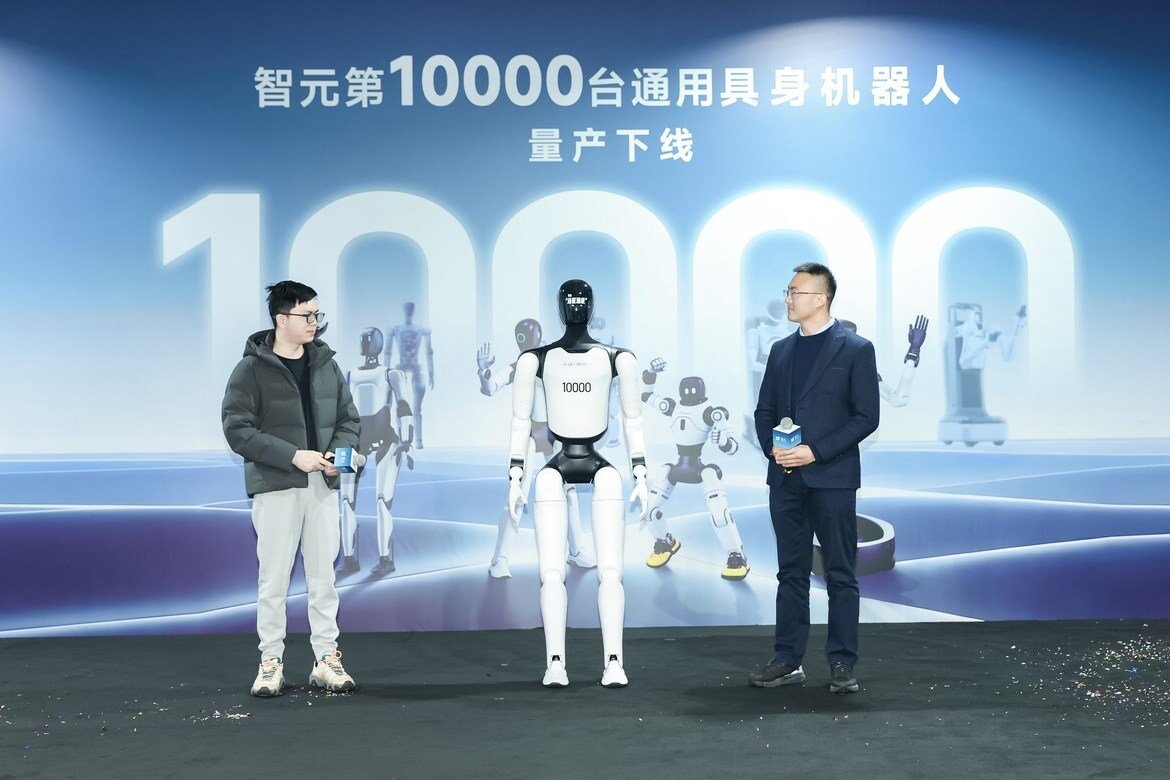
Agibot’s humanoid robots are being deployed across industries including logistics, retail and manufacturing as production reaches 10,000 units. Photo: Agibot
Agibot has reached a milestone of 10,000 humanoid robots produced, a figure that underscores how quickly the robotics industry is moving from experimentation to scaled deployment.
The company, which focuses on embodied AI systems, said a large portion of these robots are already operating in real-world environments across sectors such as logistics, retail, hospitality and manufacturing.
The milestone is notable not simply for its size, but for what it represents: a shift in robotics from technical feasibility to industrial-scale production and deployment.
From Prototypes to Production Lines
Agibot’s production trajectory reflects the rapid acceleration underway in humanoid robotics.
The company took nearly two years to build its first 1,000 units, followed by about a year to scale to 5,000. The jump from 5,000 to 10,000 units, however, was completed in just three months – a sharp increase in manufacturing speed driven by improvements in supply chains and production processes.
This kind of acceleration is unusual in hardware-heavy industries, where scaling production often takes years. It suggests that key bottlenecks in robotics manufacturing – including component sourcing, assembly and system integration – are beginning to ease.
For robotics companies, reaching this level of output is a critical step toward lowering costs and enabling broader adoption.
Real-World Deployment Drives Growth
Unlike earlier phases of robotics development, where systems were largely confined to demonstrations or pilot projects, Agibot’s robots are now being deployed at scale.
The machines are being used in environments ranging from showroom assistance and retail service to industrial production lines. Their presence in manufacturing workflows indicates that humanoid robots are beginning to move into roles traditionally occupied by fixed automation systems or human workers.
The company also reports growing international demand, with deployments expanding beyond China into markets across Europe, North America and Asia.
This global footprint suggests that demand for embodied AI systems is not limited to a single region but reflects a broader shift in how industries approach automation.
Scaling Data, Not Just Hardware
As more robots are deployed, the focus is increasingly shifting from hardware to data.
Thousands of machines operating in real-world environments generate continuous streams of operational data, which can be used to improve performance, refine control systems and expand capabilities.
At scale, this creates a feedback loop: more deployments produce more data, which improves the system, making further deployments more effective.
This dynamic is similar to what has driven progress in software-based AI, but applied to physical systems.
For Agibot and its competitors, the challenge is no longer proving that humanoid robots can work, but ensuring they can operate reliably, efficiently and safely at scale.
The company’s milestone suggests that the robotics industry may be entering a phase where growth is driven less by individual breakthroughs and more by the ability to manufacture, deploy and continuously improve systems in real-world conditions.
Faraday Future has delivered new humanoid robots for dealership use while testing education-focused deployments, signaling a broader strategy to integrate embodied AI across services and learning.
By Daniel Krauss | Edited by Kseniia Klichova
Published:
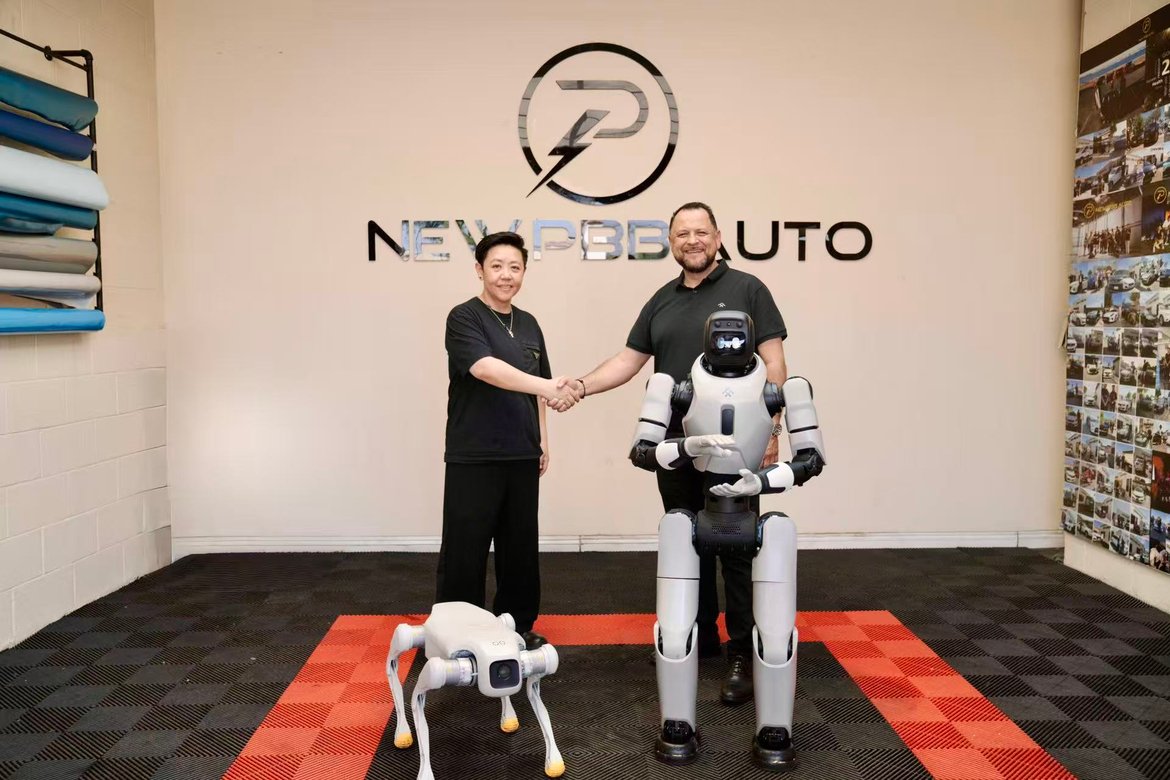
Faraday Future’s humanoid robots are being deployed in dealership environments and educational programs as part of the company’s broader embodied AI strategy. Photo: Faraday Future
Faraday Future is expanding its presence in robotics with new deployments of humanoid systems in both commercial and educational settings, as the electric vehicle maker pushes deeper into what it calls an “embodied AI” ecosystem.
The California-based company said it recently delivered two of its robots – the Master and Aegis models – to Los Angeles-based New PBB Auto, where they will be used for reception and customer-facing duties in dealership and showroom environments.
The move reflects an emerging strategy among robotics companies to introduce humanoid systems into service roles where interaction with customers is as important as physical capability.
At the same time, Faraday Future is testing how its robots can be used in education, pointing to a broader effort to position embodied AI as both a commercial tool and a learning platform.
From Showroom Assistants to Service Platforms
The initial deployment focuses on dealership operations, where the robots are expected to greet visitors, provide information and assist with basic customer service tasks.
Such roles are increasingly seen as an early entry point for humanoid robots. Unlike industrial environments, where precision and speed dominate, service settings require machines to interact naturally with people – an area where embodied AI systems are still evolving.
Faraday Future’s approach suggests that automakers may view robotics as an extension of their existing ecosystems, connecting vehicles, retail environments and digital services.
The delivery is tied to a broader business relationship with New PBB Auto, which has previously committed to future vehicle orders from the company.
Testing Robots as Educational Tools
Alongside commercial deployments, Faraday Future has begun experimenting with robotics in education.
In Los Angeles, the company hosted an interactive demonstration involving more than 300 students, where participants engaged directly with humanoid robots, a robotic dog and one of the company’s vehicles.
The event, held in collaboration with a local school district, emphasized hands-on interaction rather than passive demonstrations. Company representatives said the experience highlighted how direct engagement with robots can increase student interest in artificial intelligence and STEM fields.
Faraday Future is now exploring whether such programs could be scaled into structured educational offerings, potentially combining robotics demonstrations with curriculum development.
The company describes this approach as a “Robot & Vehicle + Education” model, in which embodied AI systems are used not only as tools but also as teaching platforms.
Automakers Enter the Robotics Race
Faraday Future’s expansion into robotics underscores a broader trend in the automotive industry.
As vehicles become increasingly software-driven, automakers are exploring adjacent markets where artificial intelligence and hardware integration intersect. Robotics – particularly humanoid systems – represents one such opportunity.
Companies including Tesla have already signaled ambitions to develop humanoid robots alongside their automotive businesses. Faraday Future’s approach suggests a different entry point, focusing initially on service and education rather than large-scale industrial deployment.
The strategy also reflects a key challenge facing the robotics industry: identifying practical, near-term use cases.
While humanoid robots are often associated with future household or industrial roles, many companies are beginning with smaller, controlled deployments in environments such as retail, hospitality and education.
For Faraday Future, the combination of dealership deployments and school programs provides an early test of how embodied AI systems can function in real-world settings.
Whether these applications scale into a broader business remains uncertain. But the company’s efforts highlight how robotics is increasingly being treated not as a standalone industry, but as part of a wider ecosystem connecting mobility, services and digital intelligence.
Researchers have developed a system that allows robots to perform learned tasks faster than human demonstrations, addressing a key limitation in imitation learning.
By Laura Bennett | Edited by Kseniia Klichova
Published:
Robots trained with imitation learning perform tasks such as food handling and object manipulation, with new systems enabling faster execution than human demonstrations. Photo: Georgia Tech
A new robotics system developed by researchers aims to solve one of imitation learning’s most persistent limitations: speed.
The approach allows robots to perform tasks significantly faster than the humans who trained them, while maintaining precision and control. The advance could accelerate the adoption of robots in industries where efficiency and throughput are critical, from manufacturing to food preparation.
Imitation learning – where robots learn by observing human actions – has become a central method in modern robotics. But until now, robots have largely been constrained by the pace of human demonstrations, limiting their usefulness in real-world applications.
The new system, called SAIL (Speed Adaptation for Imitation Learning), is designed to break that constraint.
Breaking the Human-Speed Barrier
Imitation learning has gained traction because it allows robots to acquire complex, humanlike behaviors without requiring engineers to manually program every movement.
Tasks such as folding laundry, arranging objects or handling food are difficult to encode explicitly but relatively easy for humans to demonstrate. By observing these demonstrations, robots can learn to replicate them.
The challenge has been that robots typically execute these learned behaviors at roughly the same speed as the original demonstrations. Attempting to move faster can introduce instability, reduce accuracy or cause failures when environmental conditions change.
SAIL addresses this by introducing a system that adapts motion speed dynamically while preserving stability.
The approach combines multiple components that manage motion smoothness, track positioning, adjust execution speed based on task complexity and account for hardware limitations. Together, these elements allow robots to accelerate beyond their training data without losing control.
Toward Practical, General-Purpose Robots
In testing, robots using SAIL completed a range of tasks – including stacking objects, folding cloth and preparing food – up to three to four times faster than conventional imitation-learning systems.
The results suggest that robots can exceed human speed while maintaining the level of precision required for real-world work.
At the same time, the system is designed to recognize when slowing down is necessary. Tasks that require sustained contact or delicate handling may still benefit from reduced speed to avoid errors.
This balance between speed and control reflects a broader challenge in robotics: building systems that are not only capable but also reliable under varying conditions.
Researchers say the goal is not simply faster robots, but systems that can intelligently adapt their behavior depending on the task.
Closing the Gap Between Research and Deployment
The development highlights a key transition underway in robotics.
While imitation learning has enabled impressive demonstrations in laboratory settings, deploying such systems in real-world environments requires meeting stricter demands for speed, consistency and robustness.
Industrial applications, in particular, require robots to operate at a pace that justifies their cost while maintaining high levels of accuracy.
By allowing robots to learn from human demonstrations but operate beyond human speed, SAIL could help bridge the gap between research prototypes and commercial systems.
The work also points toward a broader ambition in robotics: creating general-purpose machines capable of performing a wide range of tasks that human hands can do.
Achieving that goal will require not only learning from humans, but also surpassing human limitations where efficiency demands it.
U.S. lawmakers are introducing legislation to block government use of Chinese-made humanoid robots, reflecting growing concerns over data security and technological competition.
By Rachel Whitman | Edited by Kseniia Klichova
Published:
Updated:
A U.S. senator speaks at a podium during a public address in Washington, D.C., as lawmakers introduce legislation targeting foreign-made robotics systems. Photo: Senator Tom Cotton / Facebook
U.S. lawmakers are preparing to introduce legislation that would prohibit federal agencies from purchasing or operating humanoid robots made by Chinese companies, marking a new phase in the geopolitical competition over robotics and artificial intelligence.
The proposed American Security Robotics Act, backed by bipartisan leadership in the Senate, would bar the use of government funds to acquire or deploy unmanned ground systems from adversarial nations, including China. A companion bill is expected in the House of Representatives.
The measure reflects growing concern in Washington that advanced robotics systems could pose security risks as they become more capable, connected and embedded in critical operations.
Robotics Becomes a Security Issue
The legislation is framed around the idea that humanoid robots and other autonomous systems could collect sensitive data or be remotely influenced by foreign actors.
Lawmakers argue that as robots gain more sensors, connectivity and autonomy, they may introduce vulnerabilities not present in traditional hardware. Concerns include the potential for data transmission back to foreign entities or remote control capabilities embedded in the systems.
The bill would include limited exemptions for military and law enforcement research, provided that such systems are isolated from external communication channels.
The proposal follows earlier scrutiny of Chinese robotics firms, some of which have drawn attention from U.S. officials over potential links to state-backed initiatives.
A Growing Global Robotics Rivalry
The timing of the bill highlights intensifying competition between the United States and China in the development of humanoid robots and embodied AI systems.
Chinese companies have rapidly advanced in the sector, with firms such as Unitree and Agibot gaining visibility through new product launches and planned public listings. At the same time, U.S. companies including Tesla and a new wave of startups are investing heavily in humanoid robotics.
The competition is not only technological but also industrial. Humanoid robots are increasingly viewed as a potential platform for automating labor across manufacturing, logistics and service industries.
As a result, governments are beginning to treat robotics as a strategic technology with implications for economic competitiveness and national security.
Policy Meets Physical AI
The proposed legislation underscores a broader shift in how policymakers are approaching artificial intelligence.
While earlier debates focused largely on software – including data privacy, algorithmic bias and generative AI – the emergence of embodied AI is introducing new considerations tied to physical systems.
Robots operate in real-world environments, interact with infrastructure and may handle sensitive materials or data. These characteristics raise questions about supply chains, system integrity and operational control.
At the same time, policymakers are seeking to support domestic robotics development. Proponents of the bill argue that restricting foreign systems could help strengthen U.S. industry while reducing potential risks.
Whether the legislation passes in its current form remains uncertain. But its introduction signals that humanoid robotics is no longer just a technological race – it is increasingly a matter of national policy.
China has released its first industry standard for embodied artificial intelligence, establishing a unified framework to evaluate and deploy next-generation robotic systems.
By Daniel Krauss | Edited by Kseniia Klichova
Published:
Updated:
China has introduced a national industry standard for embodied AI systems, aiming to unify evaluation methods and accelerate deployment of humanoid robots and physical AI technologies. Photo: Kseniia Klichova / RobotsBeat
China has released its first industry standard for embodied artificial intelligence, signaling a shift from experimental development toward formalized evaluation and deployment of physical AI systems.
The standard, developed by the China Academy of Information and Communications Technology in collaboration with more than 40 institutions, introduces a unified framework for benchmarking and testing embodied AI technologies. It is scheduled to take effect on June 1, 2026.
The move reflects growing efforts to define how robots and AI systems operating in the physical world should be measured, compared and validated as the sector expands rapidly.
Establishing Benchmarks for Physical AI
Unlike traditional software-based AI, embodied intelligence involves systems that must perceive, decide and act within real-world environments. Measuring performance in such systems has historically been difficult, with companies relying on proprietary metrics or isolated testing scenarios.
The new standard aims to address that gap by defining consistent evaluation methodologies and capability requirements across the industry.
It outlines how embodied AI systems should be assessed in areas such as perception, motion control and interaction with environments. It also introduces guidance on system architecture, helping standardize how hardware and software components are integrated.
By creating a shared set of benchmarks, the framework is expected to make it easier to compare different technologies and accelerate adoption in industrial and commercial settings.
From Research to Industrialization
The release of the standard builds on earlier efforts by China’s Ministry of Industry and Information Technology, which published a broader framework for humanoid robots and embodied intelligence earlier this year.
Together, these initiatives suggest that China is moving to formalize the technical foundations of the sector as it transitions from research to large-scale deployment.
Standardization has historically played a critical role in scaling emerging technologies. In industries such as telecommunications and manufacturing, common standards have enabled interoperability, reduced uncertainty and encouraged investment.
For embodied AI, the introduction of shared evaluation criteria could help companies move beyond isolated pilot projects and toward more widely deployable systems.
A Strategic Push in the Global Robotics Race
China’s move comes amid intensifying global competition in robotics and artificial intelligence.
Governments and companies are increasingly viewing embodied AI as a strategic technology with implications for manufacturing, logistics, healthcare and national security.
By establishing early standards, China may be positioning itself to influence how the global industry defines performance and safety benchmarks for humanoid robots and other physical AI systems.
The challenge for the industry will be ensuring that such standards remain flexible enough to accommodate rapid technological advances while providing meaningful guidance for deployment.
As embodied AI systems move closer to real-world adoption, the question is no longer only how to build capable robots, but also how to measure their performance in consistent and reliable ways.
SAIC-GM has introduced humanoid robots into a Buick battery assembly line, marking an early step toward integrating embodied AI into automotive manufacturing.
By Laura Bennett | Edited by Kseniia Klichova
Published:
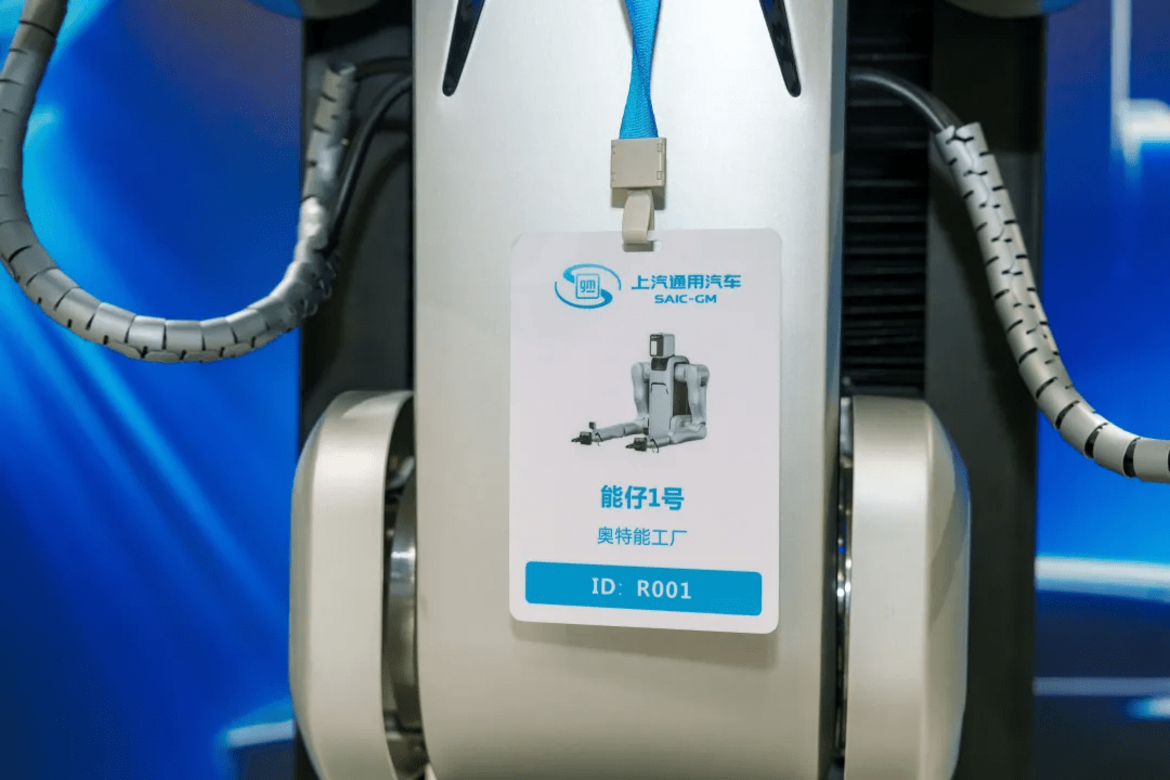
A wheeled humanoid robot operates on SAIC-GM’s battery assembly line, handling cell loading tasks as part of early embodied AI deployment in automotive manufacturing. Photo: SAIC-GM
SAIC-GM has deployed humanoid robots on a battery assembly line for Buick vehicles, marking one of the first known integrations of embodied intelligent machines into automotive production in China.
The robots, developed jointly with Shanghai-based startup Agibot, are currently operating on the production line for the Buick Electra E7, a plug-in hybrid SUV scheduled for release this year. The deployment represents a pilot phase as the automaker evaluates how humanoid systems can function within existing manufacturing workflows.
Unlike traditional industrial robots, which are typically fixed in place and designed for repetitive tasks, the new system introduces a more flexible, mobile form of automation.
A Different Approach to Factory Robotics
The robot, named Nengzai No. 1, uses a wheeled base rather than legs, allowing it to move efficiently across the factory floor while maintaining stability for precision tasks.
Equipped with dual robotic arms and a visual perception system, it can identify battery components, plan grasping paths and execute loading operations without relying entirely on pre-programmed sequences.
SAIC-GM says the robot achieves positioning accuracy within 0.1 millimeters, while operating at a pace of roughly two seconds per task, aligning with the speed requirements of a mass-production environment.
The system also occupies significantly less space than conventional automated workstations, using less than 15 percent of the typical footprint. This compact design allows manufacturers to increase production density without expanding factory floor space.
The decision to deploy the robots on battery assembly lines reflects the complexity and precision required in handling battery cells, where both accuracy and consistency are critical.
From Fixed Automation to Embodied Systems
The pilot signals a broader shift in manufacturing automation.
Traditional automotive factories rely heavily on fixed robotic arms programmed for specific tasks. While efficient, these systems lack flexibility and require reconfiguration when production lines change.
Humanoid and mobile robots, by contrast, are designed to adapt to different tasks and environments. Their ability to navigate spaces and manipulate objects more dynamically could make them suitable for a wider range of applications within factories.
SAIC-GM’s approach combines mobility with humanoid-style manipulation, suggesting a hybrid path toward more flexible automation.
The company says it has tested the robots across more than 100 potential workstations before selecting battery assembly as the first deployment scenario.
Expanding the Role of Humanoid Robots
The current deployment is limited in scope, but SAIC-GM plans to expand the use of embodied robots across additional areas of production and logistics.
The company is also exploring bipedal humanoid robots alongside wheeled systems, indicating that different robot forms may coexist depending on the requirements of specific tasks.
The move comes as automakers globally are experimenting with humanoid robotics. Companies including Tesla and BMW have begun testing similar systems for manufacturing tasks, while Chinese manufacturers are accelerating development of embodied AI platforms.
For SAIC-GM, the integration of humanoid robots into a live production line suggests that the technology is beginning to move beyond demonstration and into early industrial application.
If the pilot proves successful, it could signal a gradual transition toward more adaptive, AI-driven automation in automotive manufacturing, where robots are no longer confined to fixed positions but operate as flexible workers within the production environment.
Join our list to receive latest Blockchain, Crypto & Fintech news:
WordPress database error: [Table 'u752143311_u5t1U.wp_coingecko_coins' doesn't exist]
            SELECT coins.*, meta.post_id as post_id
            FROM `wp_coingecko_coins` coins
            INNER JOIN wp_postmeta meta ON (meta.meta_key = 'wpcf-coin-main-tag' AND meta.meta_value = coins.slug )
            ORDER BY market_cap_usd
            DESC LIMIT 9