
Google Brings Intrinsic In House to Accelerate Physical AI Development
Google has brought robotics software company Intrinsic fully in house, signaling a major push to integrate its AI models and cloud infrastructure into industrial robotics.
Google has brought robotics software company Intrinsic fully in house, signaling a major push to integrate its AI models and cloud infrastructure into industrial robotics.
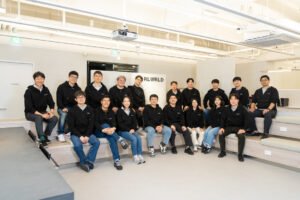
RLWRLD has raised $26 million in new funding to develop robotics foundation models trained in real industrial environments, accelerating deployment across logistics and manufacturing.
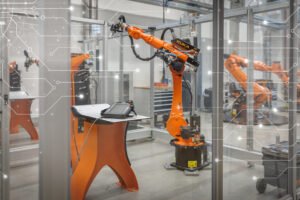
Germany’s robotics industry is projected to shrink again in 2026, raising concerns that Europe’s largest automation hub is losing ground to faster-growing competitors in Asia and North America.

China’s AI2 Robotics has raised $145 million in Series B funding to advance its embodied AI models and scale production of its AlphaBot robots for industrial and service applications.
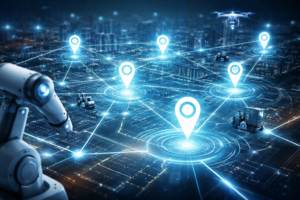
ZaiNar has raised more than $100 million and unveiled a physical AI platform that turns wireless networks into precise positioning systems for robots, devices, and autonomous systems.

Yukai Engineering’s Mirumi, a small robotic bag charm, is entering global markets as robotics companies explore emotionally expressive consumer products tied to fashion and collectibles.

U.K.-based Wayve has secured up to $1.5 billion in new funding to expand its AI-driven autonomous driving software, with robotaxi deployments planned in London and integration into consumer vehicles by 2027.

Japan has launched a national effort to mass-produce humanoid robots by 2027, bringing together universities, electronics firms, and government support to address labor shortages and restore its robotics leadership.

Hyundai Motor Group has deployed unmanned firefighting robots with South Korea’s National Fire Agency, signaling robotics’ growing role in safety-critical infrastructure.

Sitegeist has raised €4 million in pre-seed funding to scale its AI-powered construction robots, targeting infrastructure repair and labor shortages in renovation projects.
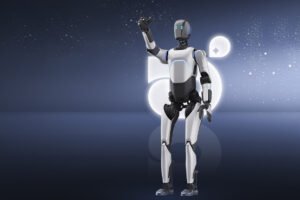
China’s top humanoid robot companies will showcase their latest technologies and global expansion plans at AW 2026 in Seoul, highlighting intensifying competition in physical AI.
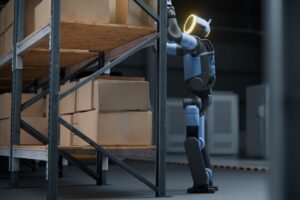
AI robots could surpass the number of human workers within decades, driven by falling costs, rapid automation, and expanding adoption across industries.

Hyundai Motor Group plans to invest $6.9 billion in an AI, hydrogen, and robotics hub in South Korea, accelerating its transition into physical AI and advanced manufacturing.
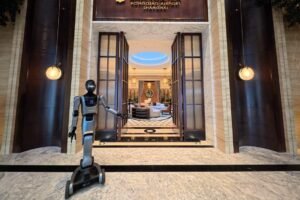
The global reception robots market is projected to grow from $1.2 billion in 2023 to $6.8 billion by 2032, driven by AI advances and rising demand for automated customer service.

HONOR will unveil its first humanoid robot at Mobile World Congress 2026, marking a strategic expansion from smartphones into embodied AI and robotics.