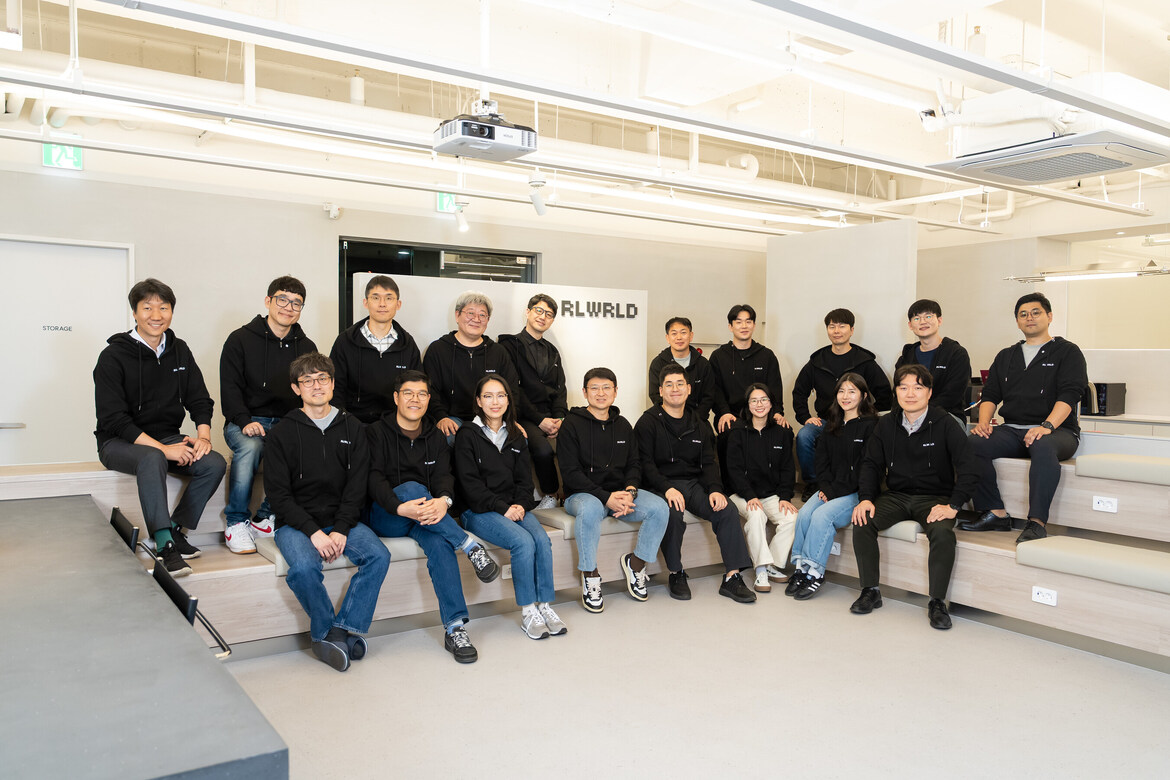

RLWRLD, a physical AI startup focused on robotics foundation models, has raised $26 million in new funding, bringing its total seed investment to approximately $41 million. The company is using the capital to accelerate development of AI systems trained directly inside factories and logistics facilities, marking a shift toward real-world data-driven robotics intelligence.
The funding round includes venture capital firms Headline Asia and Z Venture Capital Corporation, alongside strategic investors such as CJ Logistics, Lotte Ventures, and Hanwha Asset Management. These partnerships reflect growing industry demand for robotics systems capable of learning from real operational environments rather than controlled laboratory settings.
RLWRLD plans to officially launch its robotics foundation model in the first half of 2026, positioning itself among a growing number of companies developing generalized AI systems for industrial automation.
Training Robotics AI Inside Real Industrial Environments
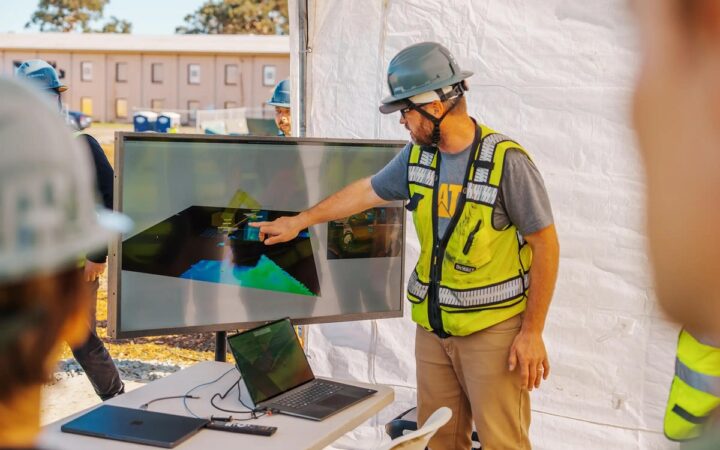
RLWRLD’s approach focuses on training foundation models directly within active industrial operations, including logistics centers and manufacturing facilities. This strategy allows robots to learn from real-world workflows, capturing data on physical tasks such as handling objects, navigating environments, and interacting with equipment.
Foundation models, which have transformed fields such as natural language processing, are now being adapted for robotics. These models aim to enable machines to perform a wide range of physical tasks without requiring task-specific programming.
By collecting large-scale operational data from strategic partners, RLWRLD is building a dataset tailored to industrial environments. This real-world data advantage could improve robots’ ability to adapt to complex and changing conditions, a key challenge in deploying automation across diverse facilities.
Company executives and investors say this approach addresses a fundamental limitation in robotics development: the difficulty of translating laboratory-trained models into reliable performance in production environments.
Strategic Partnerships Accelerate Commercial Deployment
RLWRLD’s investor network includes logistics operators, retailers, and manufacturing firms that are actively collaborating on robotics deployments. These partnerships provide both funding and access to operational environments where robots can be trained and tested.
Several proof-of-concept projects are already underway with companies in South Korea and Japan, with some progressing to joint deployment phases. These collaborations allow RLWRLD to refine its AI models while helping partners automate complex workflows.
Investors are also supporting RLWRLD’s international expansion. Headline Asia is assisting the company’s entry into North American markets, while Z Venture Capital is facilitating commercialization efforts in Japan through connections with telecommunications, retail, and industrial partners.
This model of co-development between robotics startups and industrial operators is becoming increasingly common as companies seek to accelerate deployment while reducing technical and operational risks.
Foundation Models Become Central to Industrial Automation
RLWRLD’s funding highlights a broader shift toward foundation models as the core intelligence layer for physical AI systems. Instead of developing robots for narrow tasks, companies are building generalized AI systems capable of learning from experience and adapting to new environments.
These models rely on multimodal data collected from sensors, cameras, and operational systems, enabling robots to develop more flexible and reliable behavior. As the models improve, they can be deployed across multiple facilities, allowing robots to transfer knowledge between different environments.
This approach has the potential to significantly accelerate robotics adoption by reducing the need for custom programming and enabling more scalable deployment.
As labor shortages intensify and industrial automation becomes increasingly critical, robotics foundation models could play a central role in transforming manufacturing, logistics, and infrastructure operations. Companies like RLWRLD are betting that intelligence trained in real-world environments will become the defining competitive advantage in the next generation of industrial robotics.
Disclaimer: RobotsBeat is an independent media brand owned and operated by NuvexMedia LLC, publishing news, research, and insights on artificial intelligence, emerging technologies, automation, and related industries. NuvexMedia LLC invests in and collaborates with companies across the AI, Robotics, technology, software, and digital innovation sectors. These relationships do not influence RobotsBeat's editorial coverage, and the publication maintains full editorial independence to provide accurate, timely, and objective information. © 2026 NuvexMedia LLC. All rights reserved. This content is for informational purposes only and should not be considered legal, tax, investment, financial, or other professional advice.