
Agility Robotics, one of the early developers of commercial humanoid robots, has rebranded as Agility, dropping “Robotics” from its name as the company positions itself for broader growth in the rapidly expanding humanoid automation market.
The Oregon-based company said the change reflects an effort to align its brand with a wider set of applications and services as humanoid robots move from pilot deployments into real industrial operations.
The rebrand comes as competition among humanoid robot developers intensifies globally, with companies racing to bring adaptable machines into warehouses, factories, and logistics centers.
A Shift Toward Commercial Scale
Agility has been among the first companies to deploy humanoid robots in real-world logistics environments.
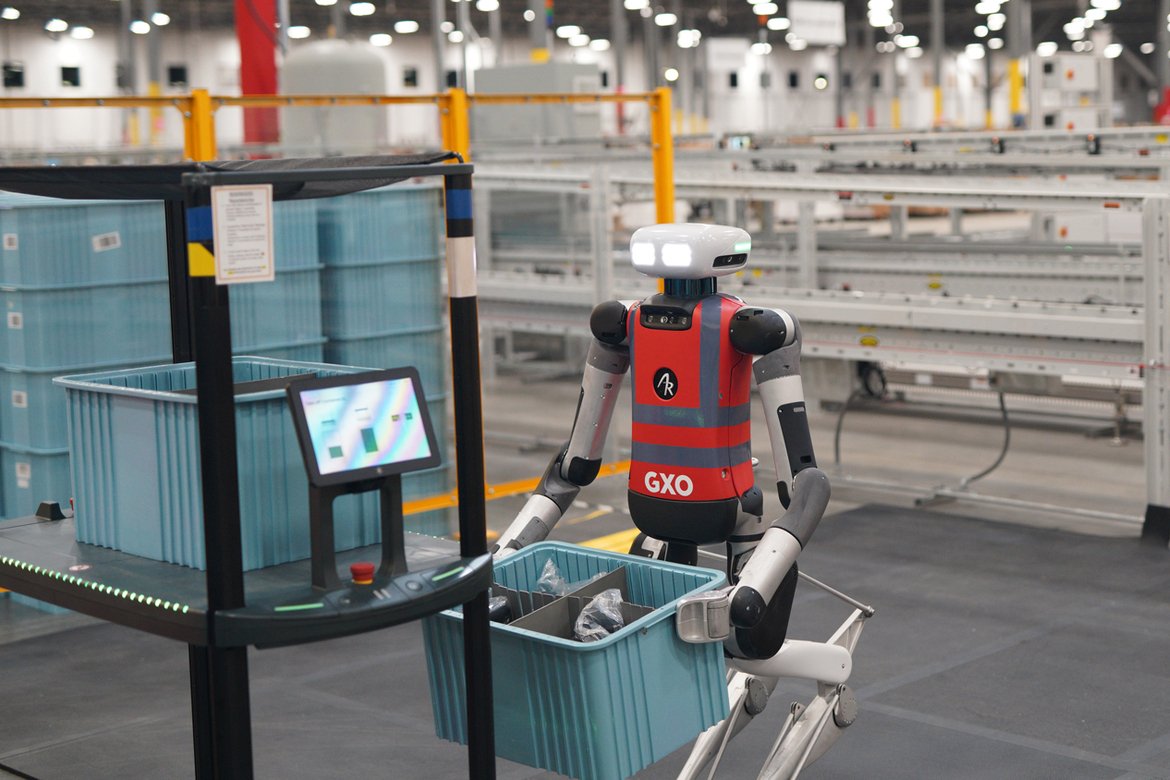
Its flagship robot, Digit, is designed to handle tasks such as transporting containers and materials within warehouse facilities. The robot’s bipedal design allows it to navigate environments originally built for human workers, including stairs, narrow aisles, and loading docks.
The company recently announced a deployment agreement with Toyota Canada following a year-long pilot program evaluating Digit’s performance in industrial operations.
Toyota joins a growing list of large companies testing or deploying the robot, including logistics provider GXO Logistics, automotive supplier Schaeffler, and e-commerce giant Amazon.
These deployments represent a shift in the humanoid robotics sector from experimental pilots toward commercial use cases where robots operate continuously alongside human workers.
Branding for a Broader Robotics Ecosystem
According to the company, removing “Robotics” from its name reflects an intention to expand beyond a single product category.
In a statement explaining the change, Agility said the simplified brand allows room to explore new industries, partnerships, and services as humanoid automation becomes more widely adopted.
The company also introduced a new logo and visual identity intended to emphasize movement, durability, and reliability, characteristics associated with its hardware and software systems.
Daniel Diez, Agility’s chief business officer, said the rebrand signals the company’s readiness to scale its technology across multiple sectors.
“With our rebrand to Agility, we’re signaling our readiness to scale beyond our current deployments and our ability to lead the adoption of humanoids across many new industries,” Diez said.
The Race to Deploy Humanoid Robots
Agility’s repositioning comes at a moment when the humanoid robotics market is expanding rapidly.
Technology companies and robotics startups around the world are developing humanoid machines capable of performing tasks that traditional industrial robots cannot easily handle. These systems are designed to operate in human-centered environments and perform a range of tasks rather than a single repetitive motion.
Agility has positioned Digit as a “cooperatively safe” humanoid robot intended to operate alongside workers without requiring extensive safety barriers.
The company says it remains on track to deliver the first cooperatively safe humanoid robot in 2026, a milestone that could accelerate the adoption of humanoid automation in logistics and manufacturing environments.
Meanwhile, other robotics companies are pursuing similar goals, targeting industries facing labor shortages and increasing demand for flexible automation.
What the Rebrand Signals for the Industry
Agility’s brand change reflects a broader transformation occurring across the robotics industry.
As humanoid robots transition from research projects to commercial products, companies are increasingly positioning themselves not only as hardware manufacturers but as providers of integrated automation systems.
That shift often includes software platforms, operational services, and partnerships with major industrial customers.
For early entrants such as Agility, maintaining a leadership position may depend less on technical prototypes and more on the ability to scale deployments, integrate with industrial workflows, and demonstrate reliable performance over time.
The company’s rebrand suggests that the next phase of the humanoid robotics market will focus on expansion beyond pilot programs toward widespread commercial adoption.