Doosan Bobcat has unveiled a new generation of autonomous and AI-enabled construction technologies at CES 2026, headlined by the RX3 autonomous concept loader and a growing ecosystem of intelligent jobsite systems. The announcements reflect the company’s push to integrate autonomy, electrification, and artificial intelligence into compact construction equipment designed for real-world deployment.
Presented during CES Media Day in Las Vegas, the technologies are part of what Bobcat describes as a “Smart Construction Jobsite,” where machines assist operators, reduce complexity, and improve safety and productivity. While several systems remain in concept or prototype form, the company emphasized that many are moving steadily toward commercialization.
RX3 Autonomous Concept Loader
The Bobcat RogueX3, or RX3, represents the third generation of Bobcat’s autonomous loader concept. The electric-powered machine is designed to match the size and footprint of existing manned Bobcat equipment, allowing it to operate in current jobsites without major workflow changes. It uses tracked mobility to provide traction across uneven or challenging surfaces while operating quietly and without emissions.
A key feature of the RX3 is its modular design. The platform can be configured with or without a cab, equipped with wheels or tracks, and paired with different lift arms depending on the task. Bobcat said the concept could ultimately support multiple powertrains, including electric, diesel, hybrid, and hydrogen, offering flexibility as energy infrastructure evolves.
“For nearly 70 years, Bobcat has led the compact equipment industry by solving real problems for real people,” said Scott Park, vice chairman and CEO of Doosan Bobcat. “As jobsites become more complex, we’re responding with intelligent systems that help people accomplish more, faster, and smarter.”
Bobcat is also working with Agtonomy as a technology partner, using its perception and fleet management software to enable autonomous and semi-autonomous operation in agricultural and construction contexts.
AI Comes Into the Cab
Alongside the RX3, Doosan Bobcat introduced the Bobcat Jobsite Companion, described as the compact equipment industry’s first AI voice control system. Powered by a proprietary large language model running entirely onboard, the system allows operators to manage more than 50 machine functions using natural voice commands.
Operators can adjust attachment settings, engine speed, lighting, and other controls without taking their hands off the controls. Because the system does not rely on cloud connectivity, it can respond in real time even in remote or connectivity-limited jobsites.
“Jobsite Companion lowers the barrier to entry for new operators while helping experienced professionals work faster and more precisely,” said Joel Honeyman, vice president of global innovation at Doosan Bobcat.
Bobcat also announced Service.AI, an AI-powered support platform designed for dealers and technicians. The system provides instant access to diagnostics, repair manuals, service histories, and troubleshooting guidance, aiming to reduce downtime and speed up maintenance.
Safety, Displays, and Energy Systems
Doosan Bobcat showcased several additional technologies that support its smart jobsite vision. A radar-based collision warning and avoidance system uses imaging radar to monitor surroundings and can automatically slow or stop a machine to prevent accidents.
The company also revealed an advanced display concept using transparent MicroLED screens integrated into cab windows. These displays overlay 360-degree camera views, machine performance data, alerts, and asset tracking directly into the operator’s field of vision.
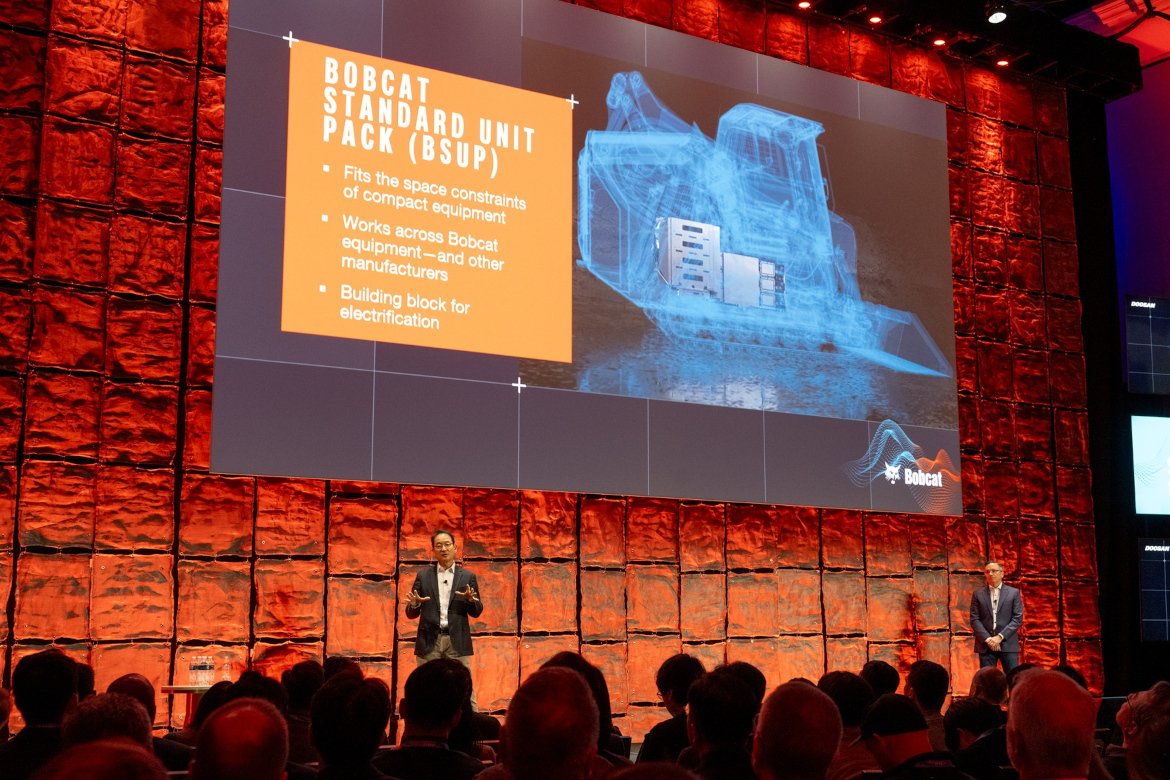
Powering these systems is the Bobcat Standard Unit Pack, or BSUP, a modular and rugged battery system designed for harsh construction environments. The fast-charging packs are scalable across Bobcat’s equipment lineup and are intended to support broader electrification efforts, including potential use by other manufacturers.
Toward a Smarter Jobsite
Doosan Bobcat said the technologies unveiled at CES 2026 form an integrated ecosystem rather than isolated features. By combining AI, autonomy, electrification, and connectivity, the company aims to redefine how compact equipment is operated and supported.
“We’ll combine AI, autonomy, electrification, and connectivity to create new jobsite standards,” Park said during the Media Day presentation.
While the RX3 and several systems remain concept-stage, Bobcat’s messaging at CES emphasized near-term impact rather than distant vision. The company framed these developments as practical steps toward safer, more productive jobsites where intelligent machines actively support human workers.