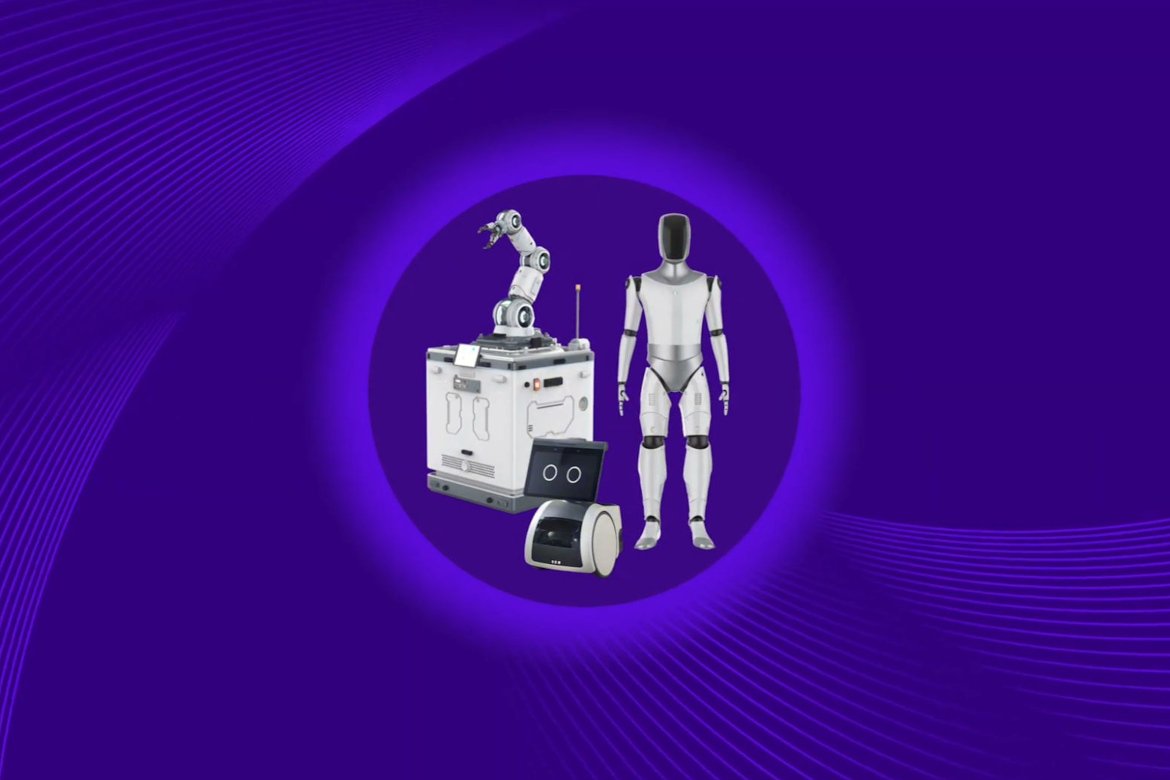

Qualcomm has expanded its ambitions beyond chips for smartphones and vehicles, unveiling a full-stack robotics platform at CES 2026 designed to power the next generation of Physical AI. The company introduced a comprehensive architecture that integrates hardware, software, and AI models to support robots ranging from household assistants to industrial autonomous mobile robots and full-size humanoids.
The announcement reflects a growing industry shift toward general-purpose robotics, where machines are expected to reason, adapt, and act safely in human environments. Qualcomm positioned its new platform as a bridge between laboratory prototypes and deployable systems, emphasizing power efficiency, scalability, and safety-grade performance as key enablers.
Dragonwing IQ10 and the “Brain of the Robot”
At the center of Qualcomm’s robotics push is the Dragonwing IQ10 Series, its latest premium-tier processor designed specifically for advanced robotics workloads. The company describes IQ10 as a high-performance, energy-efficient system-on-chip capable of serving as the primary compute engine for humanoid robots and sophisticated AMRs.
Built on Qualcomm’s experience in edge AI and low-power computing, the processor is optimized for mixed-criticality systems where perception, planning, and control must run simultaneously with strict safety requirements. The IQ10 expands Qualcomm’s existing robotics roadmap, which already supports a range of commercial robots through earlier Dragonwing processors.
The architecture enables advanced perception and motion planning using end-to-end AI models, including vision-language and vision-language-action systems. These capabilities are intended to support generalized manipulation, natural human-robot interaction, and continuous learning across diverse environments.
From Prototypes to Scalable Physical AI
Qualcomm framed its robotics platform as an end-to-end solution rather than a single chip. The architecture combines heterogeneous edge computing, AI acceleration, machine learning operations, and a data flywheel for collecting and retraining models. Developer tools and software frameworks are designed to shorten development cycles and reduce the complexity of deploying robots at scale.
This approach targets what Qualcomm described as the “last-mile” problem in robotics, where promising demonstrations often fail to translate into reliable, mass-produced systems. By providing a unified stack that scales across form factors, Qualcomm aims to accelerate adoption in retail, logistics, manufacturing, and service robotics.
“As pioneers in energy-efficient, high-performance Physical AI systems, we know what it takes to make complex robotics systems perform reliably, safely, and at scale,” said Nakul Duggal, executive vice president and group general manager at Qualcomm Technologies. He added that the company’s focus is on moving intelligent machines out of controlled environments and into real-world use.
Partnerships Across the Robotics Ecosystem
Qualcomm also highlighted a growing network of robotics partners adopting its platform. The company is working with manufacturers and integrators including Advantech, APLUX, AutoCore, Booster, VinMotion, Robotec.ai, and VinMotion to bring deployment-ready robots to market.
Humanoid robotics company Figure is collaborating with Qualcomm to define next-generation compute architectures as it scales its humanoid platforms. Brett Adcock, founder and chief executive of Figure, said Qualcomm’s combination of compute performance and power efficiency is a key building block in realizing general-purpose humanoid robots designed for industrial work.
Qualcomm said its Dragonwing processors already power several humanoid platforms in development, and discussions are underway with major industrial automation players on future robotics solutions.
CES 2026 Demonstrations and Industry Direction
At CES 2026, Qualcomm showcased robots powered by its Dragonwing processors, including VinMotion’s Motion 2 humanoid and Booster’s K1 Geek. The company also demonstrated a commercially available robotics development kit designed for rapid prototyping and deployment across multiple applications.
Additional demonstrations focused on teleoperation tools and AI data pipelines that enable robots to continuously acquire new skills. These capabilities underscore Qualcomm’s emphasis on lifelong learning and adaptability as defining characteristics of Physical AI.
The CES debut positions Qualcomm as a foundational technology provider for embodied intelligence, competing not just with chipmakers but with full-stack autonomy platforms. As humanoids and service robots move closer to commercial deployment, Qualcomm is betting that power-efficient, safety-grade compute will be a decisive advantage.
With Physical AI emerging as a central theme at CES 2026, Qualcomm’s announcement signals that the race to define the underlying infrastructure for intelligent machines is accelerating, and that robotics is becoming a core pillar of the company’s long-term strategy.