Key Notes
- Founderful and PROTOTYPE led coprod’s $6 million pre-seed round to advance modular robot hardware and a Lausanne prototyping facility.
- The co:system platform connects sensing, motion, power and battery modules through a shared EtherCAT architecture and software interface.
- Commercial rollout is planned for early 2027, while the co:dodo biped demonstrates the stack and additional robot platforms remain on the roadmap.
Swiss robotics startup coprod has raised $6 million in pre-seed funding to develop modular robot components and a unified control platform. Founderful and PROTOTYPE led the round, the company announced on November 23, with General Catalyst among the additional investors.
The company plans to use the capital for its first commercial component range and a prototyping facility in Lausanne. Its bet is that teams building a robot for a particular job can move faster when the hardware arrives with compatible interfaces and supporting software.
One Control Stack for Sensors, Motion and Power
On its platform page, coprod describes co:system as a common architecture connecting sensing, motion, power and batteries. The modules can form a complete system or be integrated into an existing robot, allowing developers to choose how much of the platform to adopt.
The control stack uses EtherCAT, an industrial communications technology, to coordinate devices over a shared network. A C++ core and Python bindings expose that hardware through a common software interface. The practical aim is to reduce the custom communication and timing work needed when components from different sources are assembled.
That work can consume engineering effort before a robot attempts its first useful task. A motor, sensor and battery may each function correctly on their own, while the combined machine still needs careful integration, diagnostics and recovery behavior. Compatible modules can simplify those interfaces; the final application still needs its own testing.
A Walking Demonstrator Tests the Components Together
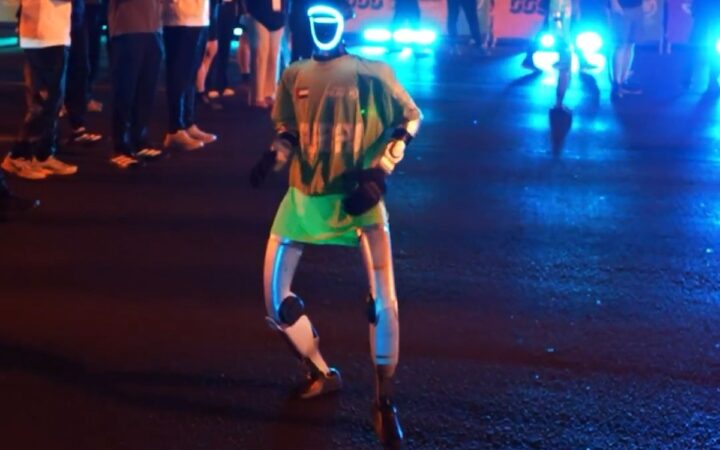
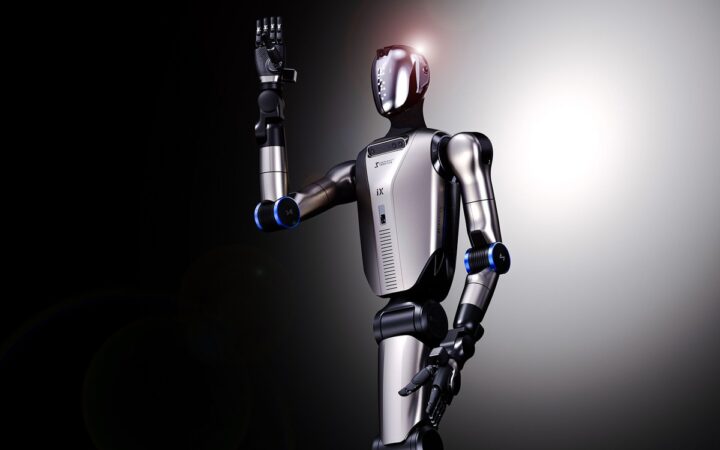
coprod has built co:dodo, a six-degree-of-freedom biped, to exercise the stack as a working system. Its published specification lists point-foot locomotion and a 1-kilohertz control rate. The company presents the machine as a demonstration of how its hardware and controls fit together.
The same systems page lists a dual-arm teleoperation platform with tactile sensing and a fuller humanoid as planned projects. Those entries describe a development roadmap, rather than additional products already delivered to customers.
For prospective users, the demonstrator is relevant because walking forces several subsystems to operate together. It does not by itself establish that every future robot design will integrate quickly, meet a particular safety requirement or achieve reliable operation in a customer environment.
Commercial Availability Is the Next Milestone
coprod is targeting an early-2027 commercial launch and aims to have its full component line qualified, certified and available by the end of that year. Those are company targets. Component availability, documentation and long-term support will determine how useful the platform becomes for outside builders.
The raise adds another approach to the robotics infrastructure market. Our Mosaico coverage examined tools for organizing robot sensor recordings, while Genesis AI’s funding supports a company developing robot hardware and AI together.
coprod’s opportunity is to make the underlying hardware easier for other teams to assemble and control. The commercial test will be whether those teams can repeatedly move from a prototype to a maintainable machine without rebuilding the same integration work for each project.
Disclaimer: RobotsBeat is an independent media brand owned and operated by NuvexMedia LLC, publishing news, research, and insights on artificial intelligence, emerging technologies, automation, and related industries. NuvexMedia LLC invests in and collaborates with companies across the AI, Robotics, technology, software, and digital innovation sectors. These relationships do not influence RobotsBeat's editorial coverage, and the publication maintains full editorial independence to provide accurate, timely, and objective information. © 2026 NuvexMedia LLC. All rights reserved. This content is for informational purposes only and should not be considered legal, tax, investment, financial, or other professional advice.