Key Notes
- Embo announced a $110 million seed round led by a16z, with NVentures and other investors backing its work on general robot intelligence.
- The team behind Dreamer and VideoGPT is developing world models that combine video learning, physical robot experience and reinforcement learning through imagined practice.
- Reliable operation in unfamiliar settings remains the development goal, and the launch does not establish commercial fleet performance or a general-purpose robot product.
Embo has raised $110 million in seed funding to build AI models for general-purpose robots, the company announced on November 23. Andreessen Horowitz led the round, with Khosla Ventures, DST Global, NVIDIA’s NVentures and other strategic investors participating.
The company is developing a robot brain that combines understanding of physical environments with fine motor control. Its central ambition is to help humanoids work in unfamiliar settings, extending beyond the specific demonstrations and conditions used to train them.
World Models Make Imagined Practice Part of Training
Embo’s technical approach starts with world models pretrained on video and text. These models learn patterns in how objects move, interact and change over time. The company then connects that knowledge to robot sensors and motors through physical experience.
Reinforcement learning adds another stage: an agent practices actions inside the learned model, receiving feedback across imagined scenarios before attempting them on hardware. The intended benefit is much more practice than a physical fleet could collect alone, including situations where an action goes wrong.
A learned world model supplies its own prediction of what happens next. That makes the accuracy of those predictions important. If a model represents contact, weight or friction poorly, successful imagined practice may fail to transfer to a real machine. Physical testing remains essential to checking what the agent has actually learned.
Dreamer and VideoGPT Research Shape the Team
In its investment announcement, a16z identifies Danijar Hafner and Wilson Yan as the researchers leading the effort. Hafner is known for the Dreamer line of agents, while Yan’s work includes VideoGPT. The investor also highlights the team’s experience with Diffusion Forcing and large-scale model development.
Dreamer provides a research precedent for learning behavior through imagined experience. The investor points to Dreamer 4 learning to obtain diamonds in Minecraft from previously collected data. Moving that idea into robotics introduces real sensors, imperfect actuation and consequences that must be measured on physical hardware.
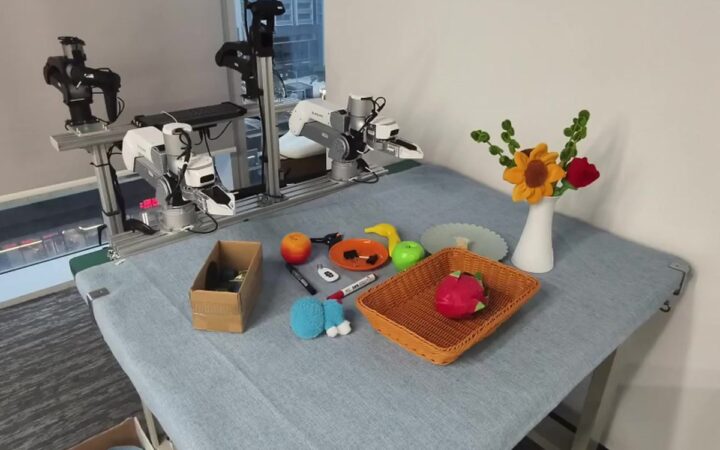
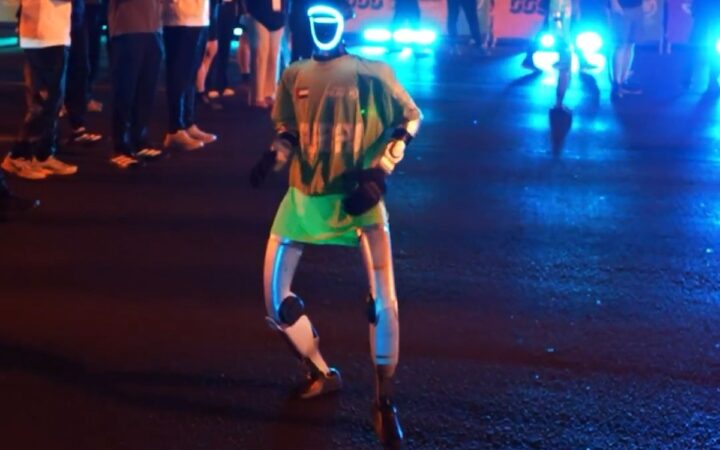
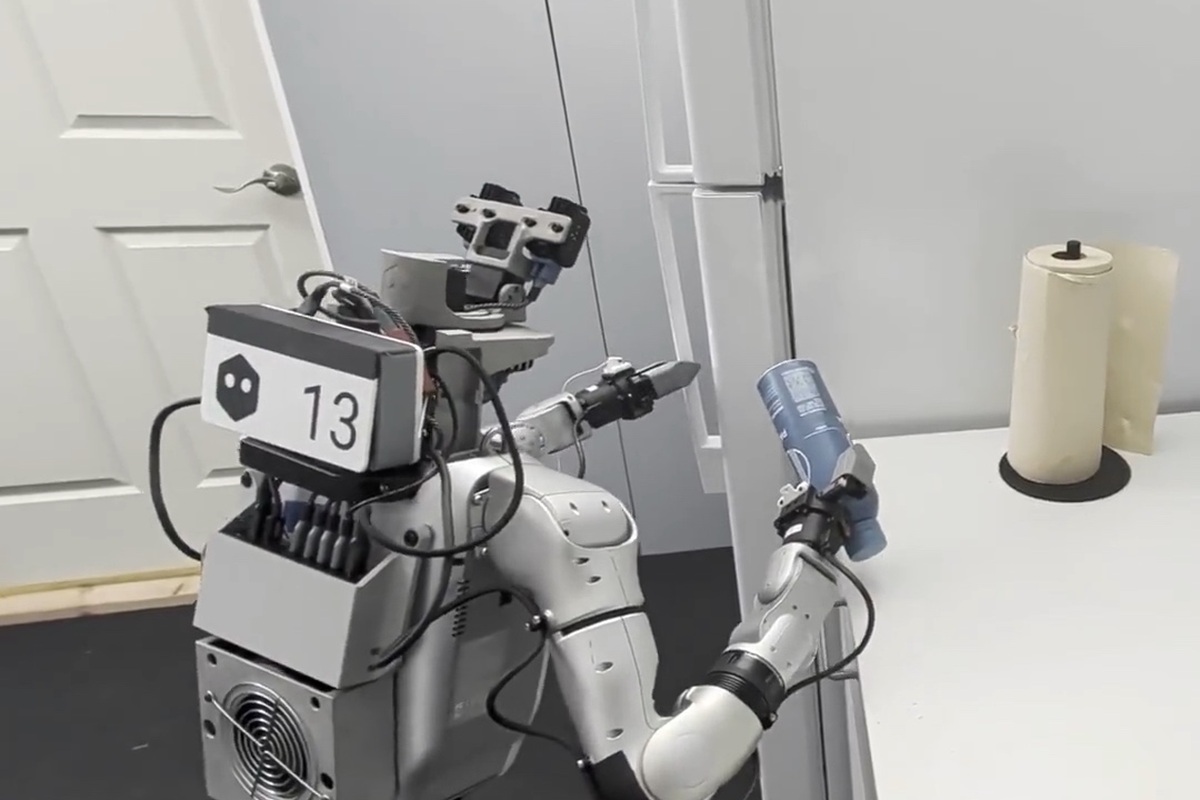
Embo’s public launch film introduces its robot-learning program. The company’s website separates its physical robot footage from examples illustrating model training and imagination, an important distinction when interpreting what each demonstration shows.
The Commercial Test Is Reliable Work in New Settings
The funding places Embo in a broader push toward models that can reuse knowledge across robot tasks. Our NVIDIA CoRL coverage examines GR00T 2 and simulation tools, while Huawei’s world model targets another approach to learning physical interactions. Those programs use different systems and evaluations, so their headline results are not directly interchangeable.
Our report on Genesis AI’s financing also follows investment in robot intelligence and hardware. Embo’s announcement adds a distinct world-model strategy to that market, with further capability updates still to come.
The immediate milestone is the company’s launch and disclosed backing. Evidence of a broadly useful robot brain will depend on task completion in unfamiliar environments, recovery after failures and the amount of human assistance required. Those measures will show whether imagined practice produces dependable work beyond a carefully prepared demonstration.
Disclaimer: RobotsBeat is an independent media brand owned and operated by NuvexMedia LLC, publishing news, research, and insights on artificial intelligence, emerging technologies, automation, and related industries. NuvexMedia LLC invests in and collaborates with companies across the AI, Robotics, technology, software, and digital innovation sectors. These relationships do not influence RobotsBeat's editorial coverage, and the publication maintains full editorial independence to provide accurate, timely, and objective information. © 2026 NuvexMedia LLC. All rights reserved. This content is for informational purposes only and should not be considered legal, tax, investment, financial, or other professional advice.