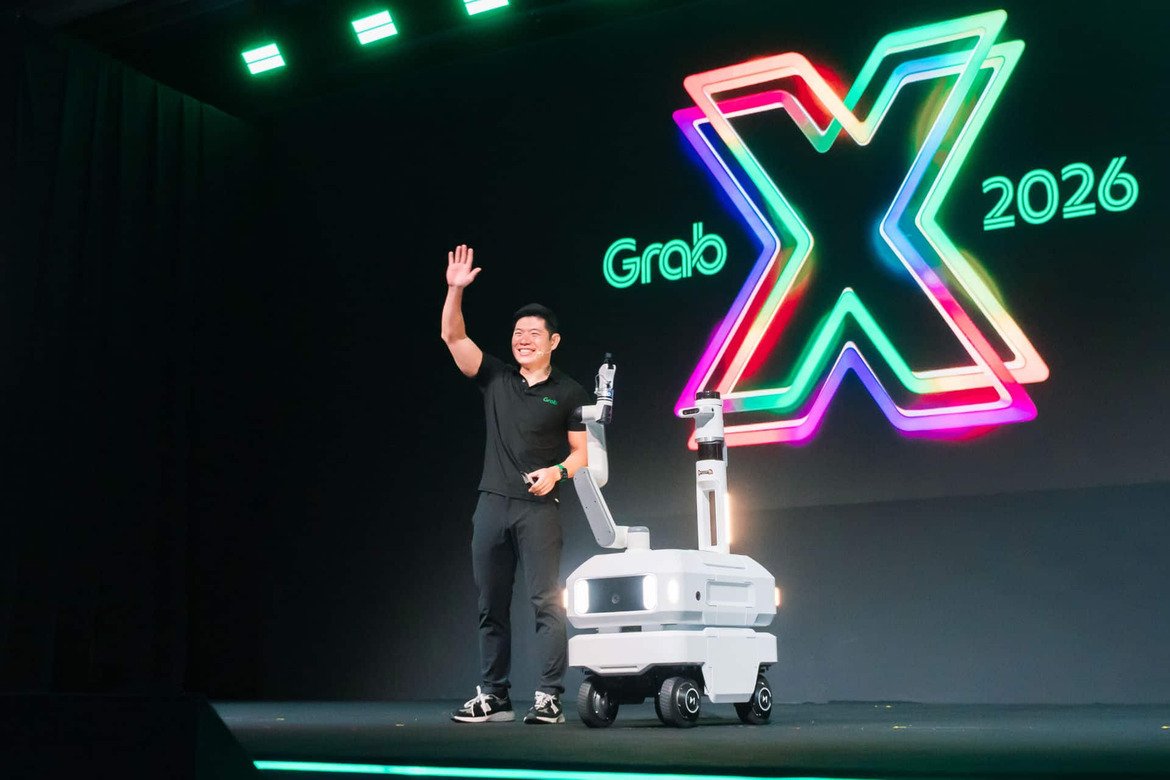

Grab unveiled an AI-powered delivery robot called Carri at GrabX 2026, the company’s annual product event held in Jakarta this month. The announcement is part of a broader push by the Singapore-based super app to embed physical automation into a platform that has long depended entirely on gig workers.
Anthony Tan, Grab’s CEO and co-founder, said the company is building an Intelligence Layer – AI infrastructure fueled by real-world, real-time signals – that sits underneath every feature and innovation in the app. That layer now extends into hardware.
Carri and the Indoor Delivery Problem
Tan said delivery partners currently lose around 10% of their earning time navigating large malls or waiting for customers to come down from office buildings. Carri is designed to absorb that idle time by handling restaurant retrieval and handoff, freeing drivers to stay on the road.
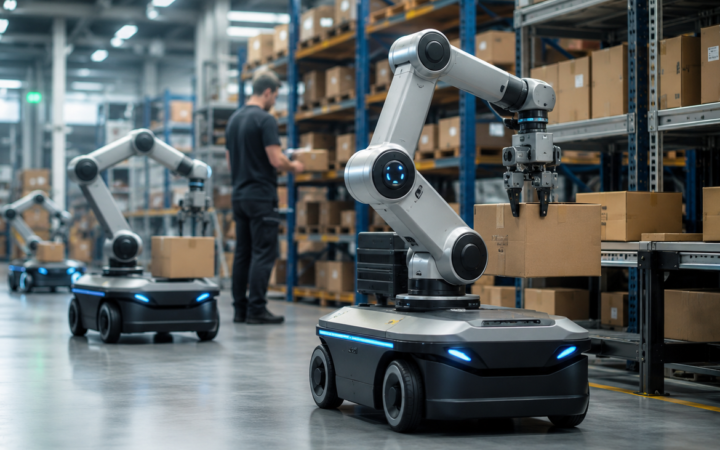
The robot is built for both indoor and outdoor environments, equipped with LIDAR sensors and cameras to navigate crowds and avoid obstacles. It features secure storage compartments that open only for the specific user assigned to a given order.
Carri is still in the development and testing phase, and the pricing or cost model for deployment has not yet been determined. Tan framed the move as a natural extension of the platform’s AI capabilities into the physical world. “We are moving into hardware to improve the messy physical parts of the job that software alone cannot fix,” he said.
13 New Features Across Three User Groups
GrabX 2026 introduced 13 AI-powered features designed around three core pillars: local life, effortless travel, and business empowerment.
For consumers, Grab introduced Group Ride for shared fares, GrabMore for multi-merchant orders under a single delivery fee, and a Grab AI Assistant that handles food, shopping, and bookings. GrabMaps and a Cash Loan product round out the consumer-facing additions.
For travelers, Grab unveiled GrabStays for hotel bookings, Discover by Grab for AI-curated dining recommendations, and GrabPay for Travel to enable cross-border QR payments across Southeast Asia.
For merchants and drivers, Grab announced a Virtual Store Manager using CCTV hardware for AI-powered monitoring, a Cloud Printer to automate order handling, and Tap to Pay to turn smartphones into contactless payment terminals. A Driver AI Assistant provides hands-free route and earnings guidance.
Monetization and the Road Ahead
Tan said Grab is also planning to extend its intelligence layer into autonomous vehicles and CCTV cameras, signaling that hardware will become a structural component of the business rather than a peripheral experiment.
On the revenue side, merchant hardware tools including cloud printers and virtual store management are set to move from free trials to a subscription model. A recent Barclays analysis estimated that widespread use of robots and drones in food delivery could reduce per-order costs to as little as $1 – a threshold that, if reached, would reshape the unit economics of every major delivery platform in the region.