Hyundai Motor Group has created two dedicated organizational units to advance its humanoid robot deployment strategy, according to industry sources. The group has established a position overseeing its software-defined factory initiative, appointing Alpesh Patel – currently chief innovation officer at Hyundai Motor Group Innovation Center Singapore – to lead the effort. A separate office for robotics component procurement has also been established, headed by Soh Hyun-seong, former head of strategic planning at Beijing Hyundai.
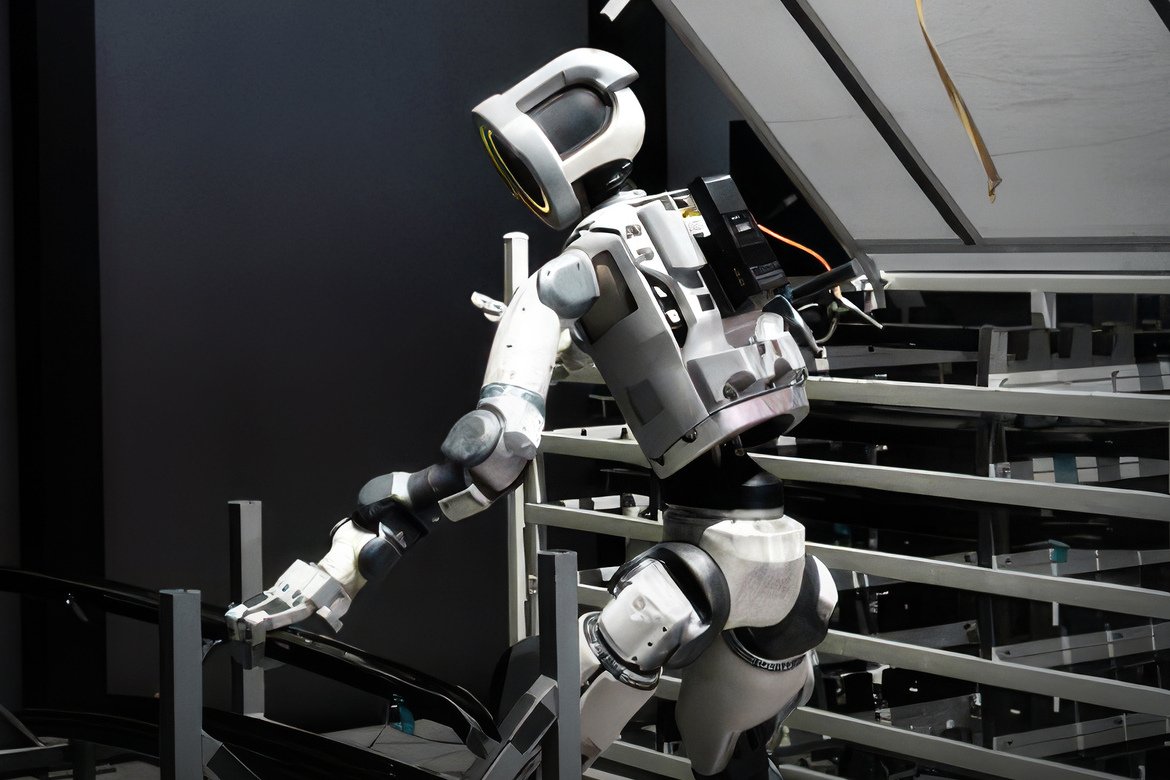
The organizational moves are the internal infrastructure being built to execute Hyundai Motor Group’s publicly stated Atlas deployment plan: 30,000-unit annual production capacity by 2028 and 25,000 robots deployed across Hyundai Motor and Kia manufacturing facilities.
What a Software-Defined Factory Means
A software-defined factory is a manufacturing environment in which AI controls and manages production, quality, and logistics operations through software rather than fixed physical infrastructure. The concept allows factories to reconfigure workflows, reallocate tasks between human workers and robots, and optimize production parameters in real time through software updates rather than physical retooling.
For Hyundai Motor Group, the SDF initiative provides the operational framework within which Atlas humanoid robots will function. Robots operating in a software-defined environment can be assigned tasks, monitored, and updated centrally – a prerequisite for deploying 25,000 units across multiple facilities in different countries and coordinating their performance at scale.
The Atlas Deployment Roadmap
The organizational changes align with a phased deployment plan the group has detailed in recent weeks. Atlas will initially handle parts sequencing operations at Hyundai Motor Group Metaplant America in Georgia beginning in 2028. Its role is expected to expand to parts assembly work from 2030. Kia’s Georgia plant follows in 2029. Deployment will subsequently extend to new factories in India and South Korea.
Boston Dynamics has also requested collaboration from Hyundai Mobis, the group’s auto parts affiliate, on mass-producing six key components for the next-generation Atlas humanoid robot. The involvement of Hyundai Mobis signals that Atlas component manufacturing is being integrated into the group’s existing automotive supply chain rather than built as a separate operation – a decision that leverages Hyundai’s manufacturing scale and supplier relationships while adding robot production to Mobis’s portfolio.
The creation of a dedicated procurement office reflects the cost competitiveness challenge that comes with scaling from current production levels to 30,000 annual units. Component costs at low volume are structurally higher than at automotive scale, and establishing dedicated procurement capability is a standard step in managing that transition in the automotive industry – one Hyundai Motor Group is now applying directly to robot manufacturing.
Disclaimer: RobotsBeat is an independent media brand owned and operated by NuvexMedia LLC, publishing news, research, and insights on artificial intelligence, emerging technologies, automation, and related industries. NuvexMedia LLC invests in and collaborates with companies across the AI, Robotics, technology, software, and digital innovation sectors. These relationships do not influence RobotsBeat's editorial coverage, and the publication maintains full editorial independence to provide accurate, timely, and objective information. © 2026 NuvexMedia LLC. All rights reserved. This content is for informational purposes only and should not be considered legal, tax, investment, financial, or other professional advice.