MWC 2026 Marks Shift From AI Apps to AI Native Hardware

Mobile World Congress 2026 highlighted a decisive shift as AI moved beyond apps and into physical devices, from humanoid robots and AI glasses to smartphones with mechanical motion systems.

By Rachel Whitman | Edited by Kseniia Klichova Published:
MWC 2026 Marks Shift From AI Apps to AI Native Hardware
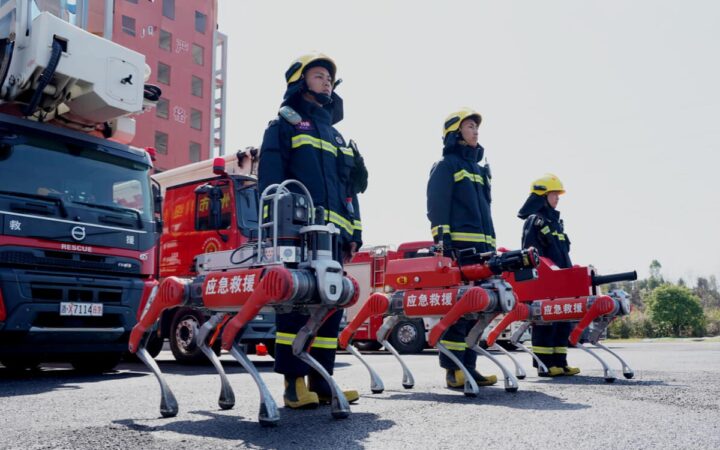
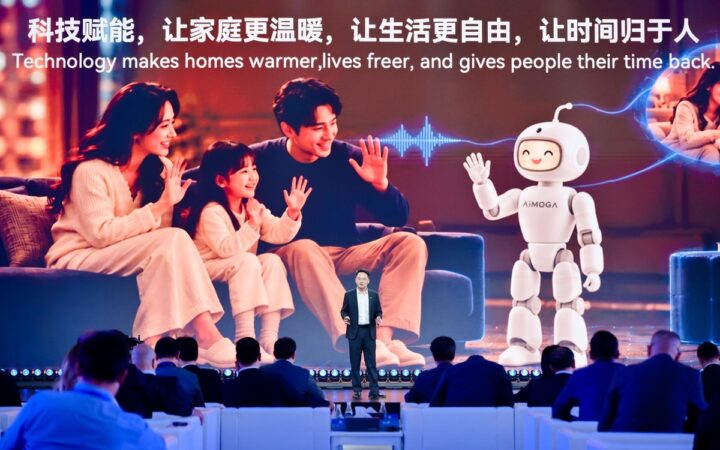
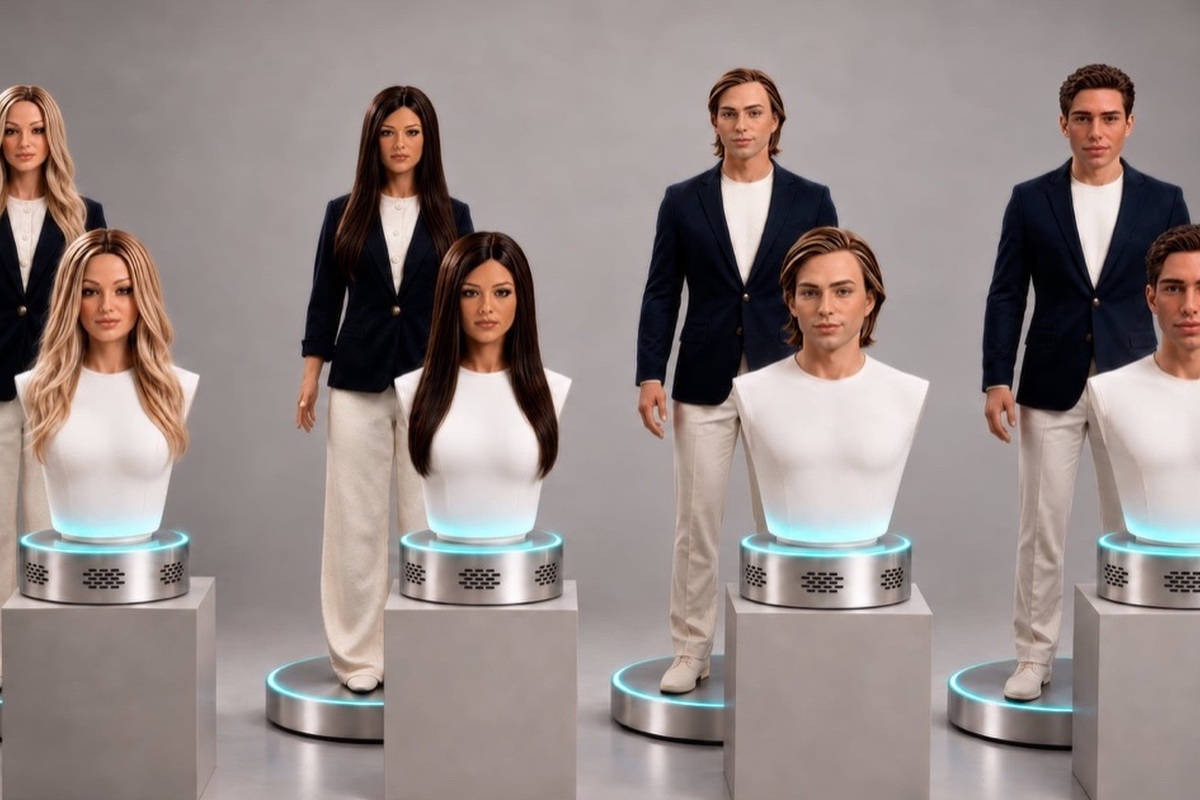
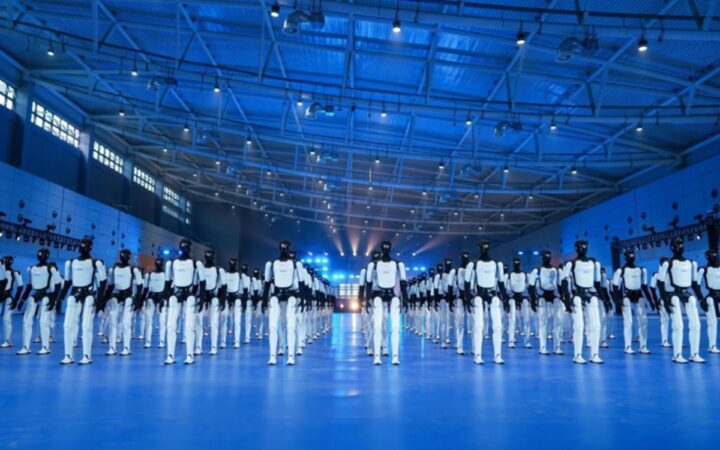
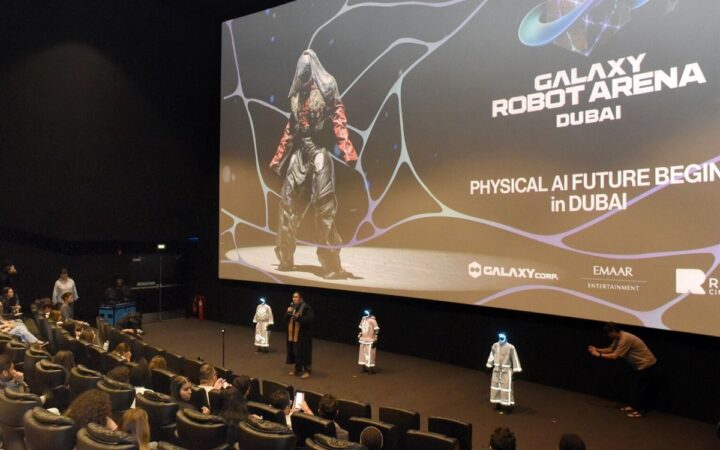
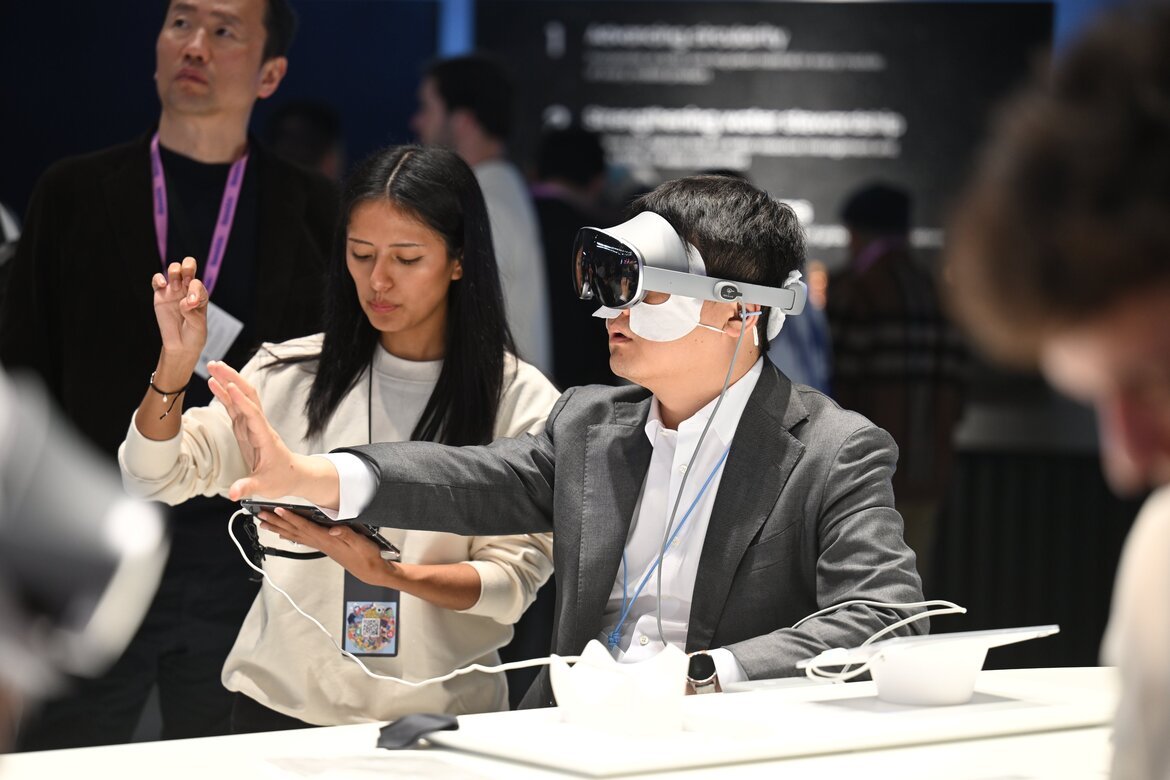
Humanoid robots, AI glasses and AI-integrated smartphones on display at MWC 2026 reflect a broader industry shift toward AI-native hardware design. Photo: MWC

Mobile World Congress 2026 underscored a structural change in the AI industry: artificial intelligence is no longer confined to apps running on smartphones. It is beginning to reshape the hardware itself.

Across the exhibition floor in Barcelona, companies presented humanoid robots controlled entirely by voice, AI glasses positioned as daily computing devices, and smartphones equipped with mechanical camera systems that physically move. The theme was consistent: large AI models are evolving from software layers into defining elements of device architecture.

Smartphone Makers Enter Robotics

Several Chinese smartphone manufacturers used MWC to demonstrate ambitions beyond handsets.

Honor unveiled its first humanoid robot during its global launch event, showcasing AI-driven motion control and multimodal interaction. The demonstration included acrobatic movements and coordinated choreography, signaling technical progress in embodied control systems.

Xiaomi, which introduced its CyberOne humanoid in 2022, did not display a robot on the show floor but reported new milestones. According to the company, its humanoid systems have begun operating in automotive factories, performing tasks such as self-tapping nut installation and material transport. Chairman Lei Jun said large-scale deployment in Xiaomi’s factories could occur within five years.

The move into robotics comes as smartphone growth slows. IDC estimates that China’s smartphone shipments reached roughly 284 million units in 2025, a slight year-on-year decline. For manufacturers with in-house chips, operating systems, and AI models, robotics represents an adjacent growth market built on overlapping technologies.

Lu Weibing, president of Xiaomi’s mobile division, has argued that investments in proprietary silicon, operating systems, and foundational AI are interconnected and transferable to robotics platforms.

Other technology firms are also advancing embodied systems. At MWC, iFlytek demonstrated a humanoid guide robot powered by upgraded multimodal voice interaction, eliminating the need for handheld remote controls. China Mobile presented an unmanned restaurant concept in which embodied robots collaborated on ordering, food preparation, and delivery.

These deployments suggest that large models are increasingly acting as real-time control interfaces rather than conversational add-ons.

AI Glasses and the Search for Monetization

While AI apps saw a surge in daily active users during China’s Spring Festival promotions, retention and revenue models remain uncertain. Several internet companies are now shifting attention toward AI hardware.

Alibaba’s Qwen brand introduced its first AI glasses at MWC, embedding large language models into wearable devices capable of translation, transcription, photography, and object recognition. The devices are positioned for both consumer and professional use.

IDC forecasts that global smart glasses shipments will exceed 23 million units by 2026, including nearly 5 million units in China. Compared with heavily subsidized AI apps, glasses offer a direct hardware revenue stream and clearer monetization path.

iFlytek also debuted lightweight AI glasses weighing approximately 40 grams, emphasizing multimodal recording and translation capabilities.

Redefining the Smartphone Form

AI integration is also altering the smartphone itself.

ZTE showcased AI-powered devices that embed assistants directly into the system layer, enabling cross-application control via natural language. Rather than functioning as standalone apps, these AI agents are integrated into core operating system workflows.

Honor introduced a more experimental concept: a “Robot Phone” featuring a motorized multi-axis gimbal paired with a 200-megapixel sensor. The device can physically rotate and track users during video calls, combining AI vision with mechanical motion.

The common thread across categories is the shift from AI-enabled hardware to AI-defined hardware. Large models are beginning to influence device structure, interaction methods, and mechanical design.

MWC 2026 did not present a single dominant form factor. Instead, it revealed a competitive search for the most natural interface between AI systems and the physical world. Whether that interface proves to be humanoid robots, wearable glasses, or reengineered smartphones remains unsettled. What is clear is that AI is no longer just inside devices. It is beginning to shape what those devices become.

Artificial Intelligence (AI), News, Robots & Robotics, Science & Tech

Tesla Expands Robotaxi Service to Dallas and Houston

Tesla has launched its driverless robotaxi service in Dallas and Houston, extending a program that began in Austin and marking the company’s most significant autonomous ride-hailing expansion to date.

By Daniel Krauss | Edited by Kseniia Klichova Published:
Tesla Expands Robotaxi Service to Dallas and Houston
A driverless electric vehicle operating as part of an autonomous ride-hailing service on urban streets. Photo: Tesla Robotaxi

Tesla has expanded its robotaxi service to Dallas and Houston, the company announced Saturday, extending a program that launched in Austin, Texas, last year. The rollout uses Model Y SUVs operating without a human driver or safety monitor in the front seat, a configuration Tesla has been working toward since first deploying the service in Austin with onboard monitors and restricted operating zones.

The expansion is the most geographically significant step yet in Tesla’s autonomous ride-hailing strategy, adding two of the largest metro areas in the U.S. to a service that also operates in parts of the San Francisco Bay Area.

Operational Details Remain Limited

Tesla announced the launches through its official robotaxi account on X, posting videos of vehicles operating in both cities alongside map images outlining service boundaries. The company did not disclose fleet size, pricing, or availability for general riders. CEO Elon Musk reposted the announcement without adding further detail.

The absence of operational specifics is consistent with how Tesla has managed the rollout to date – expanding the geographic footprint while disclosing limited data on performance, incident rates, or the regulatory approvals underpinning each new market.

The Competitive Context

Tesla’s expansion comes as the robotaxi sector broadly regains momentum. Alphabet’s Waymo has been scaling paid commercial operations in San Francisco, Los Angeles, and Phoenix, with further expansion underway. Amazon’s Zoox is also accelerating deployment of its purpose-built autonomous vehicle platform.

Tesla’s approach differs structurally from its competitors. Waymo and Zoox have relied on vehicles designed or heavily modified for autonomous operation, with extensive sensor arrays including lidar. Tesla uses a camera-based system derived from its Full Self-Driving software, applied to its existing production vehicles. That approach lowers hardware costs and allows rapid fleet scaling, but has drawn scrutiny over its safety validation methodology compared to lidar-dependent systems with longer commercial track records.

Stakes for Tesla’s Broader Strategy

Autonomous vehicles have become central to how Tesla justifies its valuation. Much of the company’s $1.3 trillion market capitalization is tied to expectations that its FSD software and robotaxi service will generate substantial recurring revenue. Musk had previously predicted that Tesla robotaxis would be operating widely across multiple U.S. metro areas by the end of 2025 – a target the company missed.

The Dallas and Houston launches represent tangible progress against that timeline, but the scale of the current deployments relative to the stated ambition remains unclear without fleet size data. How quickly Tesla can move from limited-zone launches to citywide commercial availability will be the metric that matters most for the company’s autonomous transportation thesis.

Agibot Deploys Humanoid Robots in Live Electronics Manufacturing, Eyes 100-Unit Expansion

Agibot has deployed its G2 humanoid robots at a Shanghai electronics manufacturer, reporting throughput of up to 310 units per hour and a success rate above 99%, with plans to scale to 100 robots by Q3 2026.

By Laura Bennett | Edited by Kseniia Klichova Published: Updated:
Agibot Deploys Humanoid Robots in Live Electronics Manufacturing, Eyes 100-Unit Expansion
Humanoid robots operating on an electronics manufacturing line, handling precision loading and unloading tasks at automated testing stations. Photo: AGIBOT

Agibot has deployed its G2 humanoid robots in an active production environment at Longcheer Technology, a Shanghai-based consumer electronics manufacturer. The rollout marks one of the more concrete demonstrations of humanoid robots operating within a live industrial workflow, moving the technology beyond controlled pilots into continuous factory-floor use.

The deployment comes months after Agibot announced the production of its 10,000th humanoid robot in March, a milestone the company described as a turning point in the industrialization of embodied AI.

What the Robots Are Doing

G2 units are stationed at multimedia-integrated testing stations, where they perform precision loading and unloading of devices into testing fixtures. The task demands millimeter-level placement accuracy, consistent cycle timing, and the ability to sort finished and defective units without interruption.

Agibot reports throughput of up to 310 units per hour, with individual cycle times of approximately 19 to 20 seconds per operation and a success rate exceeding 99% in continuous use. Production line integration was completed within 36 hours, and each shift produces approximately 3,000 units. The system has logged over 140 hours of cumulative continuous operation, with downtime losses below 4%.

The robots use multi-modal sensing – combining visual perception and spatial awareness – to identify objects and execute task sequences without custom tooling. The platform supports mixed-model production, meaning it can handle different device configurations on the same line, reducing changeover time.

The Underlying Architecture

Agibot describes its approach as a full-stack ecosystem for embodied intelligence, integrating robot hardware, AI models, and large-scale data infrastructure into a single system designed for continuous learning. Rather than executing fixed instructions, the robots are built to adapt to task and environment variations over time through a combination of simulation-based validation, reinforcement learning, and on-device inference.

“This project shows that embodied AI is no longer experimental. It is a practical, production-ready capability that can operate reliably in real industrial environments and deliver measurable economic value,” said Maoqing Yao, Partner, Senior Vice President, and President of the Embodied Business Unit at Agibot.

Scale and Next Steps

Agibot plans to expand the deployment to 100 robots by Q3 2026 and has identified automotive, semiconductors, and energy as the next target sectors. The company is also developing Genie Sim 3.0, a simulation platform designed to accelerate training of new robot behaviors before physical deployment.

The broader implication of the Longcheer deployment is not the throughput figures alone, but what they suggest about deployment speed. A 36-hour integration timeline and no custom tooling requirement lower the barrier for manufacturers evaluating humanoid robots against conventional fixed automation. Whether those numbers hold across more varied factory environments – with different layouts, device types, and production rhythms – will determine how transferable the model is at scale.

News, Robots & Robotics, Science & Tech

Toyota Unveils CUE7, a Lighter Basketball Robot Built on Hybrid AI Control

Toyota has introduced CUE7, the latest iteration of its basketball-shooting robot, featuring a significantly lighter frame, an inverted two-wheel base, and a hybrid control system combining reinforcement learning with model predictive control.

By Daniel Krauss | Edited by Kseniia Klichova Published:

Toyota has unveiled CUE7, the seventh generation of its basketball-shooting robot platform, on April 12. The system marks the most significant technical upgrade in the CUE series to date, with reductions in weight, a new mobility architecture, and a hybrid AI control system that combines reinforcement learning with model predictive control.

The robot was developed by Toyota’s Frontier Research Center and signals the company’s continued investment in embodied AI research outside its traditional automotive domain.

What Changed in CUE7

The most immediate change is physical. CUE7 weighs 74 kg, down from 120 kg in its predecessor – a reduction of nearly 40%. The wheeled base has been redesigned around an inverted two-wheel structure, replacing the earlier fixed-platform approach and giving the robot greater dynamic stability during motion.

The control architecture is also new. Rather than relying on a single AI method, CUE7 uses a hybrid system that combines reinforcement learning – where the robot improves through repeated trial and feedback – with model predictive control, which uses forward simulation to plan and execute precise movements in real time. The result is a platform capable of more dynamic, fluid motion than earlier versions of the robot.

CUE7 uses vision systems to identify the basket, estimate distance, and calculate shot trajectory. Its upper body makes deliberate postural adjustments to align the release angle before executing the shot with calibrated force.

A Platform Built Over Years

The CUE project began as an internal employee initiative before becoming a dedicated research program. CUE3 set a Guinness World Record in 2019 by completing 2,020 consecutive free throws. CUE6 extended the platform’s range, completing a 24.55-meter shot during a record attempt.

Each iteration has expanded the robot’s operational scope. Early versions were stationary shooters. Later models introduced mobility, ball retrieval, and dribbling. CUE7 advances the underlying control and sensing systems rather than adding new physical tasks, consolidating the platform’s technical foundation.

The Broader Purpose

Toyota uses the CUE series as a testbed for capabilities with direct relevance to general robotics: vision-based target acquisition, real-time trajectory planning, precise force control, and repeatable physical execution under variable conditions. Basketball provides a structured environment in which each of these capabilities can be isolated, measured, and improved.

The platform reflects a wider industry pattern in which automakers are applying their manufacturing and systems engineering expertise to humanoid and semi-humanoid robotics. Toyota has not announced commercial applications for CUE7, and the robot remains a research demonstration. The hybrid control architecture, however, represents a technical approach with potential applicability beyond sport – particularly in industrial and service environments where consistent, adaptive physical performance is required.

Business & Markets, News, Robots & Robotics, Science & Tech

SoftBank Robotics America and Matternet Partner to Scale Autonomous Drone Delivery

SoftBank Robotics America and Matternet have signed a strategic partnership to accelerate autonomous drone delivery deployments across the U.S., targeting healthcare and other industries where speed and reliability are critical.

By Rachel Whitman | Edited by Kseniia Klichova Published:
SoftBank Robotics America and Matternet Partner to Scale Autonomous Drone Delivery
An autonomous delivery drone operating over an urban environment as part of a commercial logistics network. Photo: Matternet

SoftBank Robotics America has signed a strategic partnership with Matternet, a drone delivery company, to accelerate the deployment of autonomous aerial last-mile delivery in the U.S. and other key markets. The deal combines SoftBank Robotics America’s role as a physical AI integrator with Matternet’s FAA-certified drone platform, targeting enterprise operators in healthcare, commerce, and industrial logistics.

Last-mile delivery continues to face structural pressure from labor shortages, rising costs, and urban congestion. Autonomous aerial delivery is emerging as a cost-competitive alternative to traditional ground-based methods, particularly at scale.

What Each Company Brings

Matternet has spent more than a decade building commercial drone delivery infrastructure. The company is the first in the industry to achieve both FAA Type Certification and Production Certification, and its technology has enabled tens of thousands of commercial flights in urban and suburban environments across the U.S. and Europe. Its M2 drone and software platform are already deployed through partnerships with UPS and Ameriflight.

SoftBank Robotics America operates as an integrator – its role is to take proven autonomous technologies and embed them into real-world operational environments at scale. The company works across senior living, hospitality, aviation, facilities management, and commercial cleaning, and has built a track record of translating robotics pilots into production deployments.

Brady Watkins, President and GM of SoftBank Robotics America, said:

“The challenge is not the technology, but rather operationalizing the technology such that it produces consistent measurable outcomes.”

Healthcare as the Initial Focus

The partnership’s initial emphasis is on healthcare, where delivery speed and reliability directly affect patient outcomes. Medical supplies, lab samples, and pharmaceuticals represent a natural fit for autonomous aerial delivery – time-sensitive, high-value, and moving between fixed points such as hospitals, labs, and pharmacies.

Katya Akudovich, Vice President of New Ventures at SoftBank Robotics America, said:

“By combining Matternet’s technology with our global commercialization capability and experience, we are creating a powerful partnership to bring the benefits of autonomous drone delivery into day-to-day operations for vertical markets such as healthcare where speed and reliability are mission critical.”

Scaling the Infrastructure

Andreas Raptopoulos, founder and CEO of Matternet, framed the partnership as part of a broader shift toward autonomous logistics networks. He said:

“Our partnership with SoftBank Robotics America will accelerate deployment of our technology and help build the autonomous delivery infrastructure for healthcare, commerce, and industry.”

The partnership does not introduce new drone hardware. Instead, it focuses on the integration layer – the processes, support structures, and operational frameworks needed to move autonomous drone delivery from isolated pilots to consistent, large-scale networks. That focus on operationalization rather than invention reflects where the autonomous delivery industry is broadly: the technology is sufficiently mature, but deployment at enterprise scale remains the central challenge. The companies did not disclose financial terms of the agreement.

Business & Markets, News, Robots & Robotics

Accenture Invests in General Robotics to Build a Unified AI Layer for Industrial Robots

Accenture Ventures has invested in General Robotics, whose GRID platform connects robots from multiple manufacturers under a single AI intelligence layer, targeting scaled automation in factories and warehouses.

By Daniel Krauss | Edited by Kseniia Klichova Published:
Accenture Invests in General Robotics to Build a Unified AI Layer for Industrial Robots
Industrial robots operating on a factory floor managed by a unified AI orchestration platform. Photo: Accenture

Accenture has invested in General Robotics, a startup building a unified AI intelligence platform for industrial robots, through its Accenture Ventures arm. The two companies will also partner to help manufacturers, logistics operators, and other asset-intensive industries deploy autonomous robotic systems at scale. Financial terms were not disclosed.

The deal reflects a wider strategic push by Accenture to move beyond software consulting and into the physical infrastructure of AI-driven automation.

The Problem GRID Is Designed to Solve

Most factories operate robots from multiple manufacturers, each running its own software stack, programming language, and integration requirements. Scaling automation across a multi-vendor fleet is expensive and slow, and the cost has historically limited full deployment to only the largest industrial operators.

General Robotics addresses this with GRID, a platform that sits above the hardware layer and connects robots from more than 40 manufacturers – including FANUC, Flexiv, Ghost Robotics, and Galaxea – under a single orchestration framework. Rather than programming each machine individually, GRID offers modular, reusable AI skills deployable across different hardware through cloud-based orchestration, simulation-based training, and full data sovereignty for enterprise customers.

“While robotics hardware and AI models advance at a rapid pace, real-world impact is constrained by the lack of a unified intelligence infrastructure,” said Ashish Kapoor, CEO and co-founder of General Robotics. Kapoor previously served as general manager of autonomous systems and robotics research at Microsoft, where he created AirSim, a widely used open-source simulator for training autonomous vehicles and drones.

Accenture’s Physical AI Strategy

The investment extends an infrastructure position Accenture has been building for over a year. The company launched its Physical AI Orchestrator in October 2025, a system that uses NVIDIA Omniverse libraries and the NVIDIA Mega Blueprint to coordinate robotic and autonomous systems in industrial settings. GRID integrates NVIDIA Isaac Sim, allowing manufacturers to train robotic AI skills in digital twins before deploying them on physical hardware – a capability that aligns directly with Accenture’s existing toolchain.

Where Accenture’s Physical AI Orchestrator handles coordination at the facility level, GRID handles robot-level AI – the skills, perception, and decision-making that individual machines need to perform complex tasks autonomously. Together, the two layers form a more complete stack for enterprise robotics deployment.

Prior investments in Sanctuary AI and a partnership with Schaeffler for industrial humanoid robots in automotive manufacturing point to a consistent thesis: Accenture is positioning itself as the primary integrator for physical AI at the enterprise level.

Scale and Market Context

“Piloting robotic systems takes too long, is expensive, and often not scalable and repeatable across a network of facilities,” said Prasad Satyavolu, Accenture’s global lead for manufacturing and operations. The stated goal of the partnership is to compress that deployment cycle by delivering an enterprise-grade robotics intelligence and orchestration layer that clients can apply across multiple facilities.

The physical AI market is projected to grow from roughly $1.5 billion in 2026 to more than $15 billion by 2032. A Deloitte survey found that 58% of global business leaders are already using some form of physical AI, though scaled deployment remains concentrated in automotive, electronics, and logistics. General Robotics remains an early-stage company without publicly reported revenue figures, and the broader challenge – persuading manufacturers to adopt an independent orchestration layer over proprietary vendor platforms – will require demonstrated performance on working factory floors, not just in simulation.

Artificial Intelligence (AI), Business & Markets, News, Startups & Venture