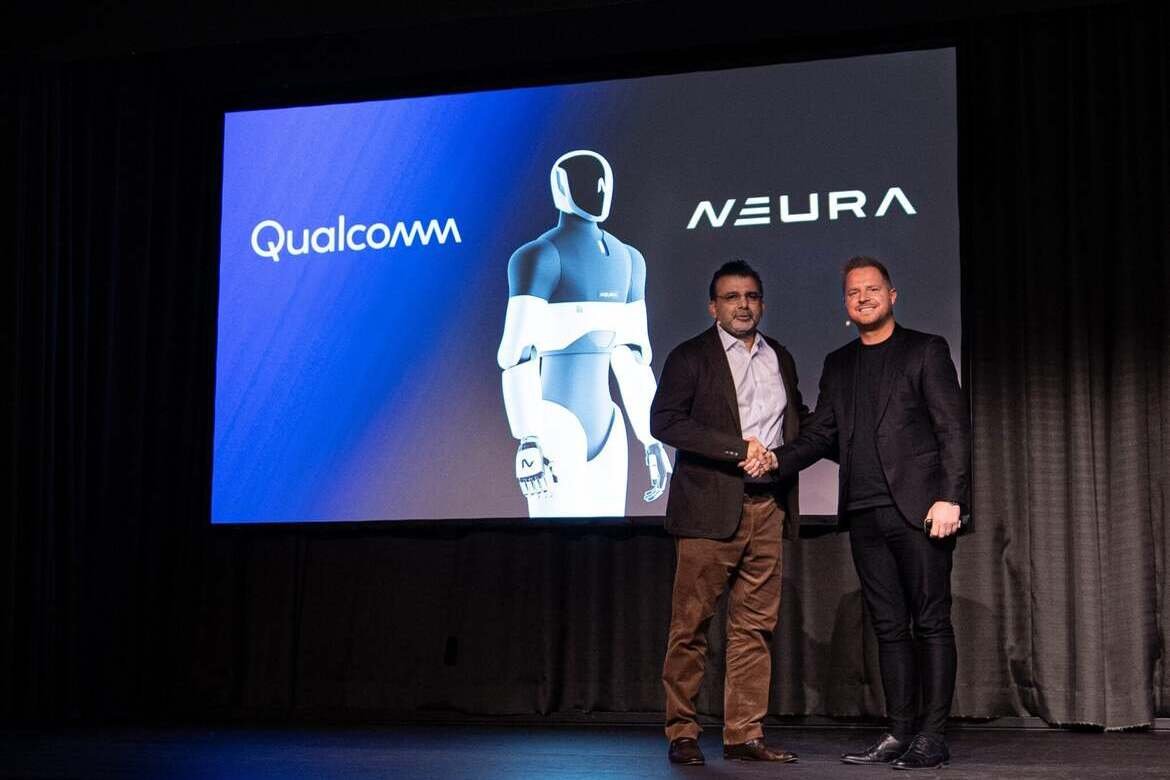

The race to build general-purpose robots capable of operating alongside humans is increasingly becoming a partnership-driven effort. Semiconductor company Qualcomm and German robotics developer NEURA Robotics have announced a long-term strategic collaboration aimed at accelerating the development of physical AI and cognitive robotics systems.
The partnership combines Qualcomm’s edge AI computing platforms with NEURA’s full-stack robotics hardware and embodied AI software, with the goal of enabling scalable robots that can operate safely in industrial, service, and household environments.
The announcement reflects a growing convergence between semiconductor companies and robotics developers as the industry works to move physical AI from experimental prototypes to commercially deployable machines.
Building the “Brain and Nervous System” of Robots
At the center of the collaboration is a joint effort to develop what the companies describe as a “brain plus nervous system” architecture for robots.
In this framework, high-level cognitive functions such as perception, reasoning, and planning operate alongside real-time control systems responsible for motion and interaction with the physical world.
Qualcomm’s role in the partnership focuses on providing the computing layer. Its Dragonwing robotics processors and edge AI platforms are designed to handle demanding workloads locally on robotic systems, allowing machines to make decisions instantly without relying on cloud connectivity.
NEURA Robotics will integrate those processors into its robotics platforms and embodied AI software stack, which powers a range of robotic systems including industrial manipulators, mobile robots, service robots, and humanoid machines.
The companies say the goal is to create standardized reference architectures that simplify how robotics developers design and deploy intelligent machines.
Moving Robotics from Research to Deployment
While robotics research has advanced rapidly in recent years, many systems remain difficult to scale commercially due to fragmented hardware and software ecosystems.
By combining computing platforms with standardized robotics architectures, Qualcomm and NEURA say they hope to accelerate commercialization of robots capable of operating reliably in real-world environments.
Robotics presents one of the most demanding edge AI workloads. Unlike many cloud-based AI applications, robots must process sensory data and make decisions instantly to ensure safe interaction with people and objects.
Nakul Duggal, executive vice president and general manager for automotive, industrial, and embedded IoT at Qualcomm Technologies, said the collaboration reflects a broader shift toward bringing intelligence directly onto devices.
“Robotics represents one of the most demanding edge AI use cases, where decisions must happen instantly, reliably, and locally,” Duggal said.
The companies plan to develop deployment standards that allow AI workloads to be updated and validated across fleets of robots while maintaining the deterministic performance required for safety-critical environments.
Creating a Shared Robotics Ecosystem
Another component of the collaboration is a developer ecosystem designed to encourage third-party robotics applications.
NEURA’s cloud platform, called Neuraverse, will serve as an environment for training, simulation, and lifecycle management of robotic systems running on Qualcomm’s processors.
The platform is designed to connect robots into a shared network where improvements learned by one system can be distributed across others.
In theory, such architectures could allow fleets of robots to continuously improve their capabilities through shared data and software updates, accelerating development cycles for robotics companies.
The partners also aim to create a marketplace for robotics applications, enabling developers to build software once and deploy it across multiple robot platforms.
What the Partnership Signals for the Robotics Industry
The collaboration highlights a broader trend in the robotics sector: the increasing importance of computing infrastructure and ecosystem development.
For decades, robotics progress was largely driven by advances in mechanical engineering and control systems. Today, artificial intelligence and high-performance computing are becoming equally central to how robots perceive their surroundings, make decisions, and interact with humans.
As a result, chipmakers are beginning to play a more direct role in shaping the robotics industry.
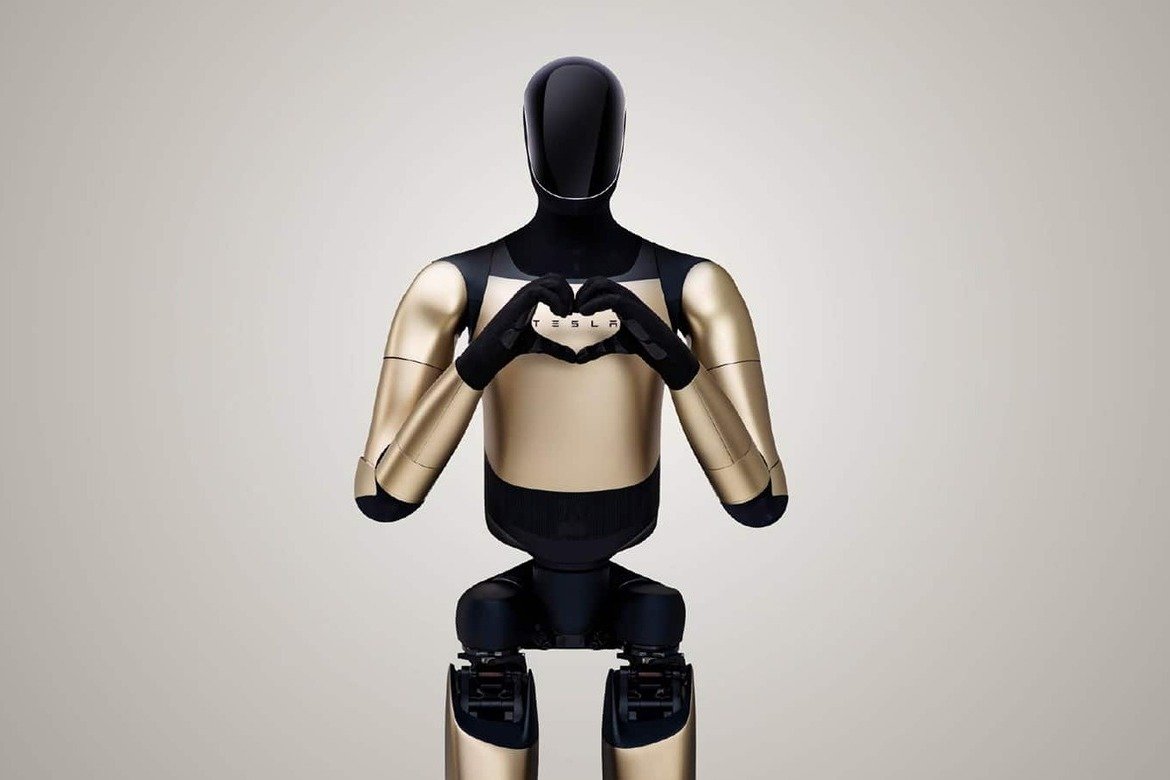
For NEURA Robotics, which is pursuing the development of general-purpose cognitive robots including humanoid systems, access to scalable computing platforms could accelerate its path to commercialization.
For Qualcomm, the partnership represents an opportunity to extend its edge AI and connectivity technologies into what many consider one of the next major computing platforms: intelligent machines operating in the physical world.
If successful, collaborations of this type could help define the architecture behind the next generation of robots, linking AI computing, software ecosystems, and physical machines into unified platforms.