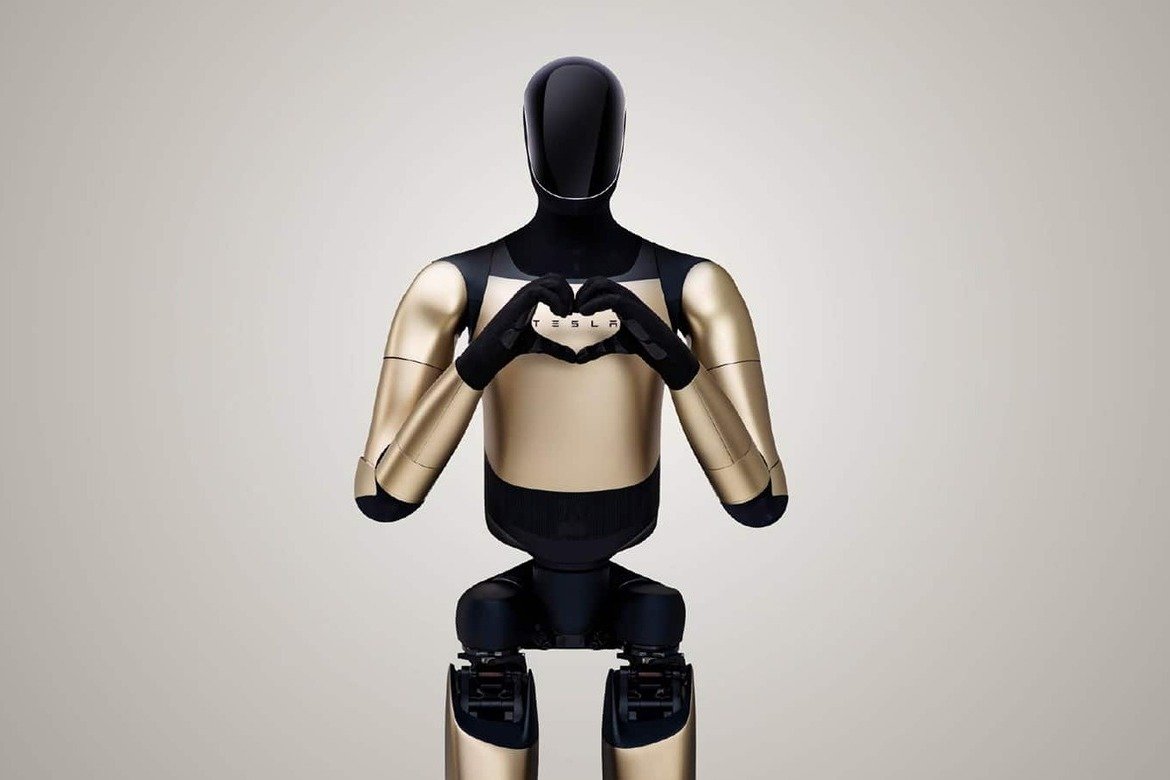

Tesla has offered a new glimpse into the next stage of development for its humanoid robot Optimus, teasing a redesigned set of robotic hands that appear significantly more human-like than previous prototypes.
The teaser image, shared by Tesla’s AI team on Chinese social media platform Weibo, shows a pair of robotic hands with finger proportions and articulation that closely resemble those of a human hand. The image quickly circulated across the robotics community, fueling speculation that the company is preparing a new iteration of the robot’s manipulation system.
Although Tesla has not released technical specifications, the design suggests the company is focusing heavily on improving dexterity – widely considered one of the most difficult challenges in humanoid robotics.
Why Robotic Hands Matter
In robotics research, the ability to manipulate objects with human-level precision remains a major technical hurdle.
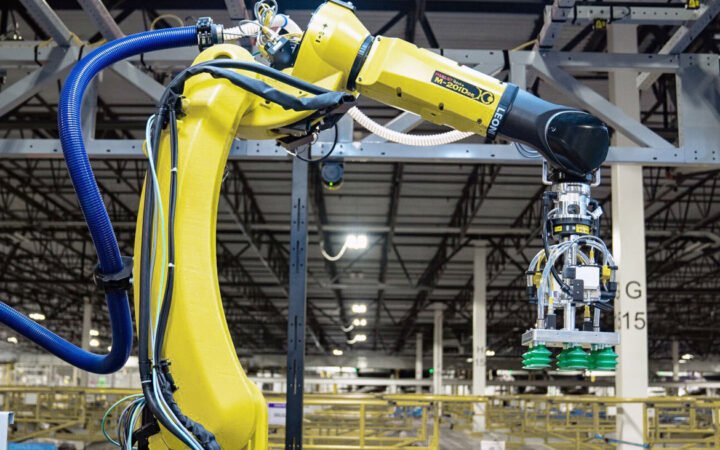
Industrial robots have long been capable of gripping and moving objects, but most rely on specialized end-effectors designed for specific tasks. Humanoid robots, by contrast, must interact with a wide range of tools, devices, and environments originally designed for human hands.
This requirement makes hand design one of the most complex engineering problems in humanoid robotics. Achieving fine motor control requires a combination of compact actuators, high-resolution sensors, and sophisticated control software capable of coordinating dozens of joints simultaneously.
If Optimus is intended to perform tasks in factories, warehouses, or eventually homes, improved hand dexterity will likely be essential.
The teaser image suggests Tesla may be moving toward a more anatomically inspired design, potentially enabling the robot to handle objects with greater precision.
A Key Step Toward Tesla’s Robotics Ambitions
Elon Musk has repeatedly described Optimus as one of Tesla’s most important long-term initiatives, potentially exceeding the impact of the company’s electric vehicles.
Musk has suggested that humanoid robots could eventually perform a wide range of tasks across industries, from manufacturing and logistics to household assistance.
In public comments, he has also framed the project in more ambitious terms, describing Optimus as a potential “Von Neumann machine” – a theoretical self-replicating system capable of building copies of itself using available materials.
While such concepts remain far from practical reality, they reflect the scale of Musk’s long-term vision for the project.
For now, however, Tesla’s progress will likely depend on solving more immediate engineering problems.
Among those, robotic hands remain one of the most critical components determining whether humanoid robots can move beyond demonstrations and into real-world work environments.
The new teaser suggests Tesla is continuing to refine that capability as it works toward the next generation of its Optimus platform.