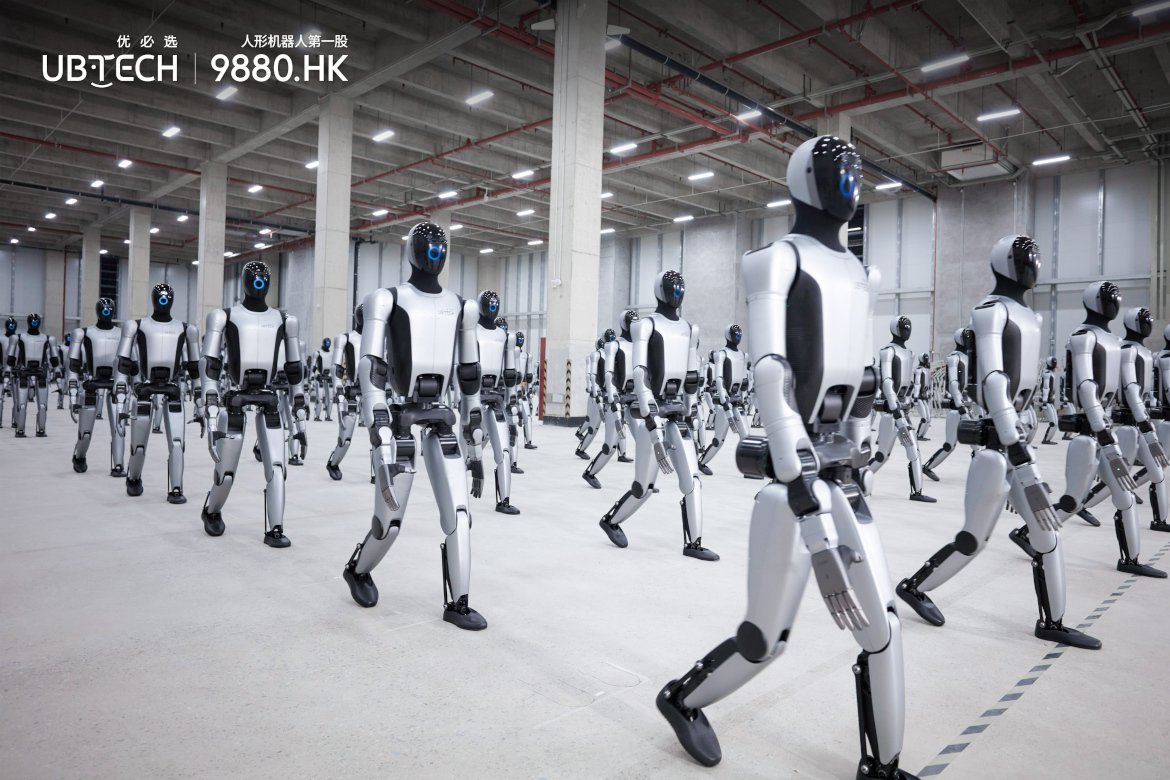

Airbus has taken a significant step toward automation in aircraft production by ordering a six-figure number of humanoid robots from UBTech Robotics. The purchase represents one of the largest commercial commitments yet for humanoid robots in heavy manufacturing and highlights how physical AI is beginning to move from pilot projects into real industrial workflows.
Meet the first humanoid robotic worker at SANY RE!
Watch UBTECH Walker S2 in action at China's first 5G-enabled wind power smart factory, where every move is a step toward a cleaner, more automated tomorrow.
From precise sorting to adaptive manipulation, this is the new face of… pic.twitter.com/DakT8oXWmJ
— UBTECH Robotics (@UBTECHRobotics) January 20, 2026
The robots are expected to be deployed across Airbus facilities to support repetitive and physically demanding tasks involved in aircraft assembly. While Airbus has long used industrial automation, the move toward humanoid robots reflects a shift toward more flexible systems that can operate in environments originally designed for human workers.
UBTech’s shares surged following reports of the deal, underlining growing investor confidence that humanoid robotics is transitioning from experimentation to scalable industrial use.
From Industrial Automation to Humanoid Labor
Unlike traditional industrial robots that are fixed in place and optimized for a narrow set of motions, humanoid robots are designed to navigate complex workspaces, manipulate tools, and interact with equipment built for human hands. For aerospace manufacturing, where production lines involve tight spaces, variable tasks, and frequent reconfiguration, this flexibility is increasingly valuable.
Meet UBTECH New-Gen of #Industrial #Humanoid #Robot——#WalkerS2 makes industry-leading breakthroughs!
• Building the dual-loop AI system: #BrainNet 2.0 & Co-Agent
• 3mins autonomous battery swapping & 24/7 continuous operation
• "Human-eye" Binocular Stereo Vision Perception pic.twitter.com/uPhxoYP5w0— UBTECH Robotics (@UBTECHRobotics) July 23, 2025
Airbus has been evaluating humanoid robots as a way to address labor shortages, improve ergonomics, and increase consistency in assembly operations. The robots are expected to assist with material handling, inspection, and other repetitive processes that can strain human workers over long shifts.
The order places Airbus among a small but growing group of global manufacturers experimenting with humanoid robotics at meaningful scale, alongside automotive and logistics operators.
UBTech’s Industrial Push
UBTech, best known for its humanoid robot platforms designed for research and service applications, has been expanding aggressively into industrial markets. The company’s latest humanoid systems are built to operate autonomously in factory environments, combining computer vision, motion planning, and AI-driven manipulation.
The Airbus deal signals growing confidence in UBTech’s ability to meet industrial reliability and safety requirements, which remain a major barrier for humanoid robots operating alongside human workers. Aerospace manufacturing, in particular, demands high precision, repeatability, and compliance with strict safety standards.
For UBTech, the agreement represents a major validation of its strategy to position humanoid robots as a practical workforce augmentation tool rather than a futuristic novelty.
A Broader Shift Toward Physical AI
The Airbus order reflects a wider trend across global manufacturing, where companies are exploring physical AI systems that can reason, adapt, and act in real-world environments. Unlike conventional automation, humanoid robots promise to reduce the need for costly factory redesigns by fitting into existing workflows.
As labor markets tighten and production complexity increases, manufacturers are increasingly willing to test new forms of automation that offer both flexibility and scalability. Humanoid robots, while still early in their adoption curve, are emerging as a potential bridge between human labor and fully automated systems.
For Airbus, the deployment is expected to begin incrementally, with performance data guiding future expansion. If successful, humanoid robots could become a permanent fixture on aircraft assembly lines, reshaping how aerospace manufacturing is performed.
The deal underscores a turning point for the humanoid robotics industry: major industrial players are no longer just experimenting. They are beginning to place real orders.