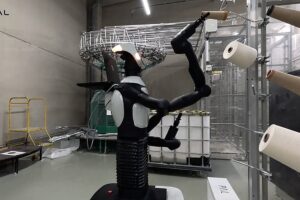
Hybrid Robots Market Forecast to Reach $10.03 Billion by 2030
A hybrid robotics forecast projects $10.03 billion by 2030, spanning hardware, software and services as manufacturers pursue more flexible automation.
Browse the RobotsBeat archives for robotics news, AI robotics updates, automation trends, product launches, company coverage, funding stories, policy developments, and practical industry analysis organized by year and month. This archive helps readers revisit older RobotsBeat coverage across humanoid robots, drones, industrial robots, service robots, robot hardware, autonomy, sensors, safety, deployment, and the companies shaping the robotics industry.
A hybrid robotics forecast projects $10.03 billion by 2030, spanning hardware, software and services as manufacturers pursue more flexible automation.
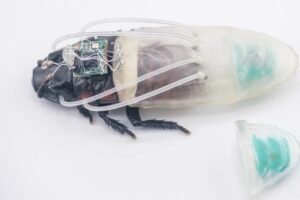
Scientists at Nanyang Technological University Singapore have developed a 3D-printed diving suit that allows remote-controlled cyborg cockroaches to survive underwater for up to three hours, following their deployment during Operation Lionheart after the March 2025 Myanmar earthquake.
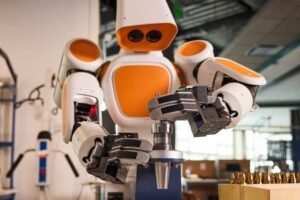
Walden Robotics has launched from stealth with $300 million at a $1.1 billion valuation, co-led by Toyota and Deviation Capital, with robots already performing real production work at a Toyota North American plant since February 2026, powered by Large Behavior Models developed at Toyota Research Institute.
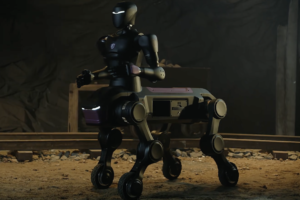
Shanghai-based Run Robotics has unveiled a centaur-configuration robot combining a humanoid upper body with a wheeled-legged lower body, capable of carrying 100-120 kg continuously and up to 210 kg statically, designed for nuclear plants, steel mills, oil fields, mining, and emergency response.

UBTECH’s UWORLD U1 companion humanoid has accumulated 13,000 pre-orders, but the critical test arrives in mid-July when final payments are due from pre-order customers, as the company navigates a 35% year-to-date stock decline, a net loss of 703 million yuan in 2025, and intensifying competition from Unitree and LimX.
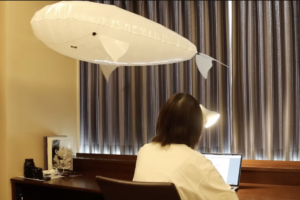
Researchers at Keio University and MIT Media Lab have developed a soft floating robot that uses helium buoyancy and flapping fins to hover silently indoors, establishing the first systematic design framework for soft floating robots as residential companions.

LimX Dynamics has raised $200 million in a pre-IPO round valuing the company at $2.21 billion, with founder Will Zhang declaring listing a strategic necessity as China’s humanoid sector investment surpassed $6.95 billion in Q2 2026 alone.
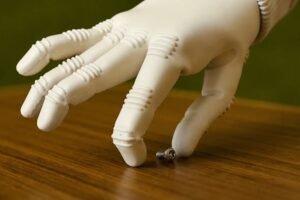
1X Technologies has unveiled NEO Hands, a 25-degree-of-freedom tendon-driven robotic hand system for its NEO home humanoid, combining distributed tactile sensing, AI-assisted manipulation, and fast actuation loops to enable dexterous handling of everyday objects in residential environments.
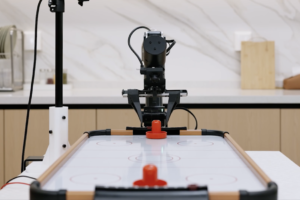
Robbyant, an embodied AI company within Ant Group, has unveiled LingBot-VA 2.0, an autoregressive world model built from scratch for physical-world robot control rather than adapted from digital video generation, achieving 150 Hz closed-loop control on a single GPU and adapting to new tasks with as few as 20 demonstrations.
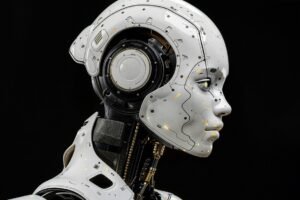
Researchers have published ThorArena, a simulation-based benchmark that evaluates humanoid robots under realistic physical forces by replaying human interaction data against virtual robots, revealing substantial performance differences that conventional empty-space benchmarks conceal.