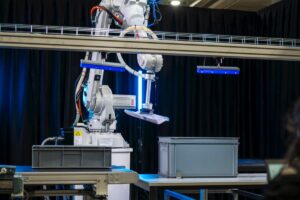
Watch: ABB Adds Physical AI Robot Trainer to Fashion Logistics
ABB’s upgraded Fashion Inductor combines vision models, retraining and a digital twin to simplify deployment of robotic fashion-logistics cells.
Browse the RobotsBeat archives for robotics news, AI robotics updates, automation trends, product launches, company coverage, funding stories, policy developments, and practical industry analysis organized by year and month. This archive helps readers revisit older RobotsBeat coverage across humanoid robots, drones, industrial robots, service robots, robot hardware, autonomy, sensors, safety, deployment, and the companies shaping the robotics industry.
ABB’s upgraded Fashion Inductor combines vision models, retraining and a digital twin to simplify deployment of robotic fashion-logistics cells.
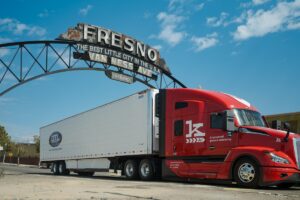
DTL Transport will deploy Kodiak’s autonomous driving system in 75 carrier-owned trucks under a per-mile model, starting with planned Sun Belt routes.

Creandum and Union Square Ventures back Machenta’s simulation-trained robot model, which aims to perform new tasks after a single demonstration.
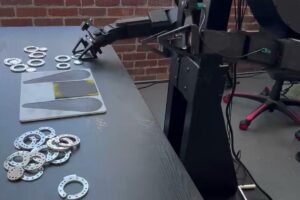
Physical Intelligence is reportedly discussing new financing at about a $20 billion valuation as its Pi API beta opens robot models to developers.
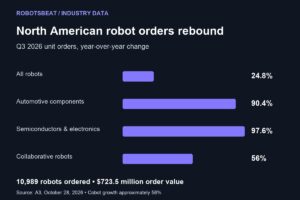
A3 reports 10,989 robot orders worth $723.5 million in Q3, with automotive suppliers, electronics and collaborative robots posting strong growth.
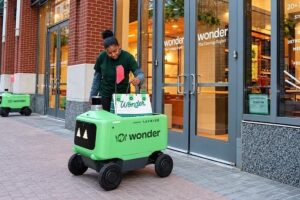
Wonder is expanding Avride robot deliveries through Grubhub in Jersey City, Hoboken, Arlington County and Philadelphia, adding dozens of participating merchants.
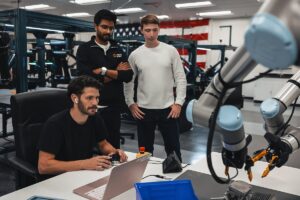
Marlinspike Partners leads Foundry Robotics’ $100 million Series A as the startup expands a 130,000-square-foot Emeryville factory for AI-powered hardware assembly.
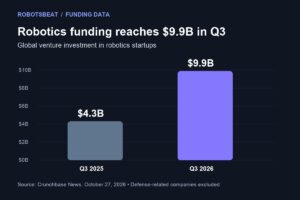
Crunchbase reports $9.9 billion in Q3 robotics funding, with investment up around 185% across January–September as China and the United States lead.
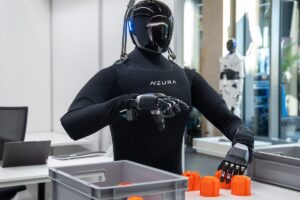
NEURA’s Munich RoboGym puts manufacturing expertise to work as training data, while a new report highlights China’s much larger robot-learning infrastructure.
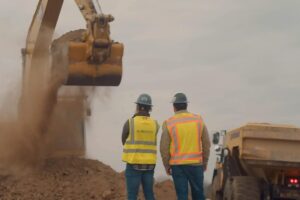
Bedrock Robotics aims to put a triple-digit autonomous machine fleet to work in 2027 as it expands field operations and explores new heavy-equipment applications.