Key Notes
- Bloomberg reports that Physical Intelligence is discussing financing at about a $20 billion valuation, with no completed round announced.
- The company’s Pi API beta lets developers adapt robot models using demonstration data, managed fine-tuning and hosted inference.
- The reported valuation concerns investor expectations, while repeatable customer deployments remain a separate measure of commercial progress.
Physical Intelligence is reportedly discussing a financing round at a valuation of about $20 billion, putting the robot-model developer at the center of another major physical AI investment story.
Bloomberg reported the talks on October 27. The financing has not been announced as completed, and the reported valuation should be treated as a negotiation figure rather than a closed transaction.
The Product Is a Model Layer for Robots
Physical Intelligence develops AI models intended to control different robot platforms. Its Pi API beta, introduced on October 13, gives developers a way to upload demonstration data, fine-tune models on managed infrastructure and use hosted inference.
That approach separates the intelligence layer from the hardware business. A customer can build a particular machine or application while adapting a shared model, rather than creating the entire learning system from the beginning.
RobotsBeat’s API coverage examined that developer offering. The funding report concerns how investors may price the company, while the API provides a concrete route for developers to test its technology.
Adapting a Model Still Requires Real Work
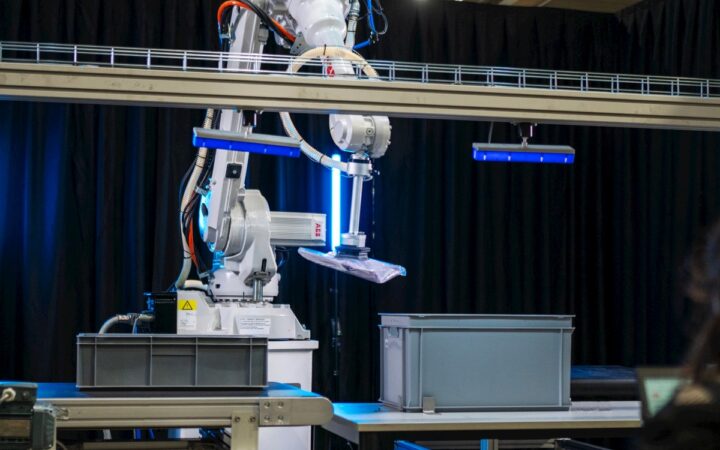
The company’s published API examples span tasks such as food handling, industrial manipulation and heavy equipment. Physical Intelligence describes an iterative process: collect demonstrations, train, test on the robot and use failures to decide what to collect next.
Access to a foundation model does not remove the application developer’s responsibilities. A system still needs suitable grippers, sensors, task definitions and recovery behavior when the real environment differs from the demonstrations.
Cloud-hosted inference adds another design choice. It can centralize computing and model updates, while making connectivity and response timing part of the deployment requirements. Physical Intelligence acknowledges network challenges in some of its early applications.
A Valuation Is Not a Deployment Metric
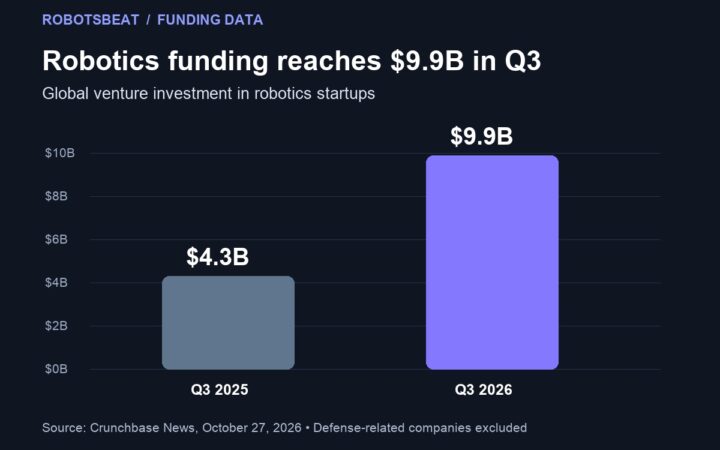
A high valuation reflects expectations about future scale and bargaining between investors and a company. It does not establish a robot’s success rate, customer retention or the economics of a particular installation.
For robot-model suppliers, the longer-term commercial test is whether customers can adapt the software to useful tasks repeatedly, with manageable data collection and engineering effort.
Our report on Eka’s financing offers a related example of capital flowing into robot intelligence. The technical approaches and business models differ, so headline valuations should not be treated as a direct ranking of capability.
What Comes Next
A company announcement would establish whether the financing closes and on what terms. Until then, the reported talks belong in the category of prospective funding, while the developer beta remains the relevant public product milestone.
The combination highlights the gap between investor expectations and the operating evidence robotics customers need. For Physical Intelligence, expanding useful applications will be as important as securing additional capital.
Disclaimer: RobotsBeat is an independent media brand owned and operated by NuvexMedia LLC, publishing news, research, and insights on artificial intelligence, emerging technologies, automation, and related industries. NuvexMedia LLC invests in and collaborates with companies across the AI, Robotics, technology, software, and digital innovation sectors. These relationships do not influence RobotsBeat's editorial coverage, and the publication maintains full editorial independence to provide accurate, timely, and objective information. © 2026 NuvexMedia LLC. All rights reserved. This content is for informational purposes only and should not be considered legal, tax, investment, financial, or other professional advice.