Key Notes
- Rendezvous Robotics announced a $20 million seed round co-led by MaC Venture Capital and Toyota Ventures to advance autonomous spacecraft assembly.
- A planned 2028 free-space mission will involve seven independent modules, while a separate 32-tile ISS experiment is scheduled for December 2026.
- The technology could enable larger and reconfigurable spacecraft, but the planned missions should not be described as completed commercial deployments.
Rendezvous Robotics has raised $20 million in seed funding to develop spacecraft made from modules that maneuver, connect and reconfigure themselves in orbit. MaC Venture Capital and Toyota Ventures co-led the round announced on October 28.
The Colorado company plans a free-space demonstration in 2028 using seven independent spacecraft tiles. The mission is intended to show autonomous assembly followed by separation and reassembly into another configuration.
Building Beyond the Rocket Fairing
The company’s announcement presents modular assembly as a way to relax a familiar spacecraft-design constraint: the complete structure must normally fit inside a launch vehicle.
Launching smaller components and joining them later could make room for larger power-generation surfaces, antennas or other structures. Reconfiguration could also let an operator change the physical arrangement after launch, rather than treating the spacecraft’s shape as fixed.
These are intended capabilities. The planned 2028 demonstration will test the architecture; it is not evidence that large modular spacecraft are already operating commercially.
Two Demonstrations at Different Scales
Rendezvous says its free-flying mission has a reserved rideshare slot with launch no earlier than April 2028. A separate TESSERAE experiment is scheduled for the International Space Station in December 2026, using 32 tiles in a controlled microgravity environment.
The two experiments should not be conflated. The ISS work tests self-assembly under controlled conditions, while the later mission involves independently deployed spacecraft joining in free space.
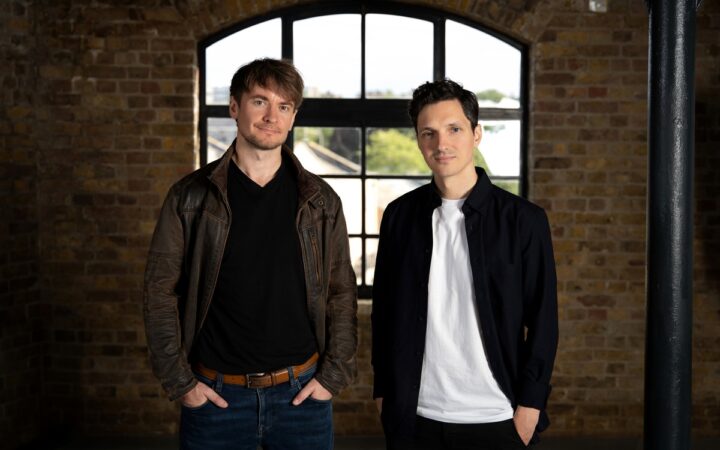
Earlier TESSERAE technology emerged from research led by co-founder Ariel Ekblaw at MIT and continued through the Aurelia Institute. CEO Joe Landon and the company are now developing larger independently operating modules.
Autonomy Is Part of the Structure
A modular spacecraft has to solve more than a mechanical connection problem. Separate components need to locate one another, align correctly and establish a connection without damaging neighboring hardware.
The system also needs to understand whether an attachment has succeeded and what to do if a component becomes unavailable. That makes sensing, control and recovery behavior central to the overall design.
RobotsBeat has covered NASA’s humanoid research, which considers robots as tools for future missions. Rendezvous takes another route: the spacecraft modules themselves provide the movement and assembly behavior.
Funding Supports the Next Flight Tests
The company says the round will support spacecraft development, demonstrations and team expansion. It lists the University of Michigan Endowment, Astera and Industrious Ventures among the participants alongside existing backers.
Our discussion of robotic space missions explains some of the broader reasons to automate work beyond Earth. In-orbit assembly addresses a specific engineering challenge within that opportunity, with its own requirements for reliability and mission assurance.
The upcoming demonstrations provide concrete checkpoints. Successful controlled self-assembly would support the research program, while autonomous joining and reconfiguration in free space would establish a different level of capability for future spacecraft designs.
Disclaimer: RobotsBeat is an independent media brand owned and operated by NuvexMedia LLC, publishing news, research, and insights on artificial intelligence, emerging technologies, automation, and related industries. NuvexMedia LLC invests in and collaborates with companies across the AI, Robotics, technology, software, and digital innovation sectors. These relationships do not influence RobotsBeat's editorial coverage, and the publication maintains full editorial independence to provide accurate, timely, and objective information. © 2026 NuvexMedia LLC. All rights reserved. This content is for informational purposes only and should not be considered legal, tax, investment, financial, or other professional advice.