Key Notes
- Xpanner’s X1 Piling R6 combines an Everstar crawler base with automated navigation, alignment and hammering for solar and battery storage foundations.
- A single operator guides the machine to a row and supervises its work remotely, while the connected dashboard records each pile’s position, depth and vertical alignment.
- Contractors can buy or rent the equipment and license active automation software monthly, with pre-drilling and ground-screw functions described as future capabilities.
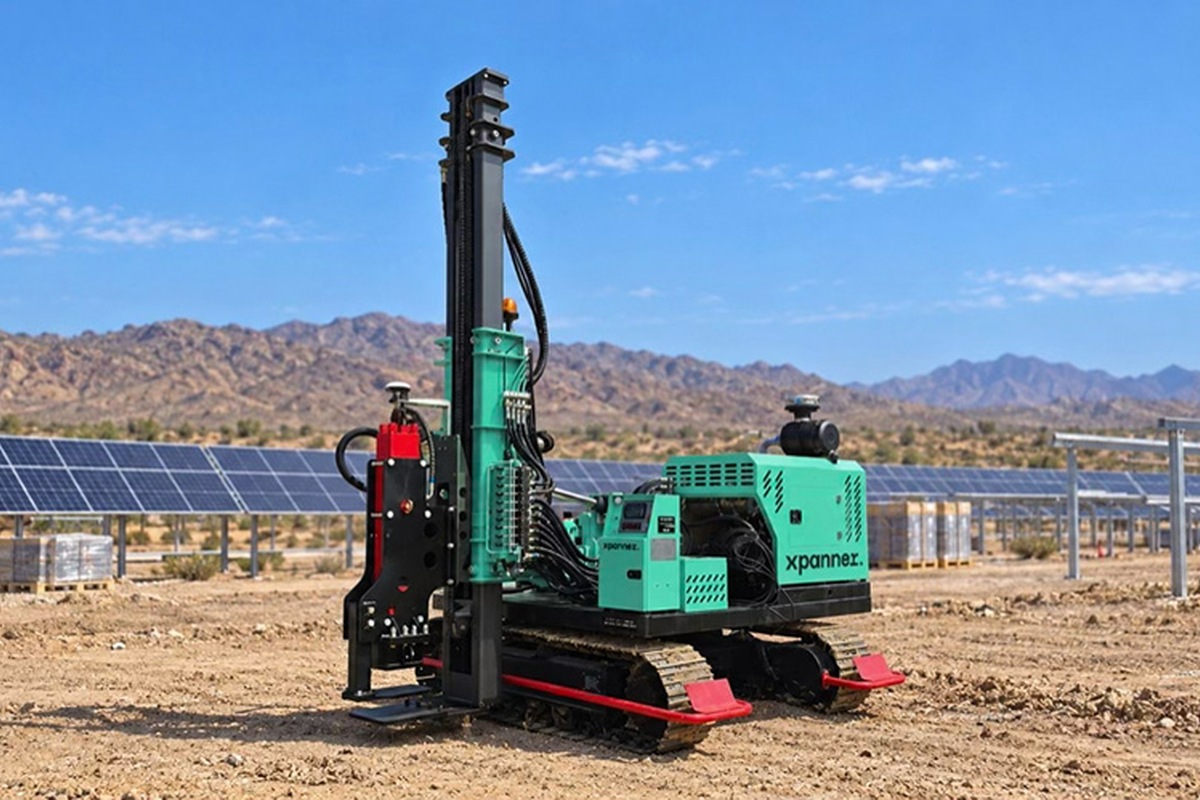
Xpanner has launched the X1 Piling R6, an automated pile-driving system designed to install foundations for utility-scale solar farms and battery energy storage projects. The machine combines an Everstar R6 crawler platform with navigation, positioning and hammer controls that let a single operator supervise the installation sequence remotely.
The launch targets a repetitive but demanding construction task: placing long steel posts at specified coordinates, driving them to the required depth and keeping them vertical. Automating that sequence could help contractors stretch available crews across more work, although the system still requires an operator on site.
One Command Starts the Piling Sequence
In its launch announcement, Xpanner says the operator loads a pile plan, guides the machine to a row and starts an automated cycle. High-precision satellite positioning and sensors then guide travel between pile locations, alignment and driving while the operator watches from a remote controller.
That division of responsibility matters. The automation handles a defined installation workflow; it does not make the entire construction site autonomous or remove the need for supervision, preparation and site management.
A Larger Working Envelope
The R6 has a 130-horsepower engine and a hydraulic hammer rated at up to 1,260 joules of impact energy. It accommodates piles up to seven meters long and a maximum driving depth of 4.8 meters, with adjustable positioning around the crawler base.
Xpanner says the machine can work with solar tracker posts and battery-storage foundation piles, including installations driven flush with the ground. Pre-drilling and ground-screw operations are potential future capabilities, rather than functions contractors should assume are available at launch.
The company also claims a faster piling cycle than its previous generation. Actual jobsite output will depend on ground conditions, pile specifications, layout and the work needed around each installation, so a cycle-speed claim alone does not establish a whole-project productivity gain.
Software Records Each Installation
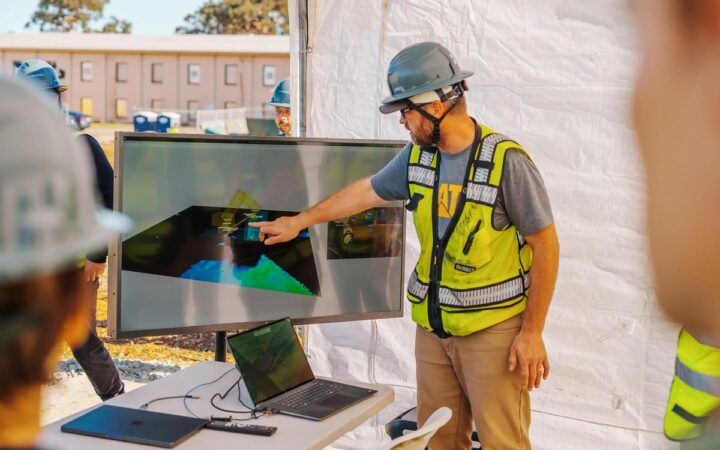
The Xpanner Connect dashboard logs pile position, depth and vertical alignment against a project map. For contractors, that creates a second potential benefit beyond machine movement: a record of what has been installed and where follow-up checks may be needed.
According to The Robot Report, customers can purchase or rent the equipment and license the automation software monthly for each active technology. The subscription is not calculated per pile or tied permanently to one project, allowing the system to move between jobs.
The publication reports that Xpanner handles installation, calibration, training and technical support, while contractors supply the operators. Public pricing was not disclosed in the launch coverage.
Construction Robots Focus on Repeatable Tasks
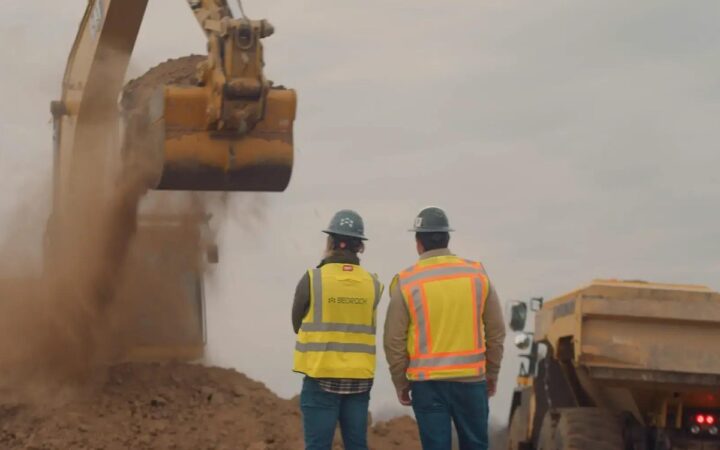
The approach fits a wider shift toward automating specific activities with heavy equipment. RobotsBeat recently covered Bedrock’s autonomous excavators, another attempt to bring software-controlled machinery into active construction projects.
Xpanner is addressing a more narrowly specified operation: repeatedly positioning and driving posts from a digital plan. That makes the quality of the plan, positioning data and installation records central to the deployment, alongside the physical capability of the machine.
Solar and storage construction also provides a practical setting for industrial robotics: the work is outdoors and physically demanding, but many individual operations repeat across large sites. The business case will ultimately rest on completed foundations, installation quality and total operating cost under those conditions.
Disclaimer: RobotsBeat is an independent media brand owned and operated by NuvexMedia LLC, publishing news, research, and insights on artificial intelligence, emerging technologies, automation, and related industries. NuvexMedia LLC invests in and collaborates with companies across the AI, Robotics, technology, software, and digital innovation sectors. These relationships do not influence RobotsBeat's editorial coverage, and the publication maintains full editorial independence to provide accurate, timely, and objective information. © 2026 NuvexMedia LLC. All rights reserved. This content is for informational purposes only and should not be considered legal, tax, investment, financial, or other professional advice.