Key Notes
- Bedrock announced a $600 million Series C at a $4.1 billion post-money valuation, bringing total funding to nearly $1 billion.
- The company says its excavators began paid autonomous work on live commercial sites in August and that its customer base has more than doubled since 2025.
- Expansion includes Haydon and additional contractors, while trench work, larger machines and broader mixed-fleet autonomy remain development opportunities.
Bedrock Robotics has raised $600 million in Series C funding at a $4.1 billion post-money valuation, giving autonomous construction equipment one of the largest new capital commitments in robotics. CapitalG and Emergence Capital co-led the round announced on October 26.
The company says its total funding is now close to $1 billion. New participants include US Innovative Technology Fund, Bessemer Venture Partners and Temasek, alongside existing backers including NVIDIA, 8VC and Eclipse.
Paid Earthmoving Becomes the Starting Point
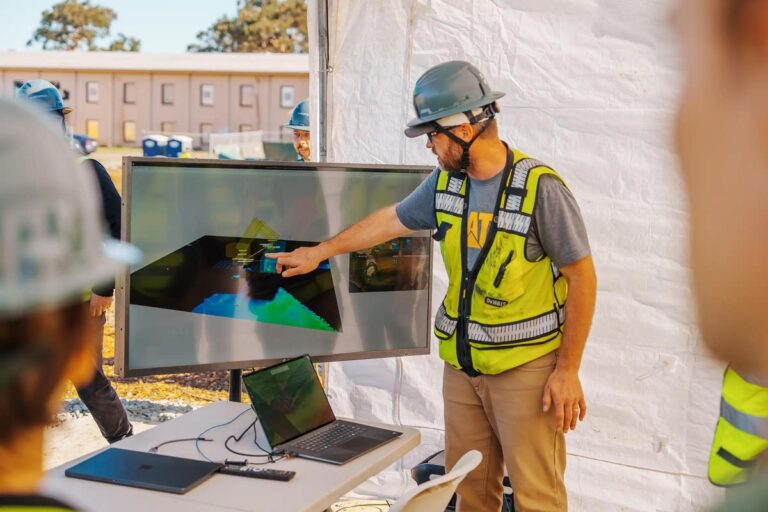
In its funding announcement, Bedrock said autonomous excavators began paid work on live commercial sites in mid-August. Its approach retrofits existing equipment rather than requiring contractors to replace their fleets.
That choice changes the purchasing decision. A contractor can evaluate automation against a machine and a workflow it already understands, while judging the added installation, supervision and support requirements.
More Contractors, More Field Support
Bedrock says customer volume has more than doubled since 2025. Haydon is a new partner, with autonomous earthwork planned at a remote Texas site; future testing will include trench work and larger machines. Additional contractors extend the business into more U.S. regions.
The funding will also support commercial and field operations. That is an important part of scaling physical systems: shipping software is only one step when the product must keep working on a changing construction site.
Equipment installation, maintenance and coordination with crews can determine how much of a machine’s available time becomes productive work. Expanding across contractors makes those operating processes as consequential as the underlying autonomy.
Physical AI Beyond Humanoid Robots
Bedrock’s focus provides a useful comparison with construction robotics: automation can be built around a specific physical job instead of a general human-shaped platform.
RobotsBeat has also covered the physical AI toolchain supporting robot development. The practical question for a construction customer is how those capabilities translate into predictable work within an existing project schedule.
The financing establishes resources for expansion, while the reported paid deployments establish a commercial starting point. Neither figure alone measures fleet productivity; repeat work across more sites will show how well the operating model travels.
Disclaimer: RobotsBeat is an independent media brand owned and operated by NuvexMedia LLC, publishing news, research, and insights on artificial intelligence, emerging technologies, automation, and related industries. NuvexMedia LLC invests in and collaborates with companies across the AI, Robotics, technology, software, and digital innovation sectors. These relationships do not influence RobotsBeat's editorial coverage, and the publication maintains full editorial independence to provide accurate, timely, and objective information. © 2026 NuvexMedia LLC. All rights reserved. This content is for informational purposes only and should not be considered legal, tax, investment, financial, or other professional advice.