Key Notes
- Hacchan is an Akita Prefectural University prototype intended to patrol buffer zones and discourage bears from approaching human settlements.
- The planned system combines autonomous navigation, animal detection and wireless coordination so nearby robot dogs can respond together.
- Field testing and practical deployment remain development goals, with no demonstrated reduction in bear attacks reported in the cited materials.
Researchers at Akita Prefectural University are developing Hacchan, a dog-shaped robot intended to patrol the boundary between Japanese settlements and bear habitat. The project combines mobile sensing with deterrent sounds and coordinated behavior, aiming to send animals back toward the mountains before they enter places where people live and work.
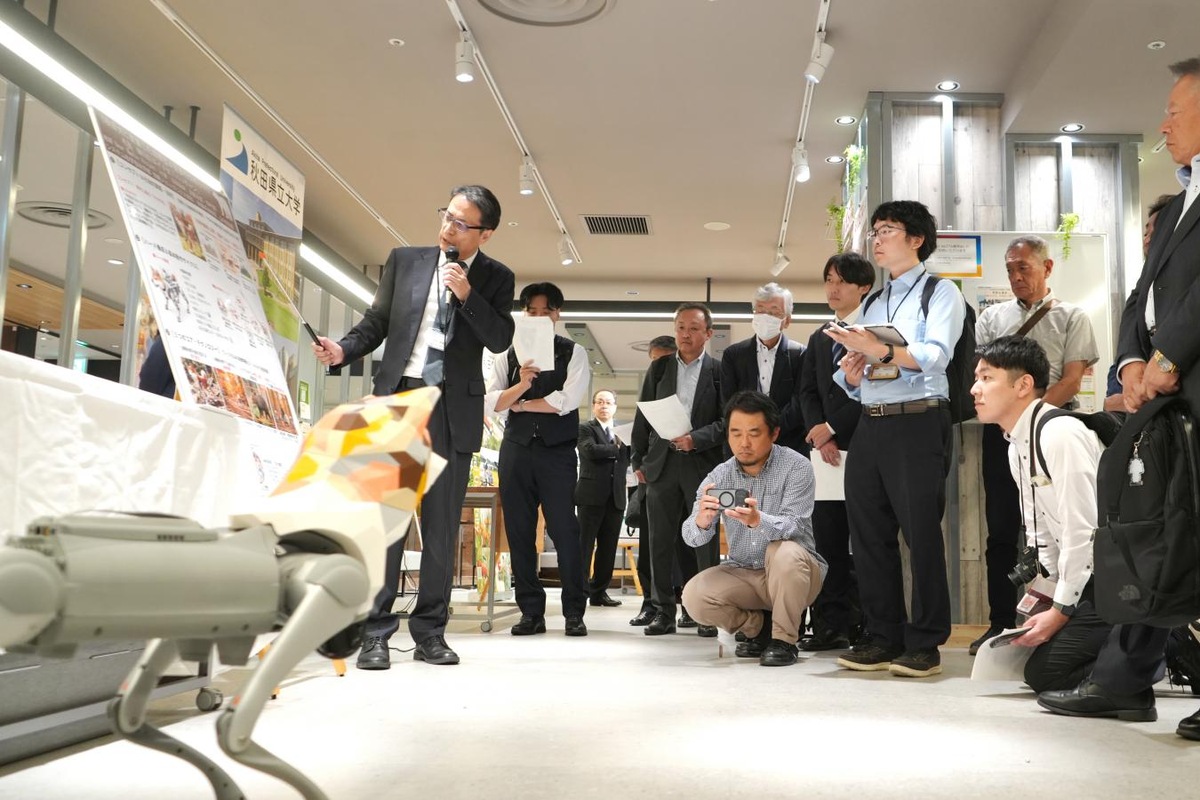
The university’s October 26 report details a prototype presented at an October 13 exhibition in Akita. It is a development project, rather than an announcement that autonomous robot packs are already protecting communities or have demonstrated a reduction in bear attacks.
A Robot Inspired by Akita Hunting Dogs
The university’s exhibition report describes Hacchan as a modern robotic interpretation of the Matagi hunting dog. The concept uses an Akita-dog appearance, bringing a recognizable local animal into a project focused on coexistence with wildlife.
The intended patrol area is a buffer zone between settlements and deeper mountain habitat. That is a more specific job than pursuing bears wherever they travel: the robot would help establish a boundary around human activity.
As SoraNews24 reported, the project envisages camera-based bear detection and amplified barking. Nearby units could be summoned to create a more intimidating group, while sightings and location information would inform patrol behavior.
Navigation and Coordination Are Still Being Developed
The university lists LiDAR and RGB-D cameras for autonomous navigation, AI cameras and infrared sensors for detection, and wireless coordination between robots. It also describes a graduated deterrence concept involving growls, barks, infrared LED eyes and capsaicin spray.
These are elements of the proposed system, not evidence that every capability has been validated against wild bears. The university says it is seeking partners for field trials and commercialization. SoraNews24 reported that developers hoped to begin field testing before year-end.
A useful patrol machine must do more than walk a route. It needs to distinguish a bear from other animals, maintain a reliable location estimate and respond predictably when people or livestock enter the same space. Coordinating multiple machines adds communication and recovery requirements.
Wildlife Response Is More Than a Robotics Demo
Japan’s Environment Ministry has separately invited technology trials covering cameras, sensors, drones, robots and warning applications for urban bear management. The call includes monitoring, patrols, deterrence and public alerts, placing mobile robots within a wider effort rather than presenting them as a complete solution.
That distinction matters for evaluating Hacchan. Detecting an animal, discouraging its approach and reducing encounters with people are separate outcomes. Field work would need to establish which of those outcomes the robot can deliver, and under what conditions.
The prototype also raises a practical operating question: whether repeated patrols can remain useful through changing weather, terrain and animal behavior. A successful exhibition demonstration establishes movement and interaction; a sustained outdoor trial tests the service communities would actually receive.
Quadrupeds Take on More Specialized Work
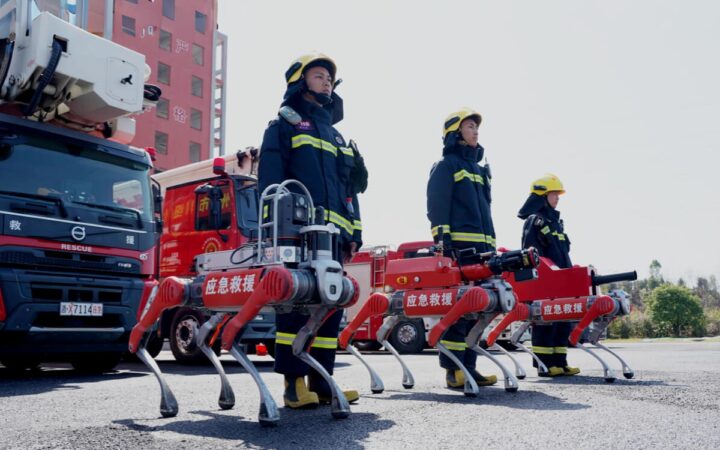
RobotsBeat’s coverage of a forest research expedition shows another use for four-legged machines near wildlife habitat: carrying equipment and scouting routes. Hacchan would move from supporting researchers to actively influencing an animal’s movement.
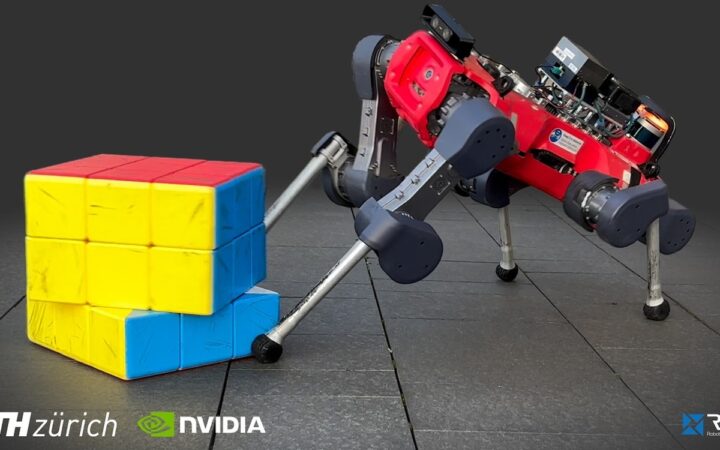
Our report on ANYmal’s manipulation skills highlights how software can extend a quadruped beyond locomotion. For Hacchan, the decisive next step is demonstrating that sensing, coordination and deterrence work together outside the exhibition hall.
Disclaimer: RobotsBeat is an independent media brand owned and operated by NuvexMedia LLC, publishing news, research, and insights on artificial intelligence, emerging technologies, automation, and related industries. NuvexMedia LLC invests in and collaborates with companies across the AI, Robotics, technology, software, and digital innovation sectors. These relationships do not influence RobotsBeat's editorial coverage, and the publication maintains full editorial independence to provide accurate, timely, and objective information. © 2026 NuvexMedia LLC. All rights reserved. This content is for informational purposes only and should not be considered legal, tax, investment, financial, or other professional advice.