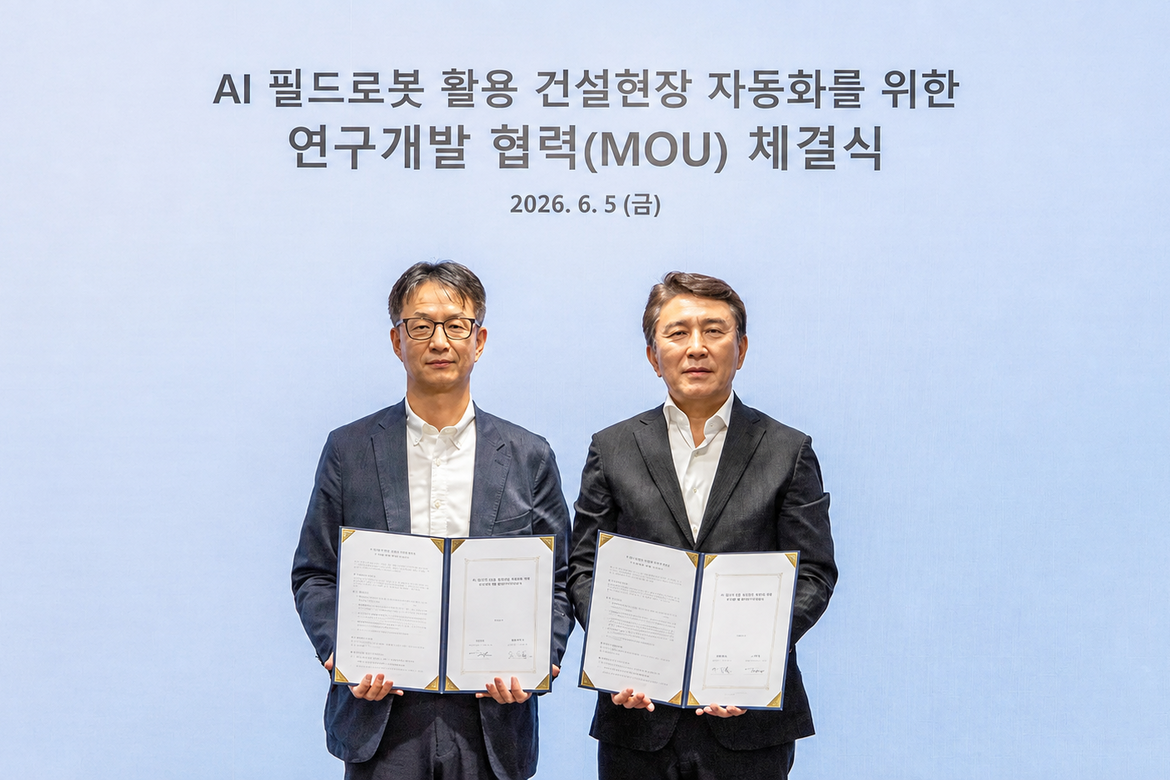
South Korean construction company GS E&C has signed a memorandum of understanding with Daedong Robotics to deploy AI-powered autonomous mobile robots at construction sites, beginning with pilot projects and expanding toward the joint development of robot models specifically designed for construction environments. The agreement was signed at GS E&C’s R&D center in Seoul on Friday.
The partnership targets physical AI applications in construction – AI systems capable of performing real-world tasks including movement, transportation, and repetitive operations – in an industry where labor shortages, safety risks, and productivity pressure are intensifying demand for automation.
What the Partnership Covers
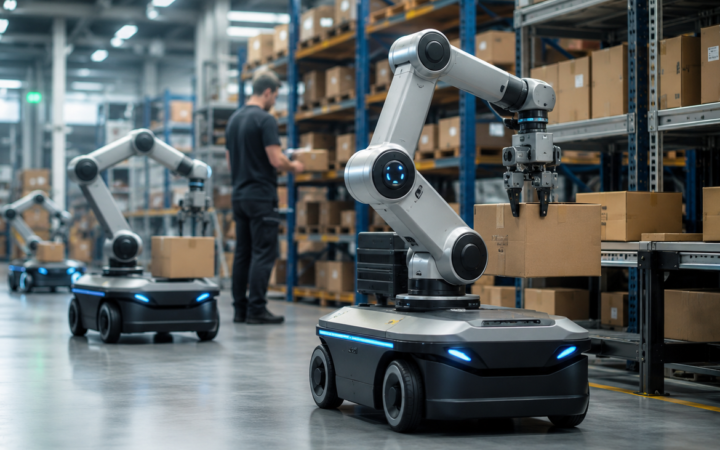
The collaboration will begin with pilot deployments of Daedong Robotics’ existing autonomous mobile robot platform at GS E&C construction sites, focusing on material transportation and repetitive labor-intensive tasks where practical automation challenges currently persist. On-site demonstrations will be used to validate robot performance and safety under real construction conditions before assessing commercial viability for broader project deployment.
GS E&C contributes construction-site domain expertise and testing infrastructure. Daedong Robotics contributes AI and autonomous navigation technology alongside operational experience from existing deployments. Data collected during field trials will be used to define the functional requirements and operating conditions that construction-specific robots need to meet – a rigorous approach to specification development that relies on empirical field data rather than assumptions about the construction environment.
The two companies also plan to jointly develop new robot models tailored to construction’s particular demands. Unlike factory floors or warehouses, construction sites are highly dynamic: workspaces change frequently, workers, equipment, and materials move continuously, and the physical environment itself transforms throughout a project’s duration. Those conditions require higher levels of safety, durability, adaptability, and operational convenience than conventional industrial robotics has been designed to deliver.
Daedong Robotics’ Background
Founded in 2024, Daedong Robotics started with agricultural transport robots and is now expanding its technology into manufacturing, construction, and other industrial sectors. The agricultural origin is relevant: autonomous navigation in outdoor, unstructured, variable terrain – the conditions of a farm – shares engineering challenges with construction site navigation that indoor warehouse robotics does not face.
The Construction Automation Context
Construction is among the industries most acutely affected by skilled labor shortages in South Korea and globally, and it is also one of the most hazardous working environments. Material handling and repetitive ground-level tasks carry significant injury risk for human workers, making them natural early targets for robotic automation. South Korea’s government has identified construction automation as a priority area, and GS E&C’s investment in robotics capability positions it competitively in a sector where digital transformation has lagged manufacturing and logistics in deployment pace.
“Digital transformation and automation are key priorities for improving safety and productivity in the construction industry,” a GS E&C official said. “Through field demonstrations of AI autonomous robots, we aim to verify their practical feasibility and secure technologies optimized for construction environments.”