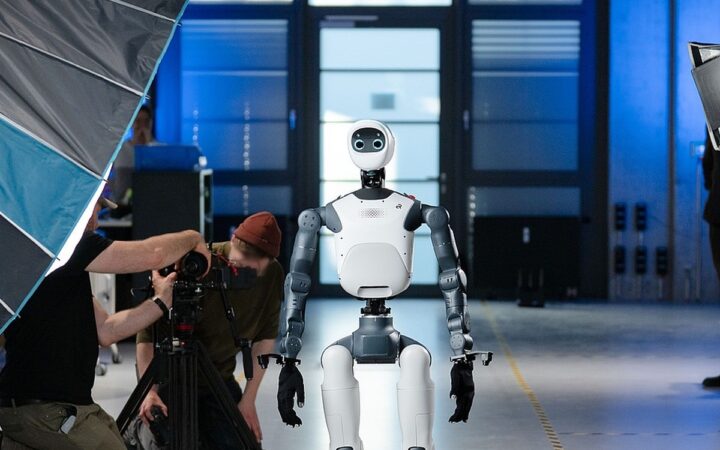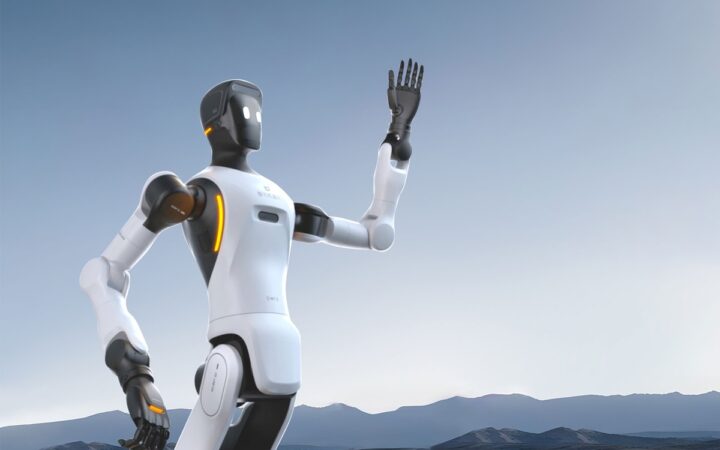
OpenAI CEO Sam Altman has confirmed the company is building a humanoid robot, ending months of ambiguity about whether the AI laboratory’s newly formed robotics division would develop its own physical hardware or license a third-party chassis. “We will definitely do a humanoid. We will do other form factors as well,” Altman said on the Sources podcast. The confirmation came alongside Altman’s view that the software remains the primary challenge: “I think all of that is less important than really figuring out the brain that makes the robot work.”
The job listings tell a more complete story. OpenAI’s careers page currently lists 19 open robotics roles in San Francisco, up from 11 when the division launched in late May. Four positions are actuator-specific, including roles for actuator design, actuator electromagnetic design, actuator gear design, and test infrastructure. A design role seeks someone to own custom electromechanical actuators end-to-end – motors, transmissions, sensing, and thermal architecture – optimizing torque density and manufacturability for production-ready designs. The listings also include PCB layout, thermal simulation, firmware, a prototyping technician, an inventory manager, and a commodity manager.
Nobody designs their own electromagnets and gear trains because the body is the easy part.
The Strategic Logic
Altman’s reasoning for the humanoid form factor follows the standard argument: the world is built for humans, so robots shaped like people can operate in existing infrastructure without modification. “The world is very much designed for people,” he said. “Matching that form factor seems good.” On home deployment, he was measured but directional: “I don’t think that’s the most important first thing to do. But yes, someday. I think everyone should have a personal robot.”
The deeper strategic rationale is data. OpenAI shut down its previous robotics project in 2021 because it could not obtain sufficient physical interaction data. Building and operating physical robots is the most direct route to the kind of data – physical interaction, failure, correction, consequence – that physical AI models require to improve. Humanoid robots function simultaneously as a product and as a data collection device. This is the same logic that drove Figure AI to walk away from its OpenAI collaboration in February 2025: “To solve embodied AI at scale in the real world, you have to vertically integrate robot AI. We can’t outsource AI for the same reason we can’t outsource our hardware,” Figure CEO Brett Adcock said at the time.
The Hardware Challenge OpenAI Is Entering
The actuator hiring reflects the primary cost and supply bottleneck in humanoid robotics. McKinsey data cited in the report estimates actuators account for 40 to 60% of humanoid bill-of-materials cost, with harmonic drives and precision roller screws facing severe supplier concentration and China controlling approximately 69% of rare-earth mining and 90% of magnet processing. Building advanced humanoid hardware outside Chinese supply chains is estimated to raise component costs from approximately $46,000 to $131,000 per unit.
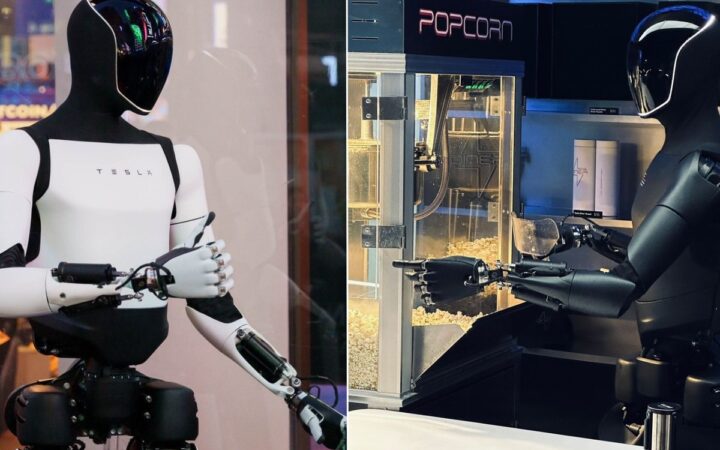
Tesla’s experience is instructive. Musk described Optimus on the most recent earnings call as “the hardest product to scale manufacturing that we’ve ever made,” noting that everything on the robot is new and required building an entirely new supply chain from scratch. No Optimus units have shipped to external customers despite five years of development.
What OpenAI Has Not Disclosed
There is no prototype, no manufacturing partner, no unit target, and no ship date for the OpenAI humanoid. The robotics division was announced in late May 2026 and has been hiring since. The confirmations Altman has provided are directional rather than operational. The Jony Ive tabletop AI device has a stated early 2027 target; the humanoid has only “definitely”.
The announcement arrives as global humanoid shipments reached approximately 19,100 units in the first half of 2026, up 272% year-on-year, with Chinese vendors accounting for more than 97% of output. Whether OpenAI’s entry into hardware development accelerates or delays its AI model contribution to the physical world will depend on how quickly the company moves from job listings to working systems.
Disclaimer: RobotsBeat is an independent media brand owned and operated by NuvexMedia LLC, publishing news, research, and insights on artificial intelligence, emerging technologies, automation, and related industries. NuvexMedia LLC invests in and collaborates with companies across the AI, Robotics, technology, software, and digital innovation sectors. These relationships do not influence RobotsBeat's editorial coverage, and the publication maintains full editorial independence to provide accurate, timely, and objective information. © 2026 NuvexMedia LLC. All rights reserved. This content is for informational purposes only and should not be considered legal, tax, investment, financial, or other professional advice.