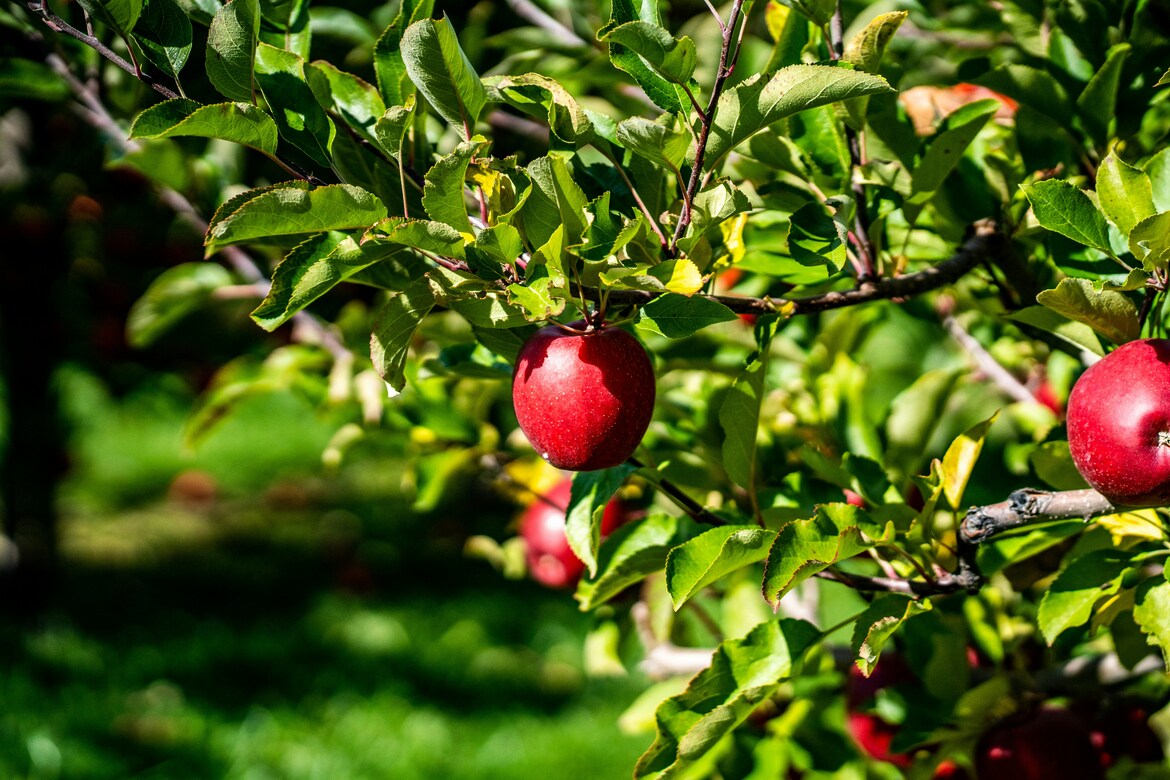
Cornell University has received a four-year, $7.5 million grant from the U.S. Department of Agriculture’s Specialty Crop Research Initiative to establish a Center of Excellence for Orchard Robotics, developing autonomous robots capable of performing labor-intensive orchard operations including flower pollination, fruit thinning, apple harvesting, and row weeding. The project involves nine partner organizations spanning Cornell, Washington State University, Oregon State University, Pennsylvania State University, Michigan State University, Carnegie Mellon University, Stanford University, and Israel-based Fresh Fruit Robotics.
The research is led by Manoj Karkee, the Norman R. and Sharon R. Scott Professor of Agriculture and Life Sciences at Cornell, alongside co-director Matthew Whiting, professor of tree fruit horticulture at Washington State University.
The Labor Cost Crisis Driving Automation
The commercial urgency behind the research is illustrated by Washington Fruit and Produce Co., one of nine collaborating organizations. Labor accounted for approximately 45% of total costs at the Yakima, Washington-based orchard fifteen years ago. Today it exceeds 60%, while apple prices have remained flat for two decades.
“Our costs have just been skyrocketing, largely around labor – meanwhile, apples sell for the same price they did 20 years ago,” said Gilbert Plath, technology director at the company, which grows apples and cherries on 10,000 acres. “Who gets squeezed at that point? It’s not the warehouse, and it’s not the grocery store. It’s the farmers.”
Beyond cost, orchard operations carry specific safety risks: ladder falls, machinery-related accidents, and repetitive motion injuries from activities like picking apples across twelve-hour days for three months at a time. The project aims to automate these tasks and redirect human labor toward manufacturing, maintaining, and supervising the machines.
What the Robots Will Do
Apples are the most-consumed fruit in the United States, contributing $21 billion annually to the national economy, with New York ranking second for total production and first for variety diversity. Unlike most U.S. crops – which are harvested by machine – specialty fruit has remained largely hand-harvested due to the dexterity and judgment required.
The research program addresses the full-season operation cycle rather than harvesting alone. Growers have consistently told collaborators that a robot useful only for harvest does not justify its cost. A robot that handles pruning in winter, pollination and thinning in spring, and harvesting in fall changes the return-on-investment calculation fundamentally. The project team is engineering soft robotic hands that handle fruit without bruising, training AI to perceive fruit tree canopies, and developing digital twins of real orchards for horticultural analysis.
Karkee has spent more than two decades developing robotic systems for agriculture. He said recent advances in neural network-based AI have substantially accelerated progress: “Where it is safe to go, where the fruits are located, how fruits are located in relation to a branch, a trellis, a wire, leaves, other fruits – all those things are being perceived and understood by robots using an AI model running behind the scenes.”
The Commercial Adoption Challenge
The project includes sociologists, economists, and extension specialists alongside engineers and horticulturalists, recognizing that technically capable robots that farmers cannot afford or do not adopt solve nothing. Cornell Cooperative Extension fruit specialist Mario Miranda Sazo will lead outreach to New York apple growers to gather feedback and ensure developed technologies fit real-world operational requirements.
Fresh Fruit Robotics founder and CEO Avi Kahani, who began developing orchard automation while managing a kibbutz orchard in northern Israel, frames the translation challenge directly: “Turning innovation into reality is still one of the major challenges. We see these incredible things that universities develop, but then we have to see if it fits into reality – if it works and most importantly, if it’s cost-effective.”
Disclaimer: RobotsBeat is an independent media brand owned and operated by NuvexMedia LLC, publishing news, research, and insights on artificial intelligence, emerging technologies, automation, and related industries. NuvexMedia LLC invests in and collaborates with companies across the AI, Robotics, technology, software, and digital innovation sectors. These relationships do not influence RobotsBeat's editorial coverage, and the publication maintains full editorial independence to provide accurate, timely, and objective information. © 2026 NuvexMedia LLC. All rights reserved. This content is for informational purposes only and should not be considered legal, tax, investment, financial, or other professional advice.