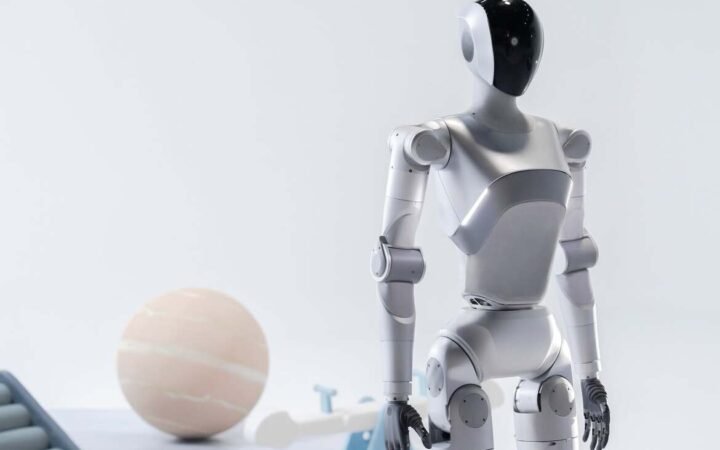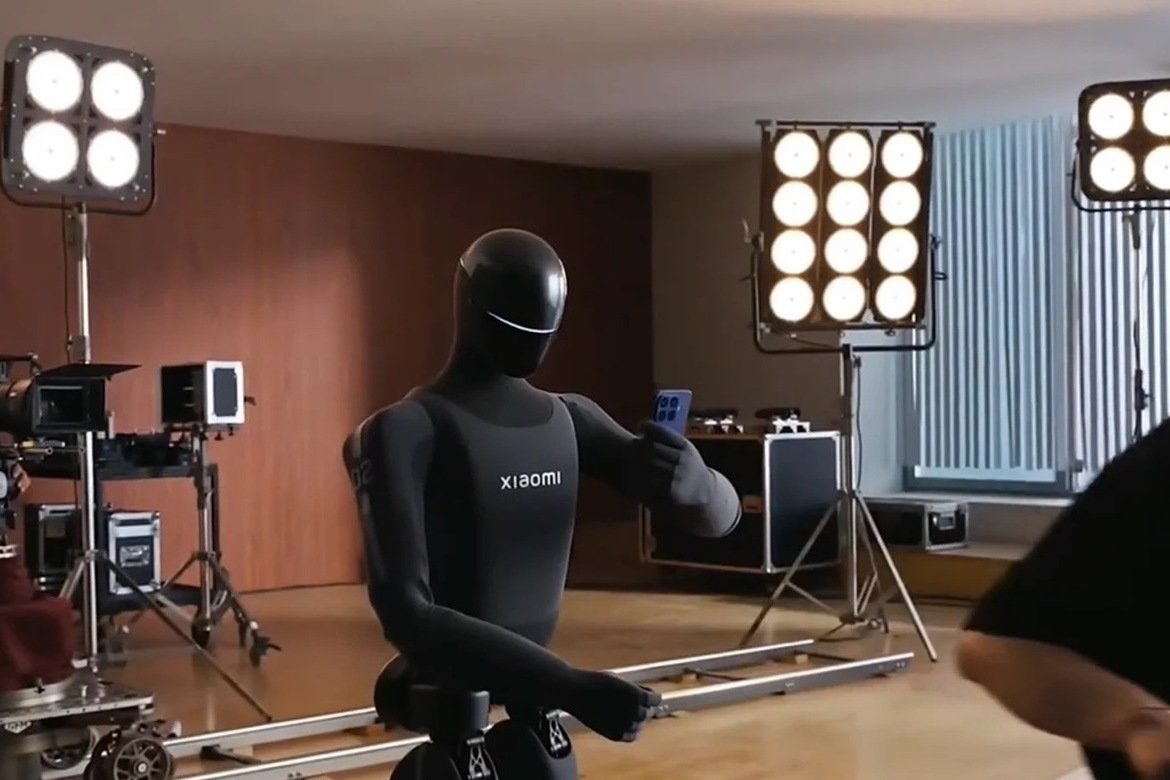
Xiaomi’s humanoid robot appeared at the Xiaomi 17T series product launch event on Monday, demonstrating autonomous grasping of the 17T Pro smartphone and independent operation of its volume key for zoom photography.
The demonstration reflected a significant hardware upgrade: at the end of March, Xiaomi conducted a deep renovation of the CyberOne bionic hand, reducing its volume by 60%, increasing degrees of freedom by 64%, expanding the full-hand tactile sensor coverage area to 8,200 square millimeters, and adding a bionic sweat gland structure to improve heat dissipation during sustained operation.
The result is a hand that is smaller, more dexterous, more sensitive, and better suited to the precise manipulation of consumer electronics than its predecessor.
Why the Demo Is Technically Significant
Operating a smartphone autonomously – picking it up securely without damaging the screen or casing, and then pressing a specific millimeter-scale button with calibrated force – falls within a narrow manipulation envelope that current humanoid dexterity systems have historically struggled to reach reliably.
The tactile sensor expansion to 8,200 square millimeters means the hand now receives detailed pressure feedback across a significantly larger surface area, allowing it to modulate grip force in real time based on the object’s texture, weight distribution, and fragility.
The demonstration was performed at a live product launch event rather than a controlled laboratory setting, providing a public benchmark for the hand’s capability under conditions that cannot be fully rehearsed.
A Nine-Year Development Arc
Xiaomi’s humanoid robotics program began in 2017, with the company successively releasing the Tie Dan and Tie Da robot platforms before establishing a dedicated robot company in 2023.
In March 2026, Xiaomi’s humanoid robot completed three hours of continuous operation at an automobile factory, achieving a 90.2% successful dual-side installation rate – one of the more specific publicly reported performance figures from a Chinese consumer electronics company’s industrial humanoid deployment.
The progression from high-precision automotive manufacturing to delicate consumer device manipulation represents a deliberate capability expansion. Factory floor tasks like component installation reward repeatability and force consistency.
Handling a smartphone rewards gentleness, spatial awareness, and fine motor control. Demonstrating competence in both contexts signals that the underlying dexterity architecture is generalizing rather than remaining task-specific.
Xiaomi has not announced commercial availability or pricing for its humanoid platform. The company has positioned the robot as a product that bridges industrial and consumer-grade deployment, and the 17T launch demonstration reinforces that framing by placing the robot alongside Xiaomi’s consumer electronics in a commercial product environment.