Key Notes
- XPENG’s latest IRON appeared at AI Day with animated visor eyes and bilingual interaction, ahead of planned store-assistant training in Q1 2027.
- The company lists 76 degrees of freedom, more than 1,500 tactile sensing points and three Turing AI chips supporting onboard intelligence and movement.
- A public release is targeted for Q2 2027, while pricing, market-by-market delivery dates and sustained customer-site performance remain undisclosed.
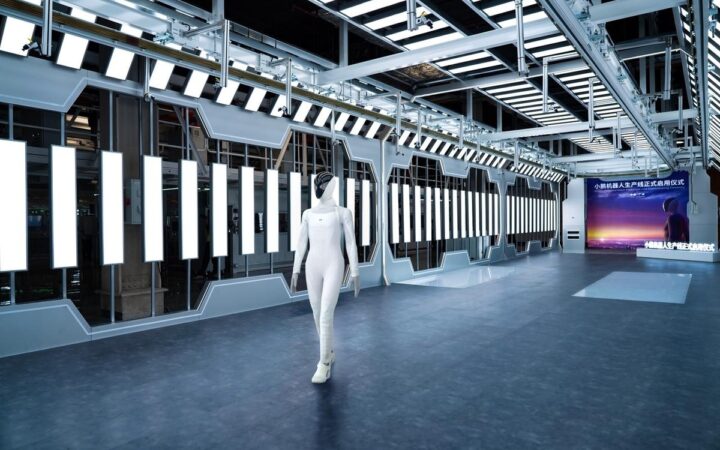
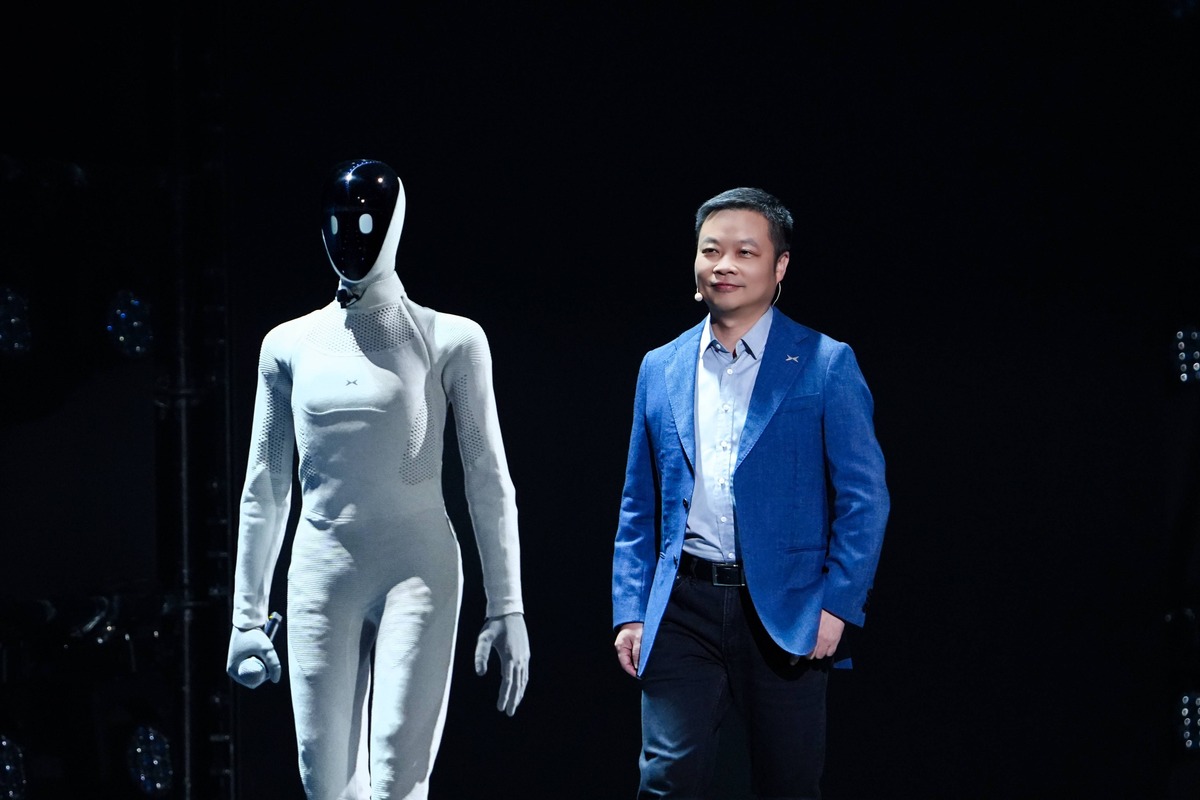
XPENG has unveiled the latest version of its IRON humanoid robot, setting out a plan for store-assistant training in the first quarter of 2027 and a public release in the second quarter. The company presented the robot at its November 25 AI Day in Guangzhou, alongside a broader update to its physical AI architecture.
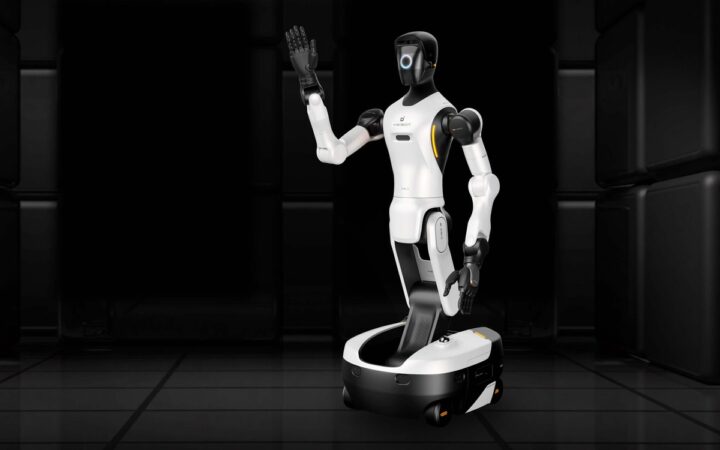
IRON’s animated visor eyes give the new design a more expressive face. XPENG said seven robots participated in bilingual questions and answers at the event, bringing conversation and interaction to the foreground after earlier demonstrations focused heavily on its human-like walk.
IRON Adds Expression to Its Humanoid Hardware
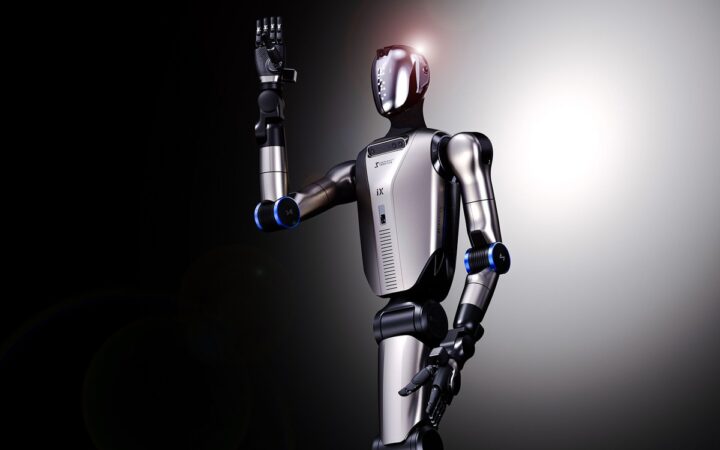
The robot has 76 degrees of freedom, more than 1,500 tactile sensing points and three proprietary Turing AI chips, according to XPENG’s announcement. The company says touch sensing covers more than 80% of key body areas and combines with onboard AI and whole-body control.
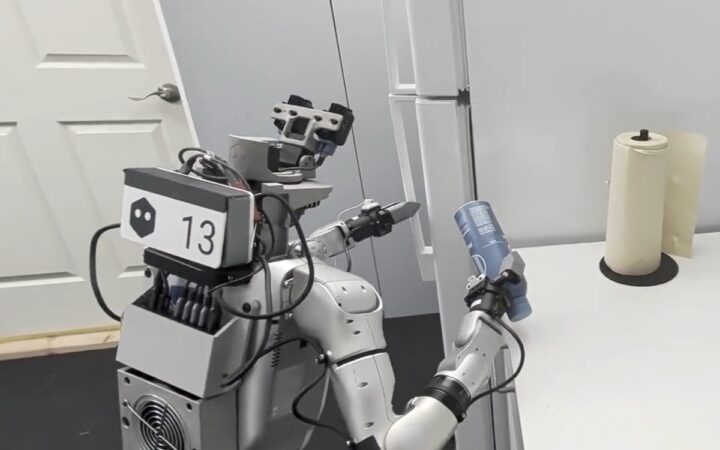
In a short official film released before AI Day, IRON handles a book, pours a drink and connects itself to a charger. The video at the top of this article is that November 24 promotional film, rather than an uncut record of the stage demonstration.
Those examples show selected interactions. They do not establish that IRON can reliably manipulate every object or work unaided in any environment. For a robot intended to meet customers, the practical requirements include understanding requests, moving around people and recovering when an interaction does not go as expected.
Chairman and CEO He Xiaopeng described visitors chatting, shaking hands and high-fiving with IRON. He also acknowledged that its physical design and intelligence still need further development.
XPENG Connects AI Planning With Physical Control
The company’s Turing Physical AI Architecture, also called VLA 3.0, separates high-level task planning, rapid responses and underlying body control into connected layers. Feedback from movement and hardware is intended to inform subsequent decisions, rather than leaving the language system detached from the machine it commands.
XPENG’s separate WorldGPT update explains another part of its approach. A cloud-based teacher model learns across six machine categories, including cars, drones, robotic arms and humanoids, with knowledge transferred into smaller models for individual machines. That development method should not be confused with a claim that the full cloud model runs inside every IRON.
The distinction matters when assessing the demo. Conversation, navigation and manipulation have to produce a useful physical result together. A fluent answer can make a robot engaging, but its ability to complete a job also depends on perception, control and the limits of its hardware.
Store Training Comes Before the Q2 2027 Release
The latest roadmap moves beyond the AI Day preview that RobotsBeat covered last week. XPENG plans to start training IRON as an assistant in its own retail stores in Q1 2027, providing a setting for learning customer-facing work before the targeted Q2 public release.
Our earlier sales roadmap covered the company’s initial emphasis on its own stores and offices. A public release target does not specify when every customer or overseas market will receive a robot, and XPENG has not announced a purchase price in the new release.
The company describes hardware sales and software subscriptions as parts of its commercial model. For now, the next concrete test is the store-training phase: whether the abilities shown on stage and in selected videos can become dependable assistance during an ordinary working day.
Disclaimer: RobotsBeat is an independent media brand owned and operated by NuvexMedia LLC, publishing news, research, and insights on artificial intelligence, emerging technologies, automation, and related industries. NuvexMedia LLC invests in and collaborates with companies across the AI, Robotics, technology, software, and digital innovation sectors. These relationships do not influence RobotsBeat's editorial coverage, and the publication maintains full editorial independence to provide accurate, timely, and objective information. © 2026 NuvexMedia LLC. All rights reserved. This content is for informational purposes only and should not be considered legal, tax, investment, financial, or other professional advice.