Key Notes
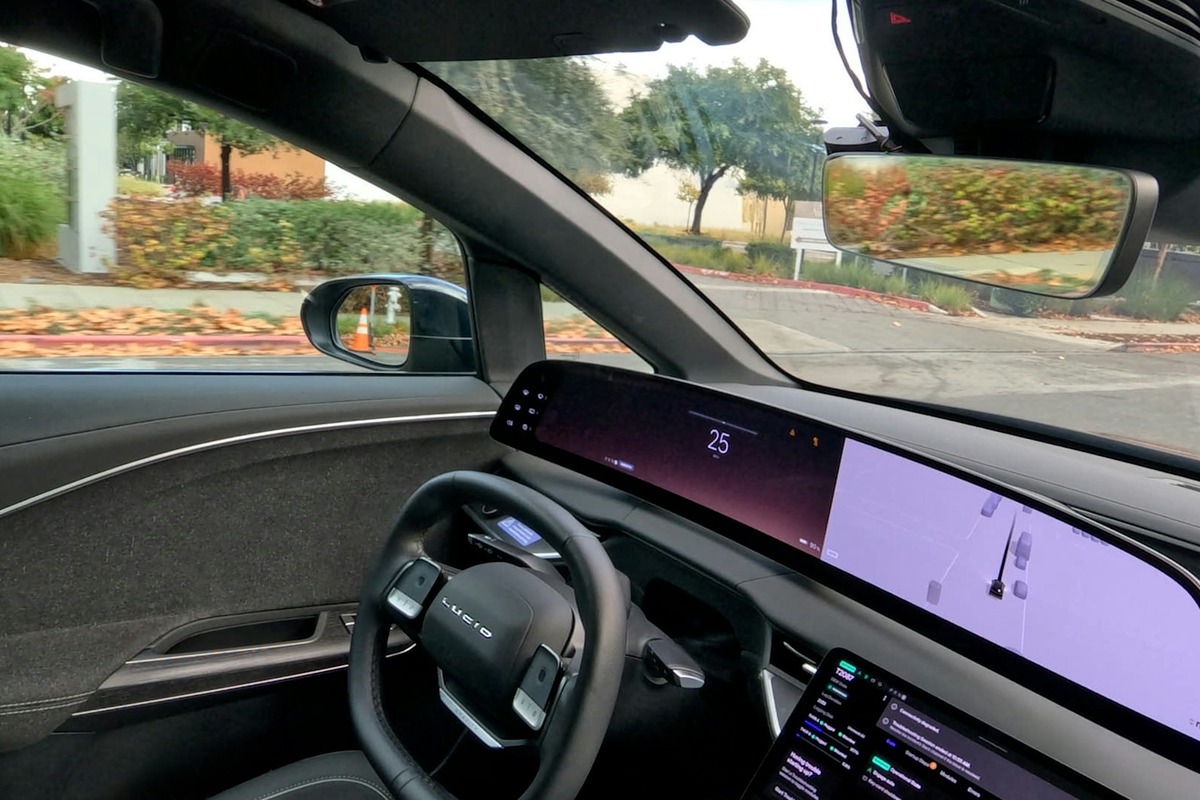
- Lucid Gravity robotaxis powered by Nuro are testing without an onboard safety driver in Palo Alto, Mountain View, Los Altos and Sunnyvale.
- Employee driverless rides are the next planned step, while the partners expect public Uber service to begin in the Bay Area in the first quarter of 2027.
- Lucid has delivered more than 100 vehicles for the program, a figure that does not establish how many are simultaneously operating without drivers.
Nuro, Lucid and Uber have begun testing Lucid Gravity robotaxis on public roads without an onboard safety driver, moving their autonomous mobility program into a new phase. The companies announced the milestone on November 24, with employee driverless rides expected to follow.
The initial testing area covers Palo Alto, Mountain View, Los Altos and Sunnyvale. Public service through Uber is expected in the first quarter of 2027; the announcement does not open bookings to paying passengers today.
The Safety Driver Comes Out of the Vehicle
The partners have been testing the Gravity robotaxi with safety drivers in the Bay Area and Houston since December 2025. Lucid has delivered more than 100 vehicles for the program, including hardware, software and passenger-experience updates. That delivery total does not establish how many vehicles are currently running driverless.
Removing the onboard fallback changes what the integrated robotics system must handle. Perception, planning and vehicle control have to work together while the surrounding fleet operation supports the journey. The absence of a driver in the seat does not mean the service has no operational support or restrictions.
Validation Extends Beyond Ordinary Road Miles
Nuro’s safety approach combines simulation, closed-course work and public-road testing. Its process sets requirements for a particular vehicle platform and operating environment, then evaluates the system against those requirements before deployment.
In simulation, road data can be used to recreate situations and test changes repeatedly. Track testing provides controlled conditions for vehicle behavior, while road trials expose the integrated system to actual traffic. Each contributes different evidence; a large number of routine miles alone cannot describe every unusual situation a robotic vehicle may encounter.
Nuro also describes continued monitoring and improvement after deployment. Those are the company’s validation practices, rather than an independent conclusion that the vehicles can operate safely in every location or condition.
A Three-Partner Route Toward Public Robotaxi Service
The program divides the work among Lucid’s vehicle platform, Nuro’s autonomous driving system and Uber’s ride-hailing and fleet network. Moving from a test vehicle to a passenger service also requires dependable maintenance, rider assistance and a clear operating area.
Lucid is involved in a separate European program with Bolt and NVIDIA, covered in our European robotaxi report. That project uses a different autonomy system and should not be treated as an extension of the Nuro-powered Uber fleet.
RobotsBeat’s XPENG YOYO coverage follows another approach to commercializing robotic transport. Across these programs, public-road testing and an available passenger service remain separate milestones. For Nuro, Lucid and Uber, the next announced steps are employee driverless rides and the planned Bay Area public launch.
Disclaimer: RobotsBeat is an independent media brand owned and operated by NuvexMedia LLC, publishing news, research, and insights on artificial intelligence, emerging technologies, automation, and related industries. NuvexMedia LLC invests in and collaborates with companies across the AI, Robotics, technology, software, and digital innovation sectors. These relationships do not influence RobotsBeat's editorial coverage, and the publication maintains full editorial independence to provide accurate, timely, and objective information. © 2026 NuvexMedia LLC. All rights reserved. This content is for informational purposes only and should not be considered legal, tax, investment, financial, or other professional advice.