Key Notes
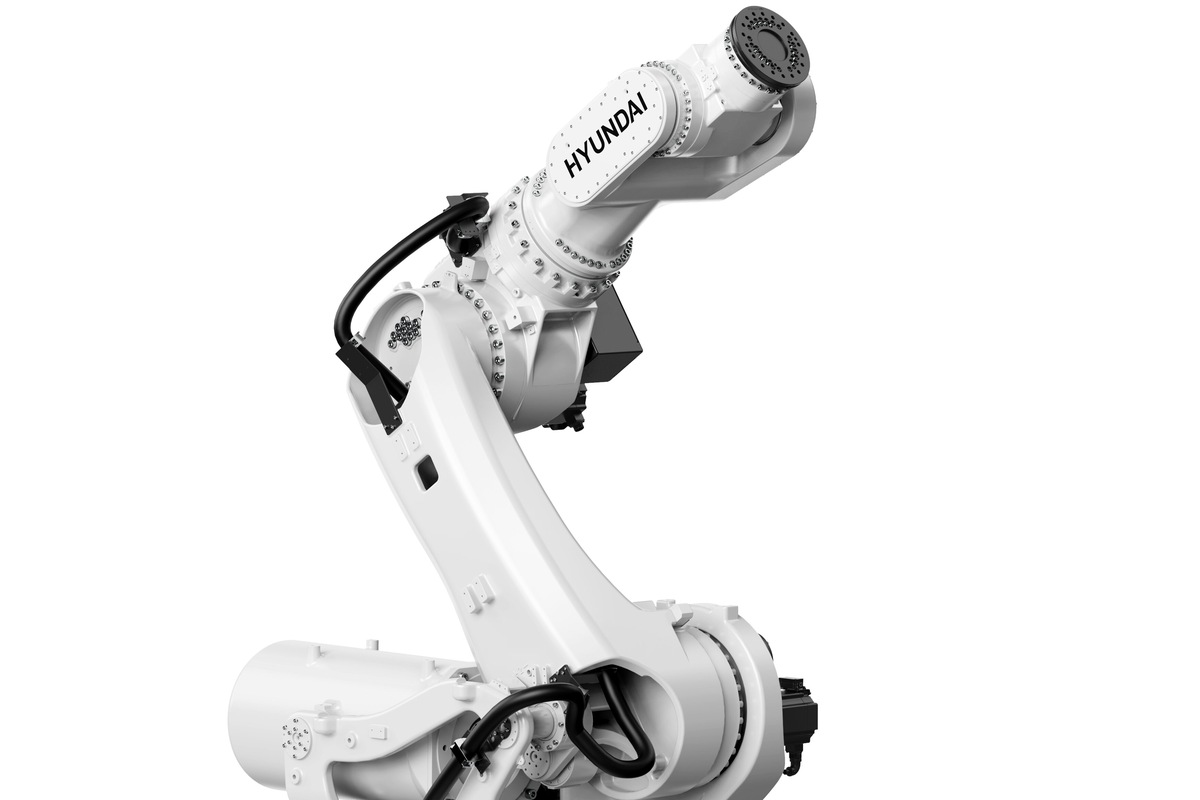
- HD Hyundai Robotics has marked the first sale of its HDT1000-33, a six-axis industrial arm with a maximum payload of 1,000kg.
- The initial robots are intended to load heavy cylinder engine blocks into machining equipment and move finished parts through a construction-engine production process.
- The company reports positioning error within 0.1mm in repeated movements and plans wider applications in shipbuilding equipment, large vehicle components and battery packs.
HD Hyundai Robotics has made its first sale of the HDT1000-33, a six-axis industrial robot designed to handle loads up to 1,000kg. The initial robots will work with large cylinder engine blocks, targeting a part of manufacturing where the weight of the component can constrain the entire production process.
The company marked the sale on November 18 at Hankook R&D in Ansan, South Korea, according to its announcement. The arm will load blocks into machining equipment and transfer completed components to the next production stage for construction-machinery engines.
Heavy Handling Extends Into Machine Tending
The payload rating describes the load the robot can handle, rather than its own mass. A six-axis articulated arm can change a component’s orientation as well as move it, making it suitable for machine loading and unloading rather than only lifting an object between two points.
Those jobs depend on more than lifting capacity. An integrator has to account for the gripper, the position of the load’s center of gravity, access to the machine and the clearance needed throughout a movement. The complete application determines which parts can be handled within the robot’s operating limits.
HD Hyundai says development began in February 2024 in response to demand for handling larger, heavier modules. The company describes the new robot as South Korea’s first domestically developed industrial model in the one-ton payload class.
Precision and Safety Depend on the Complete Workcell
The manufacturer reports that position error remains within 0.1mm across thousands of movements. That is a company-stated performance figure; the announcement does not provide an independent test protocol or detailed results for the customer’s installed engine-production workflow.
Automating the lift and transfer can reduce workers’ direct handling of heavy parts. It also places greater importance on the surrounding installation: secure gripping, controlled access, machine coordination and a defined response to a stopped cycle. A payload specification alone does not establish the safety of the finished workcell.
A Wider Market for Large Industrial Components
HD Hyundai plans to extend the robot’s applications to shipbuilding equipment, large vehicle components, electric-vehicle battery packs and secondary batteries. The first-sale announcement does not disclose the initial unit count or contract value, leaving the scale of the launch unquantified.
The product sits alongside the broader automation expansion covered in our report on HD Hyundai’s shipyard plans. That program includes different robot types and processes; the HDT1000-33 addresses a specific heavy-handling requirement.
Our coverage of BMW’s robot investment illustrates the continuing importance of conventional industrial arms as manufacturers develop newer AI systems. For the HDT1000-33, the commercial test is whether an integrated installation can move heavy components consistently while keeping the machining process supplied and minimizing manual intervention.
Disclaimer: RobotsBeat is an independent media brand owned and operated by NuvexMedia LLC, publishing news, research, and insights on artificial intelligence, emerging technologies, automation, and related industries. NuvexMedia LLC invests in and collaborates with companies across the AI, Robotics, technology, software, and digital innovation sectors. These relationships do not influence RobotsBeat's editorial coverage, and the publication maintains full editorial independence to provide accurate, timely, and objective information. © 2026 NuvexMedia LLC. All rights reserved. This content is for informational purposes only and should not be considered legal, tax, investment, financial, or other professional advice.