Key Notes
- SCHUNK Humanoid Robotics, founded in January 2026, now operates as TACTILIA Robotics with a focus on modular hands for industrial manipulation.
- The Munich-based company targets humanoids, collaborative robots and mobile manipulators, using SCHUNK’s 15 CoLabs to test applications with customers.
- Its platform combines hand hardware, software and process expertise, while the announcement leaves pricing, delivery dates and quantified performance undisclosed.
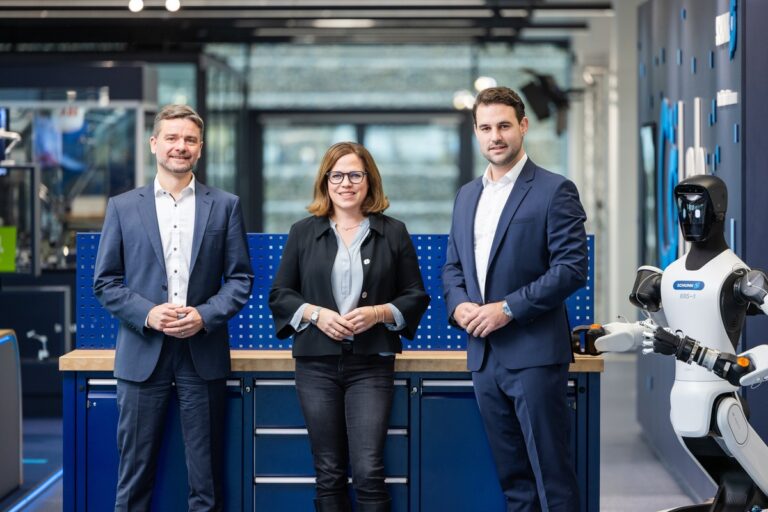
SCHUNK’s humanoid-hand spin-off has adopted the name TACTILIA Robotics as it develops a modular robotic hand for manufacturing and logistics. The Munich-based company is targeting a practical obstacle to useful robots: gripping and positioning varied objects reliably, then turning those movements into repeatable industrial work.
The November 18 announcement marks a new identity for SCHUNK Humanoid Robotics GmbH, which was founded in January 2026. TACTILIA operates independently while drawing on SCHUNK’s gripping technology, industrial experience and customer application infrastructure. Markus Netzer leads the business as CEO.
A Modular Hand for More Than Humanoids
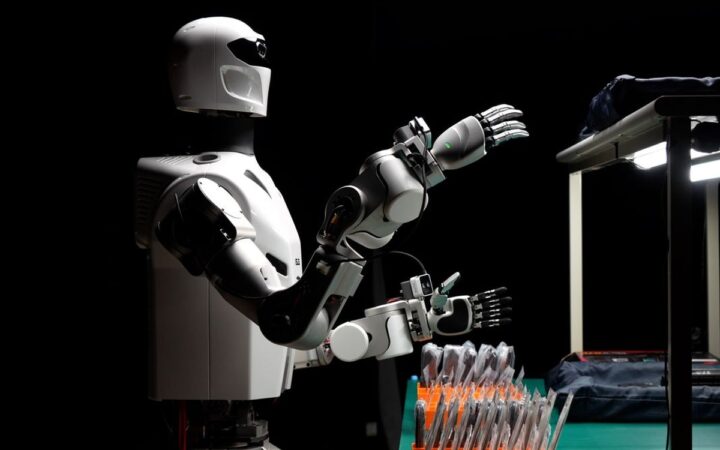
TACTILIA says its hands are intended for humanoids, collaborative robots and mobile manipulators. That gives the platform a potential role beyond any one full-body robot: the same underlying manipulation technology could serve a stationary workstation or a machine that moves between jobs.
SCHUNK’s January announcement described the next generation of a modular five-finger hand with an integrated wrist and forearm. It placed the spin-off within a longer engineering effort, noting that SCHUNK had worked with five-finger gripping technology for more than a decade.
The new company’s application overview identifies tasks including connector mating, cable routing, vial handling and logistics piece picking. These examples describe its intended market. In practice, each demands a different balance of reach, contact force, precision and object handling.
Customer Testing Runs Through SCHUNK’s CoLabs
TACTILIA plans to use SCHUNK’s 15 CoLabs worldwide to test the hand with customers and develop it for specific applications. The approach connects development with production requirements, including integration and dependable operation over extended periods. The network is testing infrastructure, rather than an announced fleet of customer deployments.
That process matters because a successful grasp is only part of a manufacturing task. A connector must arrive at the right angle, a cable must follow its intended route, and a component must be released without disturbing its position. Workstation layout, sensing and control software all affect the result.
TACTILIA’s platform strategy combines hand hardware, grasping software and process expertise. It presents support for different robot and AI platforms as a design goal, giving customers a component to integrate into their chosen system.
Robotic-Hand Competition Moves Toward Useful Work
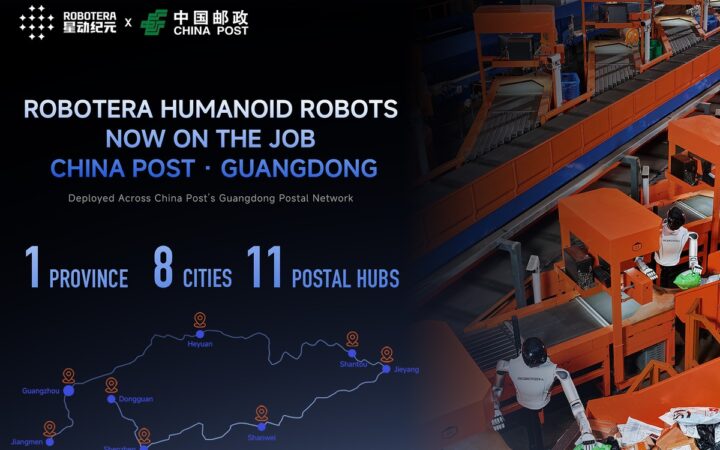
The launch adds a European industrial-automation supplier’s spin-off to a field already attracting attention from robot-learning teams. Our report on ROBOTERA’s hand examined hardware aligned with NVIDIA’s DexUMI demonstration interface, while our Linkerbot profile explored a business built around dexterous hands and skills software.
TACTILIA’s announcement does not disclose pricing, a firm delivery schedule or quantified performance results. Its stated emphasis is industrial application development. The evidence that will matter to buyers is how the hand handles their parts, how often an operator must intervene and how much work is required to integrate and maintain it. Those results will determine where a modular hand offers an advantage over a simpler gripper.
Disclaimer: RobotsBeat is an independent media brand owned and operated by NuvexMedia LLC, publishing news, research, and insights on artificial intelligence, emerging technologies, automation, and related industries. NuvexMedia LLC invests in and collaborates with companies across the AI, Robotics, technology, software, and digital innovation sectors. These relationships do not influence RobotsBeat's editorial coverage, and the publication maintains full editorial independence to provide accurate, timely, and objective information. © 2026 NuvexMedia LLC. All rights reserved. This content is for informational purposes only and should not be considered legal, tax, investment, financial, or other professional advice.