Kinetix AI Unveils KAI Humanoid with 115 Degrees of Freedom and 18,000-Sensor Tactile Skin
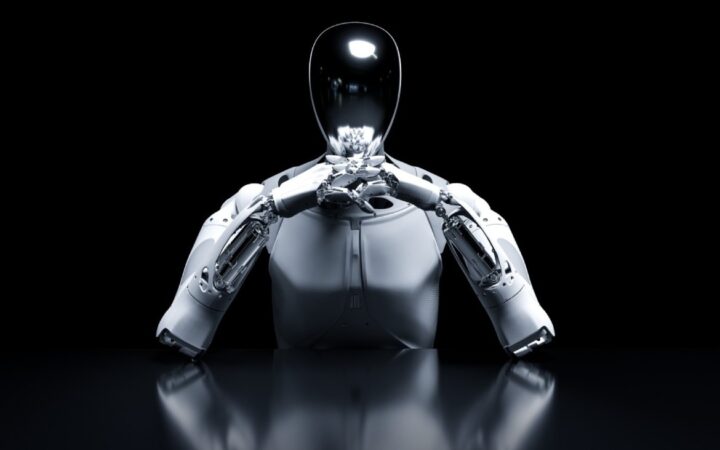
Shenzhen-based Kinetix AI has unveiled KAI, a full-sized humanoid robot with 115 degrees of freedom, a 36-DoF dexterous hand, and a full-body tactile skin system with 18,000 sensors, targeting service and home assistance applications at a sub-$40,000 price point.
Shenzhen-based startup Kinetix AI held its GIFTED press conference on April 26 to unveil KAI, a full-sized humanoid robot designed for service and home assistance applications. The company, also operating as Kai Robotics, was founded by veterans of the original R&D team behind the XPENG Iron humanoid. KAI is targeting a sub-$40,000 price point and mass production in late 2026.
The platform’s specifications are ambitious across hardware, sensing, and AI architecture – though the gap between laboratory demonstration and reliable real-world deployment remains the central challenge the company will need to close before commercial scale is achievable.
115 Degrees of Freedom
The most distinctive technical claim is KAI’s 115 degrees of freedom across the full body – a figure substantially higher than the 20 to 45 DoF typical of most contemporary humanoid platforms. The articulation range includes shoulder movement, torso flexion to 75 degrees, and neck rotation across a 65-degree range, giving the robot a range of motion intended to closely approximate human flexibility.
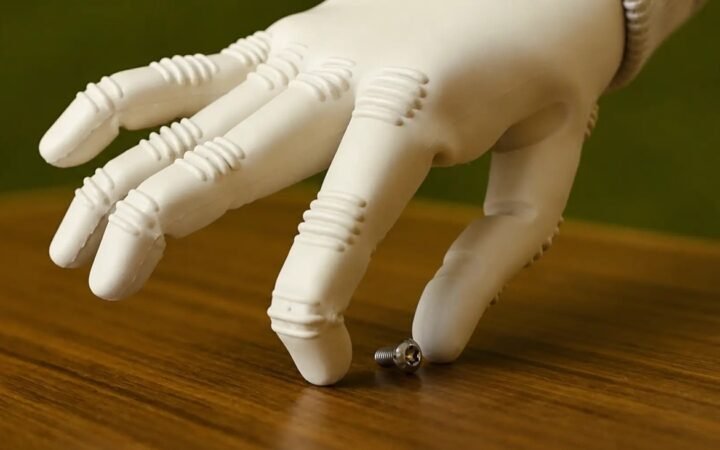
The hands are the most mechanically complex element. Each features 36 DoF – 22 active and 14 passive joints. The passive joints act as mechanical buffers, allowing the hand to conform to objects and absorb impact forces without requiring immediate computational response. The company describes this as a safety feature for domestic use, where contact with objects and people is frequent and unpredictable.
Tactile Sensing and Battery Safety
KAI is covered in a synthetic tactile skin containing 18,000 sensing points capable of detecting forces as light as 0.1 newtons. The system enables what Kinetix AI calls haptic-aware manipulation – the ability to modulate grip force and contact behavior based on real-time pressure feedback across the robot’s surface.
Power is supplied by a 1.7 kWh semi-solid-state battery, a chemistry choice that reduces thermal runaway risk compared to conventional lithium-ion packs. The selection mirrors a broader trend among Chinese humanoid manufacturers, including XPENG Robotics, toward safer battery architectures for robots operating in proximity to people.
Data Strategy and AI Architecture
KAI’s intelligence layer is built around what Kinetix AI calls the KAI World Model, a closed-loop architecture comprising Base, Action, and Evaluation modules. The system is designed to predict environmental changes and assess the safety of candidate movement trajectories before executing them – a simulation-before-action approach that parallels techniques used across physical AI development more broadly.
To address the data scarcity problem that constrains most humanoid AI training, Kinetix AI developed the KAI Halo, a lightweight head-mounted device worn by human operators during normal daily routines. The device captures first-person video, body pose, and environmental point cloud data, generating training data from natural human behavior rather than structured motion-capture sessions. The company argues that this approach produces a more diverse and naturalistic dataset than traditional capture methods.
Market Positioning and the Reliability Question
KAI is positioned as a general-purpose helper for retail, concierge, and home assistance roles rather than heavy industrial applications. The sub-$40,000 target price is designed to be competitive within a segment where most platforms remain either significantly more expensive or more narrowly capable.
The architecture’s complexity – 115 DoF, 18,000 sensors, semi-solid-state batteries – introduces significant engineering challenges in maintaining system reliability outside laboratory conditions. XPENG’s own robotics leadership has publicly identified hardware reliability, including signal disconnection and mechanical failure rates, as a primary bottleneck for the industry. Whether KAI’s high-DoF design can sustain stable performance in the unstructured environments it targets will determine whether the platform reaches commercial deployment on its stated timeline.
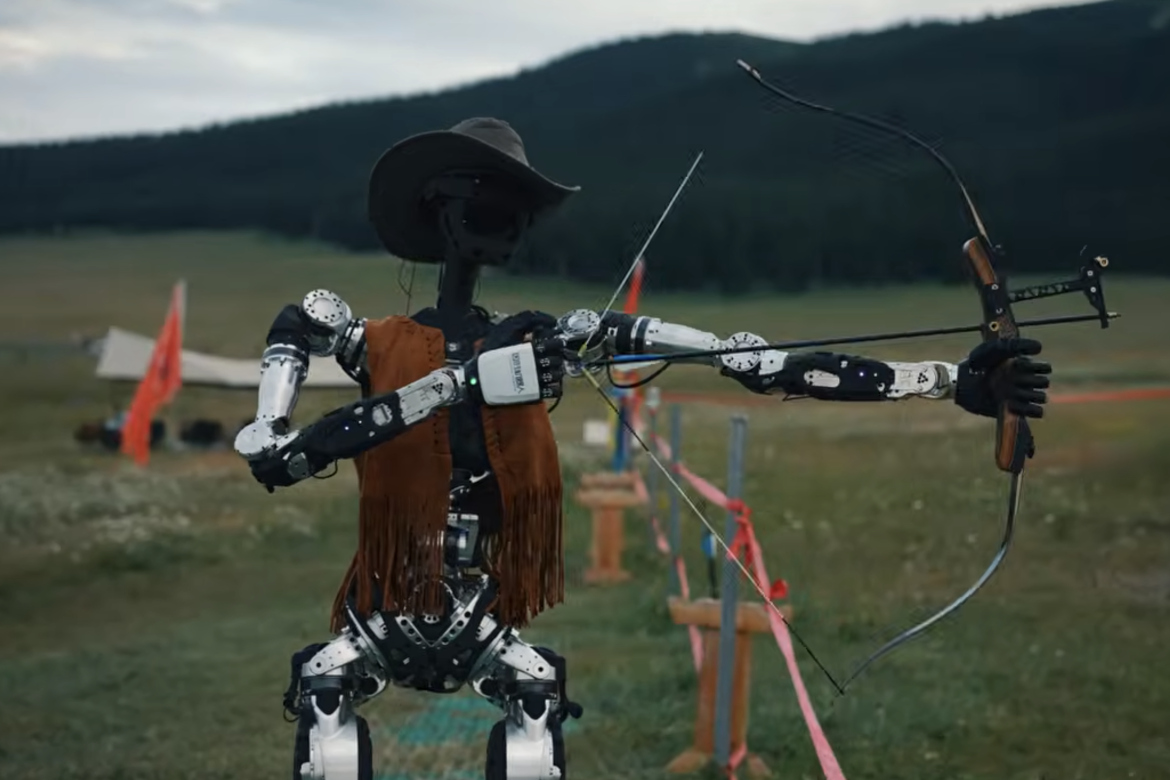
PNDbotics has demonstrated its Adam humanoid riding a robotic horse and firing an arrow at a target from 20 metres, highlighting advances in whole-body coordination and dynamic balance.