Key Notes
- Opentrons announced a $40 million Series E led by Avego, with participation from BroadOak Capital Partners, on October 29.
- The company plans to expand robotics, software and data infrastructure that connect experiment design with physical laboratory execution.
- Its reported installed base exceeds 11,000 robots, but that figure does not mean every customer laboratory operates autonomously.
Opentrons has raised $40 million in Series E funding to expand the physical laboratory infrastructure behind AI-driven research. Avego led the financing, with participation from BroadOak Capital Partners, the company announced on October 29.
The investment will support robotics, software and data tools intended to connect experimental planning with execution. That puts a specific form of physical AI at the center of the story: machines carrying out repeatable laboratory procedures.
The Physical Experiment Is the Bottleneck
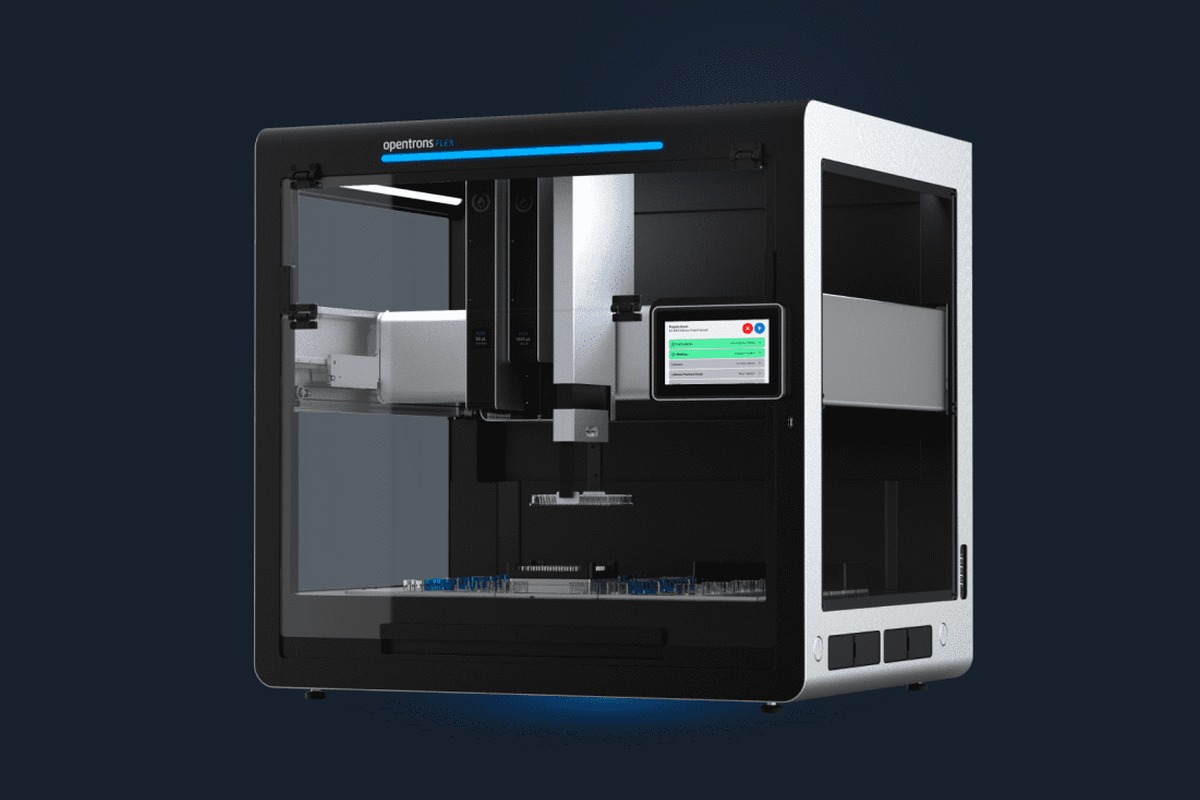
In its funding announcement, Opentrons positions its Flex platform as a bridge between AI-generated experimental plans and results collected in a real lab. It reports more than 11,000 robots deployed in over 80 countries.
That installed base is the company’s figure. It describes robot deployment, not the number of fully autonomous laboratories or scientific discoveries attributable to AI.
A Robot That Executes a Protocol
The Flex platform uses liquid-handling hardware, interchangeable pipettes and optional labware handling to automate bench work. Its software interfaces allow laboratory workflows to connect to other systems.
This kind of automation is useful because an experiment is a sequence of physical actions, not just a written instruction. Samples, volumes and timing must remain consistent if results are to be compared between runs.
Connecting a model to a robot also makes the quality of that interface consequential. A suggested procedure has to become an executable protocol with appropriate checks, and the resulting data must retain enough context to explain what actually happened.
Automation Across Life Sciences
RobotsBeat has covered Multiply Labs’ manufacturing work in a different part of life sciences. Laboratory experimentation and production have different requirements, but both depend on reliable execution and traceable process data.
The broader connection to our Foundry Robotics report is the execution layer: software gains practical value when it can direct a physical process and collect evidence about the outcome.
For Opentrons, growth will depend on making those connections useful across more workflows without losing experimental control. Funding provides resources for that work; reliable protocols, integration and repeatable results will determine its impact at the lab bench.
Disclaimer: RobotsBeat is an independent media brand owned and operated by NuvexMedia LLC, publishing news, research, and insights on artificial intelligence, emerging technologies, automation, and related industries. NuvexMedia LLC invests in and collaborates with companies across the AI, Robotics, technology, software, and digital innovation sectors. These relationships do not influence RobotsBeat's editorial coverage, and the publication maintains full editorial independence to provide accurate, timely, and objective information. © 2026 NuvexMedia LLC. All rights reserved. This content is for informational purposes only and should not be considered legal, tax, investment, financial, or other professional advice.