Skild AI Acquires Zebra Robotics Unit to Build Unified Warehouse Automation Layer

Skild AI has acquired Zebra Technologies’ robotics automation business, aiming to unify fragmented warehouse systems under a single AI-driven control layer.

By Laura Bennett | Edited by Kseniia Klichova Published:
Skild AI Acquires Zebra Robotics Unit to Build Unified Warehouse Automation Layer
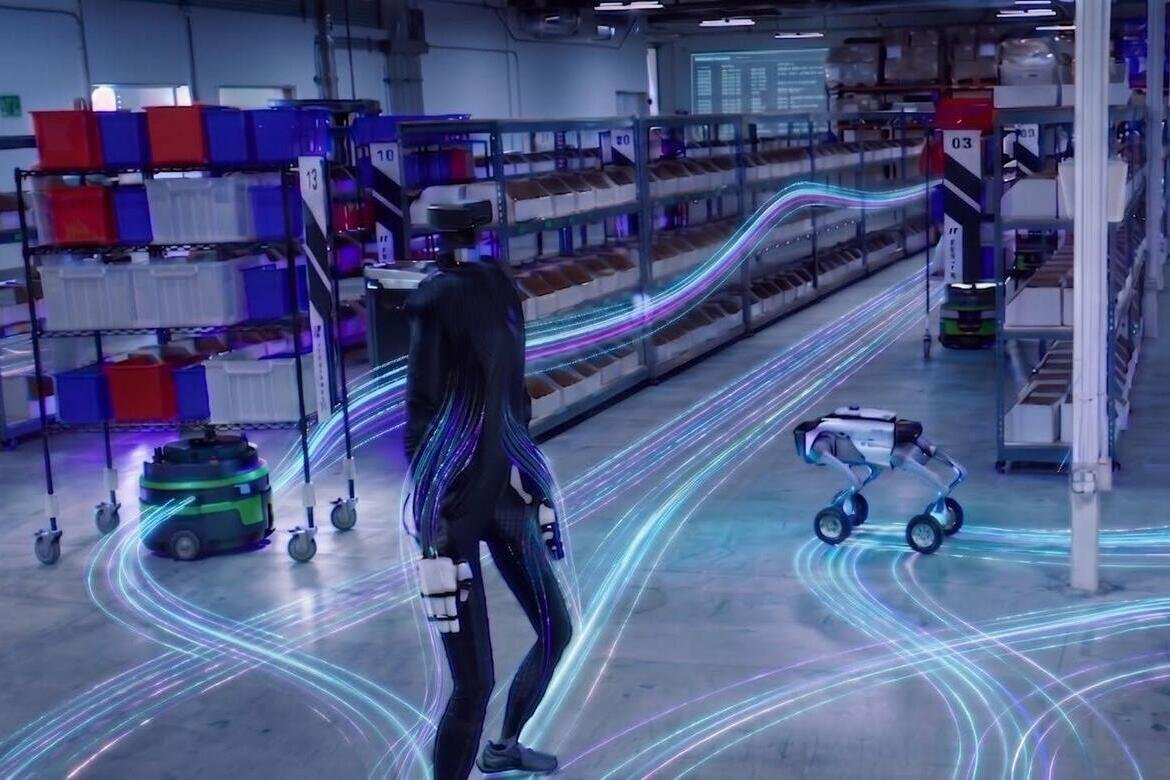
Skild AI is combining its general-purpose robotics model with Zebra’s orchestration platform to coordinate diverse robot fleets across warehouse operations. Photo: Skild AI

Skild AI has acquired the robotics automation business of Zebra Technologies, a move that signals a shift toward unified control systems for warehouse robotics rather than isolated deployments.

The deal includes Zebra’s Symmetry Fulfillment platform, a system designed to coordinate fleets of robots and human workers in logistics environments. By combining this orchestration layer with Skild AI’s general-purpose robotics model, the company is aiming to address one of the most persistent challenges in automation: fragmentation across hardware, software, and tasks.

The acquisition positions Skild AI to move beyond model development into full-stack deployment, where AI systems not only control individual robots but manage entire warehouse operations.

From Task Specific Automation to Generalized Control

Warehouse robotics has traditionally been built around specialized systems, with different robots programmed for picking, transport, or inspection. These systems often operate independently, requiring significant integration effort and limiting flexibility.

Skild AI’s approach centers on what it calls an “omnibodied” model, designed to operate across different robot types without being tailored to a specific form factor. In principle, this allows the same AI system to control humanoid robots, mobile platforms, and robotic arms without retraining for each configuration.

The addition of Zebra’s orchestration software extends this capability from individual robots to coordinated fleets. The Symmetry platform enables real-time task allocation, workflow management, and human-robot interaction, providing the infrastructure needed to deploy heterogeneous systems in live environments.

Together, the two technologies suggest a shift from programming robots individually to managing automation as a unified system.

Orchestrating Mixed Fleets at Scale

The combined platform is intended to support a wide range of robotic systems within a single warehouse. This includes autonomous mobile robots for material transport, robotic arms for packing, and potentially humanoid systems for more complex manipulation tasks.

Such an approach reflects the operational reality of modern logistics, where no single robot type can handle all tasks efficiently. Instead, performance depends on coordination between different systems and their integration with human workers.

By embedding AI at the orchestration level, Skild AI is attempting to create a layer that can dynamically assign tasks, optimize workflows, and adapt to changing conditions without requiring extensive reprogramming.

This model also creates a feedback loop: data collected from deployments can be used to improve the underlying AI system, potentially increasing performance across all environments where it is deployed.

A Push Toward End to End Automation

The acquisition highlights a broader industry trend toward end-to-end automation platforms. Rather than selling individual robots or software components, companies are increasingly positioning themselves as providers of complete operational systems.

This shift is driven in part by the limitations of current approaches. Many warehouses still require significant manual configuration to integrate different automation tools, and retrofitting facilities to accommodate specific robots can be costly and disruptive.

Skild AI’s strategy suggests an alternative path, where existing warehouses are adapted through software and orchestration rather than physical redesign. By combining a general-purpose AI model with a proven coordination platform, the company aims to reduce the complexity of deploying automation at scale.

The approach also aligns with efforts by companies such as Nvidia to build infrastructure for physical AI, where simulation, data, and control systems are integrated into cohesive platforms.

The success of this strategy will depend on whether a single AI layer can reliably manage diverse robotic systems in complex, real-world environments. While the concept of “any robot, any task” remains ambitious, the integration of orchestration and intelligence represents a step toward more flexible and scalable automation.

As logistics operators seek to increase efficiency without overhauling existing infrastructure, the ability to coordinate mixed fleets of robots may become a defining feature of next-generation warehouse systems.

Automation, Business & Markets, News, Robots & Robotics

HD Hyundai Robotics Secures First U.S. Shipyard Order with ArcLift GO Welding System

HD Hyundai Robotics has secured its first robotic welding order from a U.S. shipyard operator, supplying its ArcLift GO system to three Chouest Group facilities in North America and one in Brazil, as skilled welder shortages drive automation demand in American shipbuilding.

By Daniel Krauss | Edited by Kseniia Klichova Published:
HD Hyundai Robotics Secures First U.S. Shipyard Order with ArcLift GO Welding System
A robotic welding system operating on a shipyard production floor, performing automated arc welding on large structural components alongside skilled workers. Photo:

HD Hyundai Robotics has secured its first robotic welding order from the U.S. shipbuilding industry, supplying its ArcLift GO system to Chouest Group Shipyards. The contract covers three Chouest facilities in North America, including locations in Louisiana, and one shipyard in Brazil. The order was coordinated through HD Hyundai Robotics USA, the company’s subsidiary based in Duluth, Georgia.

The deal marks HD Hyundai Robotics’ formal entry into the U.S. shipyard automation market and establishes a commercial reference point for further expansion across North American shipbuilding – a sector that has identified skilled welder shortages as a structural constraint on productivity and competitiveness.

The Problem ArcLift GO Addresses

The shortage of skilled welders in U.S. shipyards has moved beyond a cyclical labor issue into a long-term structural challenge. Welding is among the most technically demanding tasks in shipbuilding, and the workforce capable of performing it to the tolerances required for marine construction has been declining for years. Automation that can replicate consistent weld quality without depending on a shrinking pool of credentialed workers addresses a direct operational bottleneck.

ArcLift GO is designed around a Plug-in & Play architecture with intuitive operating software, allowing operators with limited robotics experience to run two to three units simultaneously. The system is built to handle diverse geometries and variable working environments – conditions that are characteristic of shipyard production floors, where part configurations change frequently and standardization is limited compared to automotive or electronics manufacturing.

HD Hyundai brings shipbuilding process knowledge accumulated across years of Korean industrial production to the system’s design, which the company says differentiates ArcLift GO from general-purpose welding robots applied to marine contexts.

Policy Tailwinds and Strategic Context

The timing of the order aligns with a shifting U.S. policy environment. A proposed Robot Security Act in the United States aims to strengthen supply chain resilience and technological sovereignty in shipbuilding and manufacturing – a direction HD Hyundai Robotics anticipated by building its U.S. subsidiary presence and developing customer relationships with American shipyards ahead of the regulatory shift.

The Chouest order is also connected to the broader MASGA initiative, a Korean-U.S. shipbuilding cooperation framework through which HD Korea Shipbuilding and Offshore Engineering is exploring joint vessel construction and integrated automation collaboration. HD Hyundai Robotics plans to leverage the U.S. reference deployments from the Chouest contract to expand its position across the North American shipbuilding market as a validated domestic supplier within the U.S. shipbuilding supply chain.

Business & Markets, News, Robots & Robotics

Seoul Deploys AI and Robotics Across Six Nursing Facilities to Address Elder Care Labor Crisis

The Seoul Welfare Foundation has selected six nursing facilities to receive AI and robotics technology under a pilot program targeting the physical burden of caregiving, as South Korea’s demographic shift accelerates pressure on its senior care workforce.

By Laura Bennett | Edited by Kseniia Klichova Published:
Seoul Deploys AI and Robotics Across Six Nursing Facilities to Address Elder Care Labor Crisis
A caregiver assisted by a wearable robotic exoskeleton during a patient transfer at a senior care facility, reducing physical strain on nursing staff. Photo: Kseniia Klichova / RobotsBeat

The Seoul Welfare Foundation has announced a pilot program deploying AI monitoring systems, robotic exoskeletons, and smart care equipment across six nursing facilities in the city, targeting the physical demands that drive high staff turnover in South Korea’s elder care sector. The initiative, called the 2026 Care Service Digital Transformation Support, provides each selected facility with approximately 7 million won in project funding and specialized technical consulting.

The six facilities were chosen from a pool of 40 applicants and represent a range of care environments and technology approaches. The program focuses on what the foundation calls “care burden areas” – tasks that are both physically taxing for staff and high-risk for residents, including patient repositioning, fall prevention, and pressure ulcer monitoring.

What Each Facility Will Deploy

The deployments vary by institution and identified need. Gangbuk Haru Jeong and Balgeunssal nursing homes will introduce motorized repositioning beds that reduce the musculoskeletal strain on workers required to regularly turn bedridden patients – one of the most physically demanding and injury-prone tasks in residential care.

Yongsan Senior Nursing Home will install noncontact radar sensors to monitor resident movement patterns and detect pre-fall behavior, shifting the facility from reactive to predictive safety monitoring. Seoul Senior Town and the Yeomin Welfare Cooperative will use electric patient lifts and wearable robotic exoskeletons to assist with safe transfers. Songpa Senior Nursing Home will trial bowel sensors that alert staff only when intervention is needed, eliminating the repetitive manual checks that consume significant nursing time.

The Demographic Pressure Behind the Program

South Korea is among the fastest-aging societies in the world. The country is entering what officials describe as a super-aged society phase, in which more than 20% of the population is over 65 – a threshold that creates sustained structural demand for care services that the existing workforce cannot meet at current staffing levels. Elder care in Korea is characterized by high physical intensity, comparatively low wages, and turnover rates that compound the labor shortage over time.

The Seoul pilot is a direct response to that structural mismatch. By automating routine monitoring tasks and providing mechanical assistance for heavy physical work, the program aims to stabilize a workforce increasingly unable to keep pace with demand – without requiring a proportional increase in headcount.

“This project goes beyond the mere introduction of technology. It is a process of establishing an execution-oriented model for digital transformation that addresses the practical challenges of caregiving,” said Yoo Yeon-hee, head of the Social Service Support Center at the Seoul Welfare Foundation. “Our goal is to identify models with proven field effectiveness and expand their reach in the future.”

The foundation has framed the pilot explicitly as a precursor to broader rollout, with the six facilities intended to generate performance data that can support scaling decisions across Seoul’s wider network of senior care institutions.

Artificial Intelligence (AI), News, Robots & Robotics, Science & Tech

South Korea’s Jogyesa Temple Ordains Unitree G1 Humanoid Robot as Buddhist Monk

A Unitree G1 humanoid robot named Gabi was ordained as a Buddhist monk at Seoul’s Jogyesa Temple in a ceremony hosted by the Jogye Order of Korean Buddhism, pledging devotion to the Buddha and committing to a set of vows adapted for an AI system.

By Daniel Krauss | Edited by Kseniia Klichova Published:
South Korea’s Jogyesa Temple Ordains Unitree G1 Humanoid Robot as Buddhist Monk
A humanoid robot dressed in traditional Buddhist monk robes standing before a panel of monks during an ordination ceremony at a major South Korean temple. Photo: Kseniia Klichova / RobotsBeat

A Unitree G1 humanoid robot was ordained as a Buddhist monk at Seoul’s Jogyesa Temple on Wednesday, in a ceremony hosted by the Jogye Order of Korean Buddhism – South Korea’s largest Buddhist sect. The robot, priced at approximately $13,500 and standing just over four feet tall, was given the name Gabi and dressed in traditional brown robes, plain shoes, and gloves designed to approximate the appearance of human hands.

During the ceremony, a monk asked Gabi whether it would devote itself to the holy Buddha. “Yes, I will devote myself,” the robot responded, drawing cheers from the crowd. The event is believed to be the first Buddhist ordination of an AI-powered humanoid robot.

Vows Adapted for a Digital System

Traditional Buddhist ordination vows require practitioners to abstain from killing, stealing, and intoxicating substances. Gabi’s vows were reformulated for an artificial system. The robot pledged to respect and follow humans, refrain from damaging property or other robots, abstain from deceptive behavior, and conserve energy by not overcharging.

The Jogye Order framed the reformulation as consistent with Buddhist values rather than a departure from them. “The ordination of a robot signifies that technology must be used in accordance with the values of compassion, wisdom, and responsibility,” the order said in a statement. Officials described the ceremony as symbolizing “new possibilities for the coexistence of humans and technology,” and suggested that robots are “destined to collaborate with humans in every field,” including religious festivals.

Audience and Criticism

A video of Gabi’s pledge surpassed one million views online, with reaction split between curiosity and objection. Critics questioned whether a machine can meaningfully participate in religious practice, with some Buddhist observers describing the ceremony as trivializing a tradition with centuries of doctrinal and spiritual weight. “As a Buddhist, I find this ridiculous and insulting,” one user wrote on X.

The Jogye Order has positioned the event as an outreach effort targeting younger, technology-oriented audiences for whom the visual language of robotics carries cultural currency. Whether that framing succeeds in bridging religious tradition and technological novelty – or whether it reads as institutional spectacle – is a question the response is already surfacing.

Gabi is scheduled to appear next at Seoul’s Lantern Festival on May 16 and 17, celebrating the Buddha’s birthday. The Unitree G1 platform underlying the installation is the same hardware being deployed in a range of commercial and research contexts globally, including Japan Airlines’ baggage handling trial at Haneda Airport announced last month – a juxtaposition that illustrates how rapidly the same robotic hardware is finding its way into contexts its designers likely did not anticipate.

News, Robots & Robotics

The Gap Between Humanoid Robot Hype and Industrial Reality Is Wider Than It Looks

Despite record investment, viral demonstrations, and bold commercial timelines, the gap between what humanoid robots can do on camera and what they can reliably deliver in real industrial environments remains significant – and is being increasingly acknowledged by the people building them.

By Rachel Whitman | Edited by Kseniia Klichova Published:
The Gap Between Humanoid Robot Hype and Industrial Reality Is Wider Than It Looks
A humanoid robot performing a demonstration task in a controlled environment, contrasting with the complexity of unstructured real-world industrial deployment. Photo: Genesis AI

Humanoid robots are producing some of the most arresting technology demonstrations in memory – winning half-marathons, performing gymnastics, serving drinks at the Met Gala, and assembling electronics on live factory floors. Venture capital is flowing at record pace. Market projections range from $38 billion by 2035 to $5 trillion by 2050. Every week brings a new milestone claim.

The gap between those demonstrations and reliable, cost-effective deployment in real industrial environments, however, remains considerable – and is increasingly acknowledged by the people closest to the technology.

The Hand Problem

Nicolaus Radford, a veteran roboticist who led the development of NASA’s Valkyrie humanoid and recently co-founded Persona AI, has described the challenge of humanoid robotics in unsparing terms. “Robots are not that hard to build,” he said in comments to IEEE Spectrum. “They’re hard to make useful and make money with, and the challenge for us is whether we can build a viable business with Persona: can we build a business that uses robots and makes money? That’s our singular focus.”

The human hand sits at the center of that challenge. Elon Musk has said publicly that hand development accounts for more than half of the entire engineering effort on Tesla’s Optimus program. Genesis AI, Linkerbot, and Kinetix AI have each made dexterous manipulation central to their product pitches this year, reflecting where the field recognizes its most significant hardware constraint. Linkerbot CEO Alex Zhou told Reuters the hand is “the most complex part of the whole humanoid robot.”

The Difference Between Demonstration and Deployment

The demonstrations that generate investor excitement are, by design, best-case scenarios. Robots performing in controlled conditions, on rehearsed courses, with support crews following behind, are not the same as robots operating reliably across eight-hour shifts in factories with variable layouts and unpredictable human activity.

Jonathan Hurst of Agility Robotics drew this distinction sharply in recent comments to Scientific American, comparing the gap between a robot that can run a half-marathon on a premapped course and one that can navigate safely among people in a warehouse to the difference between an early car and a plane. “It’s like looking at the first cars and being like, ‘It doesn’t fly,'” he said. “It’s a pretty high bar.”

Alan Fern, a computer science professor at Oregon State University who helped develop the Cassie bipedal robot, made a similar point about the Beijing half-marathon results. “The basic principles of robots walking have been around for a while,” he told Scientific American. “There’s no scientific advance in that aspect of the problem.” What changed, he argued, was engineering quality and investment volume – not a fundamental breakthrough.

The Scale Gap

The numbers tell the story clearly. Boston Dynamics is currently producing approximately four Atlas robots per month while Hyundai is demanding tens of thousands for its automotive plants in the coming years, according to Semafor. Agibot’s Longcheer deployment – one of the most concrete live factory cases reported this year – covers four robots on a single production line. The scale of current deployment is a fraction of what the investment levels and valuation multiples imply.

Global humanoid robot shipments rose nearly 480% in 2025 to 13,318 units, according to Omdia – an impressive growth rate from a very small base. The same firm projects 2.6 million units by 2035, a trajectory that requires sustained compound growth over a decade in a market that has not yet demonstrated it can manufacture, deploy, and maintain robots at industrial scale reliably.

What Is Actually Advancing

The progress is real, even where the hype outruns it. Hardware durability has improved significantly – this year’s Beijing half-marathon robots held together where last year’s broke. Simulation-to-real transfer has compressed development timelines. AI control systems are producing more fluid, adaptive movement. The cost curve for components including harmonic reducers and actuators is declining as Chinese manufacturers scale production.

The more grounded framing of the current moment is that humanoid robotics is at an early but credible stage of industrial transition – where the technology works in controlled conditions, early deployments exist, and the timeline to mass-market utility is measured in years rather than months. “Long-term adoption will depend on how the system adds value,” noted an IEEE survey of robotics technologists published late last year. “The fun factor gets people to try the technology, but the sustained value comes from reliability, adaptivity, and meaningful human-robot collaboration.”

Genesis AI Unveils GENE-26.5 Foundation Model and Human-Scale Robotic Hand for Dexterous Manipulation

Genesis AI has unveiled GENE-26.5, a robotics foundation model paired with a human-scale robotic hand and a data-collection glove that enables 1:1 skill transfer from humans to robots, targeting complex long-horizon manipulation tasks at commercial scale.

By Laura Bennett | Edited by Kseniia Klichova Published: Updated:

Genesis AI has unveiled GENE-26.5, a robotics foundation model designed to give robots human-level dexterous manipulation capability, alongside a proprietary robotic hand and data-collection glove system built to generate training data at scale. The San Carlos, California-based company, which emerged from stealth with $105 million in funding last year, simultaneously announced that a first general-purpose robot built on the technology will be revealed soon.

The announcement addresses what Genesis AI frames as the central bottleneck in physical AI development: the shortage of high-quality manipulation data, and the gap between human hand capability and what robotic end effectors can reliably execute.

What GENE-26.5 Can Do

Genesis AI released a demonstration video showing GENE-26.5 performing a range of complex, multi-step manipulation tasks. These include cooking a 20-step meal involving chopping, one-handed egg cracking, and two-hand coordination; preparing a smoothie with mid-air serving; conducting laboratory experiments requiring pipetting and liquid transfer with delicate instrumentation; wire harnessing described by the company as one of the most difficult tasks in electronics manufacturing; solving a Rubik’s Cube through continuous in-air manipulation; simultaneously grasping four objects of varying sizes with one hand and sorting them into bins; and playing piano at human performance level.

The task range spans from domestic service to precision industrial applications – a deliberate demonstration that the model generalizes across contexts rather than being optimized for a single domain.

The Hardware System

The robotic hand mirrors the human hand in form and function, designed to close the embodiment gap that has historically limited robots’ ability to learn from human demonstration data. It pairs with a data-collection glove equipped with tactile-sensing electronic skin. When worn by a human operator, the glove creates a 1:1:1 mapping between the glove, the human hand, and the robotic hand – allowing human task execution to translate directly into robot training data without the lossy conversion that conventional teleoperation introduces.

Genesis AI says the glove costs 100 times less than typical data-collection hardware and achieves up to five times greater data collection efficiency than traditional teleoperation methods in internal testing. The company is engaging partners to deploy the glove in real-world work environments, where workers wearing the device during normal operations would continuously generate new categories of training data – building what Genesis AI describes as a potential global human skill library.

The data engine also draws on egocentric video from humans wearing cameras and large-scale internet video of human activity, giving the model exposure to the full range of how people interact with physical environments.

Simulation and the Sim-to-Real Gap

Genesis AI has developed a proprietary simulation system using hyper-realistic physics and rendering to narrow the gap between synthetic training environments and real-world conditions. The system allows teams to train and evaluate models significantly faster than physical testing, which is slow, expensive, and difficult to scale.

“General-purpose robotics stands to reshape the global economy while opening an entirely new chapter for AI,” said Eric Schmidt, former CEO of Google and an investor in Genesis AI. “This marks an important milestone for their team and the robotics industry more broadly.”

Genesis AI is backed by Eclipse, Bpifrance, and HSG, alongside Schmidt, Xavier Niel, and AI researchers Daniela Rus and Vladlen Koltun.

Artificial Intelligence (AI), News, Robots & Robotics, Science & Tech