Key Notes
- Lute’s $20 million financing total combines seed and pre-seed rounds, with the seed co-led by OTB Ventures and FORWARD.one.
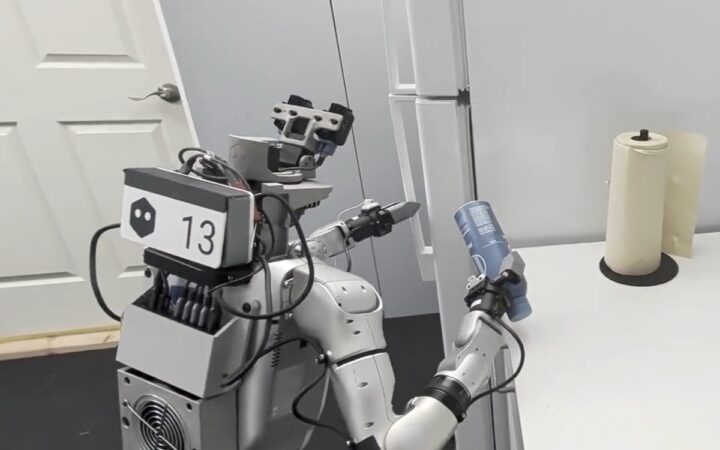
- The company is developing tactile sensors and robot foundation models, with Lute-0 posting higher success rates than π0.5 on five company-run retail tasks.
- Lute combines autonomous operation with remote human support and plans to use the funding for more data, better models and additional customer deployments.
Lute has raised $20 million across seed and pre-seed funding to develop robot models that learn from touch as well as vision. The company, with teams in Warsaw and San Mateo, is using tactile data to improve manipulation in retail, warehouses and third-party logistics.
OTB Ventures and FORWARD.one co-led the seed round, following pre-seed funding led by Credo Ventures and Seedcamp. OTB’s investment note confirms the combined $20 million total. Other participants include Inovo VC, Borusan Ventures, ff Venture Capital and Naval Ravikant; the announcement does not disclose a valuation or separate amounts for the two rounds.
Touch Sensors Capture What Cameras Cannot Easily Show
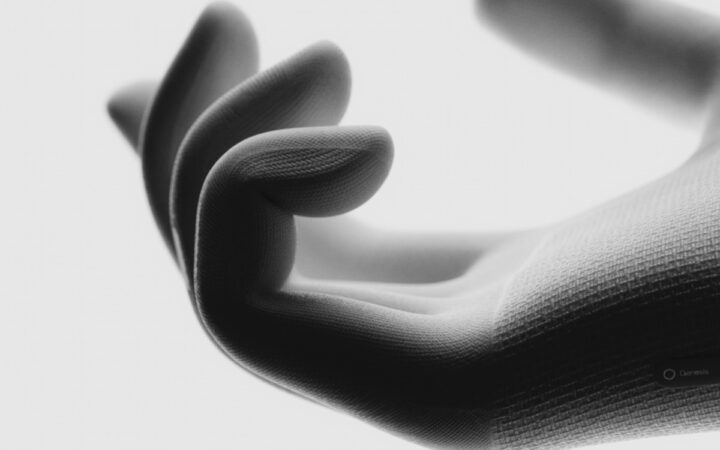
In its November 25 announcement, Lute describes compact, elastomer-based tactile sensors developed with partners and incorporated into a portable data-collection system. They record information about contact, load and changing pressure.
The aim is to add observations that an image alone may not reveal clearly: whether a grasp is becoming unstable, how firmly an item is held and how its material responds. That information is particularly relevant when a robot handles soft packaging or objects that shift under pressure.
The broader research goal is a family of foundation models using tactile and visual inputs. Lute’s first model, Lute-0, is a video-action model that connects observations of a changing scene with robot movements.
Lute-0 Posts Higher Scores in Five Internal Tests
Lute publishes the following success rates for retail manipulation tasks, comparing Lute-0 with Physical Intelligence’s π0.5. The figures are the company’s own evaluations.
| Internal retail task | Lute-0 | π0.5 |
|---|---|---|
| Fruit pick and place | 82% | 72% |
| Drinks | 50% | 18% |
| Deformable snacks | 98% | 70% |
| Deformable packs | 70% | 62% |
| Vegetable manipulation | 76% | 22% |
Source: Lute’s internal retail pick-and-place evaluations. These results describe the five listed tasks, rather than an independently verified performance level across all retail work.
The company also reports lower pretraining-data requirements and improved latency. The public announcement does not provide enough detail to establish a controlled, equivalent-data comparison or isolate how much of the result comes specifically from adding touch.
The variation between tasks is informative. Drinks remain at 50% success in the published test, while deformable snacks reach 98%. An operator’s decision would depend on performance for the actual objects and workflow being automated, rather than the strongest result alone.
Deployments Combine Autonomy With Human Support
OTB identifies co-founders Paweł Budzianowski and Krzysztof Walas as the company’s CEO and CTO. Its account says Lute’s models are operating at a large European automotive-parts distributor and in hospital corridors, with further retail work under way. The customers are not named.
Lute works with systems integrators to adapt its technology to hardware already being installed for clients. When a robot needs help, monitoring and remote human assistance support the operation; difficult cases and interventions then become material for further training.
That connects model development to the work needed after installation. A deployment has to account for the task, the equipment and the cost of human intervention. The announcement does not disclose fleet-wide uptime, intervention rates or the financial returns achieved by customers.
Our Lupa coverage follows another approach to collecting touch-rich human demonstrations, while our Enact report examines force and contact awareness in manipulation. Lute’s new capital will support more data collection, model development and customer deployments, where repeated task performance will test the value of its approach.
Disclaimer: RobotsBeat is an independent media brand owned and operated by NuvexMedia LLC, publishing news, research, and insights on artificial intelligence, emerging technologies, automation, and related industries. NuvexMedia LLC invests in and collaborates with companies across the AI, Robotics, technology, software, and digital innovation sectors. These relationships do not influence RobotsBeat's editorial coverage, and the publication maintains full editorial independence to provide accurate, timely, and objective information. © 2026 NuvexMedia LLC. All rights reserved. This content is for informational purposes only and should not be considered legal, tax, investment, financial, or other professional advice.