Key Notes
- RoboSense reported 427,800 LiDAR units sold for robotics and other applications in the first nine months of 2026, an increase of 423% from a year earlier.
- The company says its Space Camera has entered leading AI companies’ supply chains, but it has not named those customers or disclosed their order volumes.
- Third-quarter group revenue rose to about 673 million yuan while net loss widened to about 168 million yuan, showing the gap between shipment growth and profitability.
RoboSense sold approximately 427,800 LiDAR units for robotics and other applications in the first nine months of 2026, up 423% from a year earlier. The increase highlights growing demand for the sensing hardware used in mobile robots, automated equipment and embodied AI systems.
The company’s November 25 results announcement also reported new supply-chain relationships for its Space Camera products. Its financial filing shows that the expansion in sensor volumes has come alongside a wider quarterly loss.
Robotics-Related LiDAR Sales Reach 427,800 Units
The nine-month figure covers RoboSense’s combined category for robotics and other uses. It should not be read as a count of humanoid robots: the business serves applications including commercial cleaning, autonomous delivery and 3D spatial-data collection.
For the third quarter alone, the exchange filing records 145,200 units in that category, up 309% year over year. Total quarterly LiDAR sales, including automotive applications, were approximately 575,500 units.
Separating those figures matters. The 423% growth rate describes nine months of robotics-related unit sales, while the quarterly total includes a larger automotive business. Neither figure measures the revenue or profitability of humanoid robotics on its own.
Space Camera Connects Robot Sensing With Training Data
RoboSense says its Space Camera has entered the supply chains of several leading AI companies, with collaborations spanning North American model developers and humanoid manufacturers. The announcement does not identify those customers or disclose their order volumes.
The company is positioning spatial sensing for two connected jobs: recording the physical world to train AI and providing the observations a deployed robot needs to act. Hardware used for data collection and onboard perception can therefore become part of the same development pipeline.
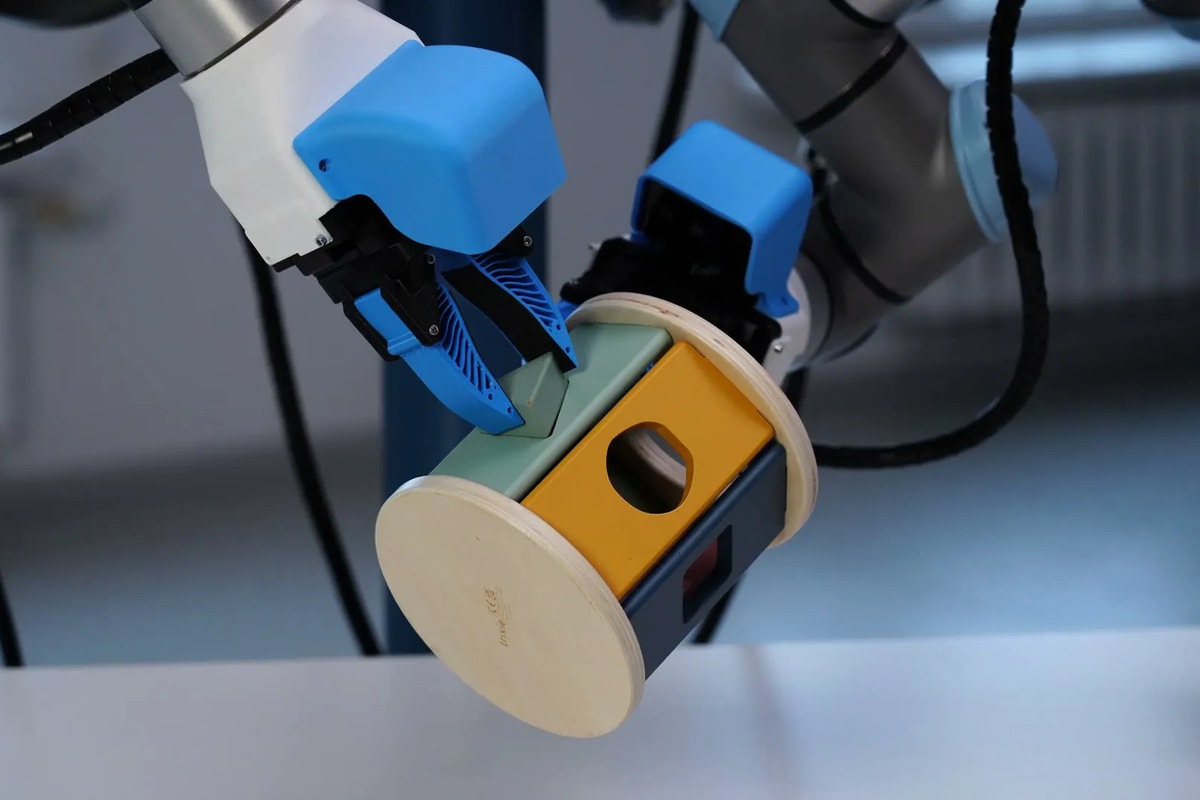
Its AC2 camera, for example, combines solid-state time-of-flight LiDAR, stereo RGB cameras and an inertial measurement unit. RoboSense describes hardware synchronization of depth, image and motion streams, with mounting options that include robot heads and arm end-effectors. These are the manufacturer’s product specifications, rather than a newly disclosed customer deployment.
Our Ouster coverage examines another approach to aligning colour and depth information. The value for robotics lies in observations that remain useful when objects move, lighting changes or a task requires precise contact.
Higher Volumes Have Yet to Produce Quarterly Profit
RoboSense’s unaudited results put third-quarter group revenue at 672.7 million yuan, up 65.2%. Its net loss widened to about 168 million yuan from 100 million yuan a year earlier, while gross margin fell to 3.7% from 23.9%.
Those are group-level figures, covering automotive and other activities as well as robotics. They show why rising sensor shipments and profitable growth need to be assessed separately.
The wider ecosystem also needs tools to manage what sensors record. RobotsBeat’s Mosaico report looks at organizing and synchronizing robot data. RoboSense supplies part of the hardware feeding those workflows; sustained customer orders and improving financial returns will show how much that demand becomes a durable business.
Disclaimer: RobotsBeat is an independent media brand owned and operated by NuvexMedia LLC, publishing news, research, and insights on artificial intelligence, emerging technologies, automation, and related industries. NuvexMedia LLC invests in and collaborates with companies across the AI, Robotics, technology, software, and digital innovation sectors. These relationships do not influence RobotsBeat's editorial coverage, and the publication maintains full editorial independence to provide accurate, timely, and objective information. © 2026 NuvexMedia LLC. All rights reserved. This content is for informational purposes only and should not be considered legal, tax, investment, financial, or other professional advice.