Key Notes
- WorldGPT is designed to learn from six machine categories, sharing a foundation for perception, prediction and action planning across robots and vehicles.
- XPENG’s reported 95.2% Meta-World MT50 average comes from simulated manipulation tests, with comparisons that do not control for training data.
- The model is a cloud teacher intended to train smaller on-device systems, while its technical report and a deployment timetable for those systems remain forthcoming.
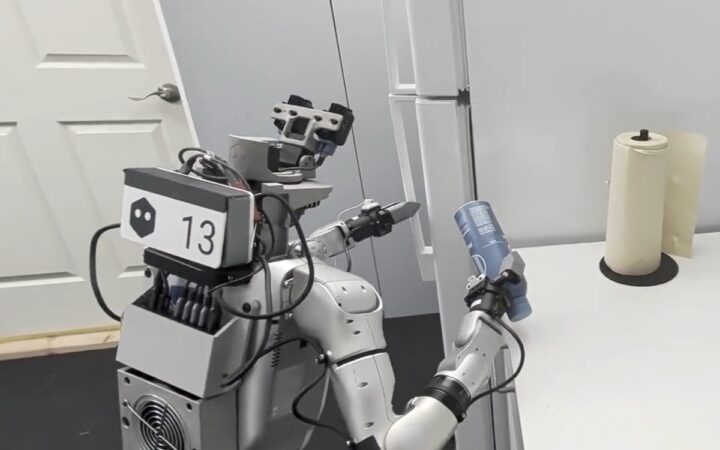
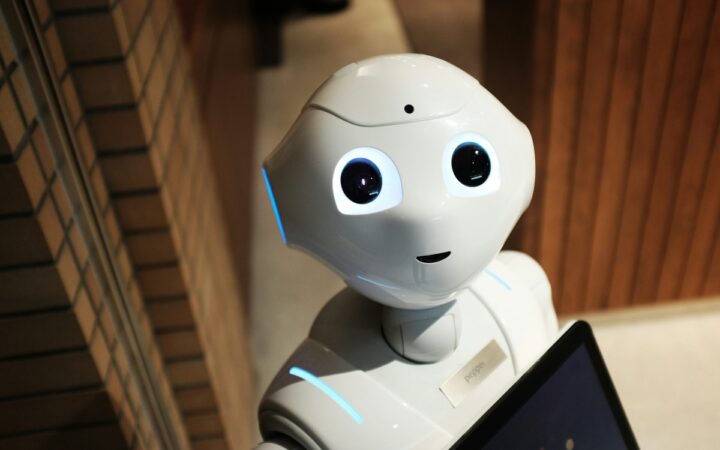
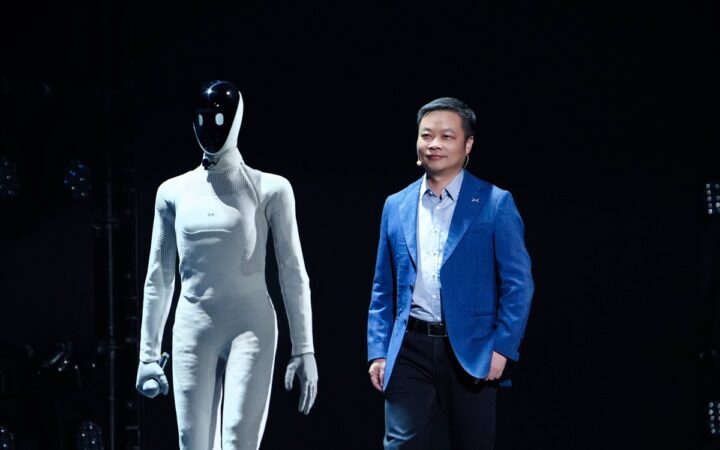
XPENG has introduced WorldGPT, a physical AI model designed to share learning across cars, boats, drones, single-arm robots, dual-arm robots and humanoids. The goal is a common understanding of the physical world that can support different machines without building every AI system independently.
The company’s November 24 announcement places WorldGPT within its Turing World Model family. XPENG reports leading benchmark results in several fields, while positioning the model as a cloud-based teacher for smaller systems adapted to particular robot bodies.
A Shared Teacher for Different Robot Bodies
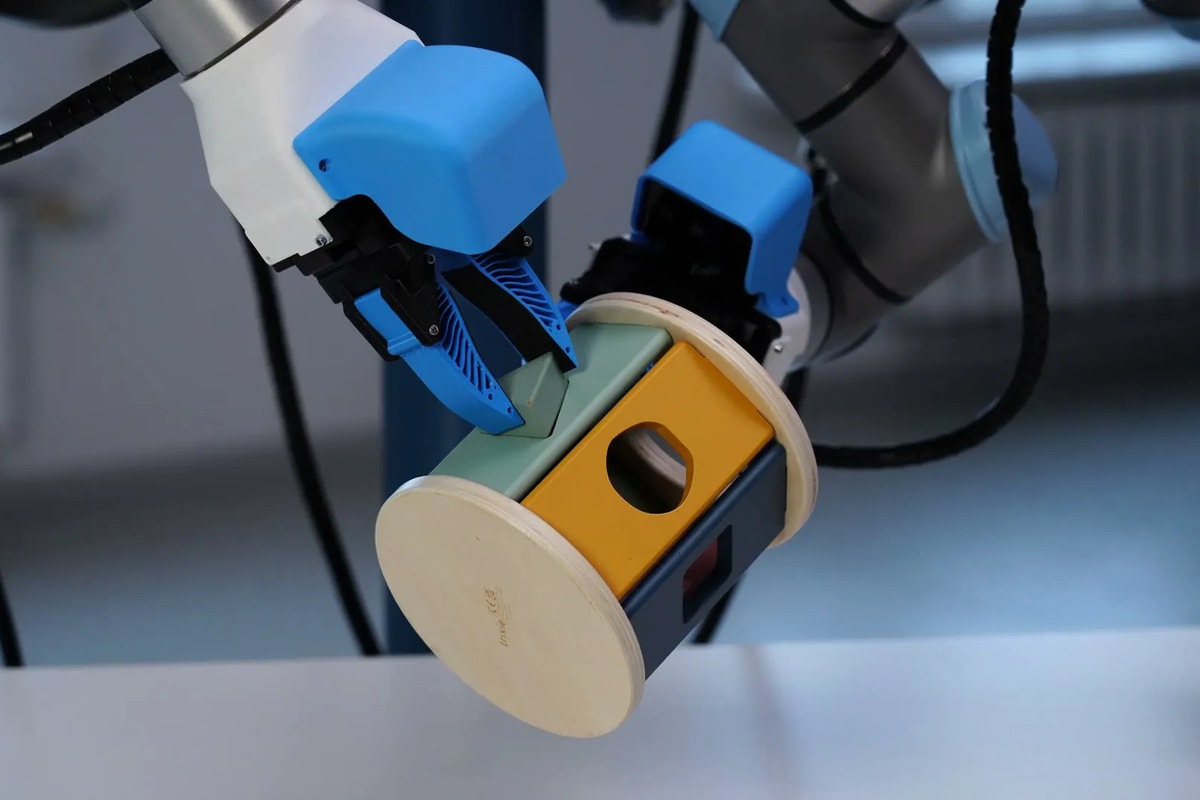
The proposed connection between machines is visual experience. A steering command cannot directly operate a robot gripper, but both systems need to interpret objects, distances and motion from camera observations. Shared learning aims to reuse that understanding while preserving the controls each body requires.
XPENG says WorldGPT combines perception, reasoning, prediction and action planning. Given camera footage and an instruction, it can generate a possible future scene, produce actions and explain its decisions in language.
The company’s development plan uses a large teacher in the cloud, with knowledge distilled into smaller models intended to run on individual machines. The intended benefit is less duplicated training work when adapting AI to another body. XPENG has not quantified a customer’s development-cost saving or announced a timetable for those on-device models.
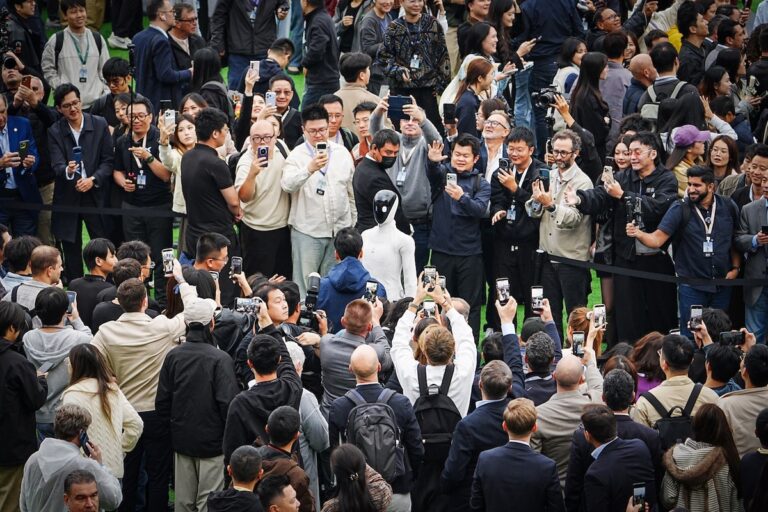
The distinction is relevant to our IRON coverage. WorldGPT’s role as a development platform does not mean the full cloud model is already running inside every humanoid shown at XPENG’s AI Day.
What WorldGPT’s Robotics Scores Actually Measure
XPENG reports 12 first-place results across driving, manipulation, visual understanding and video generation, using comparisons dated November 12. For robotics, its benchmark tables show a 95.2% average on Meta-World MT50.
Meta-World is a simulated manipulation benchmark containing 50 environments. MT50 tests learning across those tasks; a high score does not establish the same success rate on unfamiliar physical objects or in a customer’s workplace.
WorldGPT’s published protocol uses 50 fixed layouts and ten episodes per task, with the reported average weighting four difficulty levels equally. The project also cautions that models in the comparison were not trained on controlled, identical datasets. Its VBench 2.0 video-generation result is labelled as self-evaluated with prompt rewriting.
These details make the results useful as a research comparison while limiting broader conclusions. The project page still lists its technical report as forthcoming, leaving important questions about training and reproducibility for a fuller disclosure.
Predicting a Robot’s Future Is a Step Toward Acting
The project demonstrations place generated futures beside source recordings. They begin with roughly one second of camera input; subsequent predicted footage illustrates the model’s expectations, rather than documenting a robot physically completing every depicted action.
For robotics, that separation is central. Predicting how a scene will change can help planning, but the final machine still needs an adapted controller, dependable perception and a way to respond when contact or movement differs from the prediction.
WorldGPT joins a broader effort to make learning transfer across hardware. Our GR00T 2 report follows NVIDIA’s approach to robot learning, while our Embo coverage examines world models for more adaptable robot behavior. These projects pursue related goals through different systems and evaluations.
WorldGPT’s potential is the ability to reuse experience across machines. Demonstrating that benefit in deployment will require measurements of how much new data a robot needs, how reliably it performs its assigned job and whether the smaller model preserves useful capabilities outside the cloud.
Disclaimer: RobotsBeat is an independent media brand owned and operated by NuvexMedia LLC, publishing news, research, and insights on artificial intelligence, emerging technologies, automation, and related industries. NuvexMedia LLC invests in and collaborates with companies across the AI, Robotics, technology, software, and digital innovation sectors. These relationships do not influence RobotsBeat's editorial coverage, and the publication maintains full editorial independence to provide accurate, timely, and objective information. © 2026 NuvexMedia LLC. All rights reserved. This content is for informational purposes only and should not be considered legal, tax, investment, financial, or other professional advice.