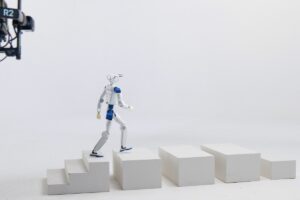
RoboParty Opens RP1 Humanoid Hardware and Software to Researchers
RoboParty’s RP1 release opens humanoid designs, control software and learning tools, with modular configurations built for research rather than household deployment.
Browse the RobotsBeat archives for robotics news, AI robotics updates, automation trends, product launches, company coverage, funding stories, policy developments, and practical industry analysis organized by year and month. This archive helps readers revisit older RobotsBeat coverage across humanoid robots, drones, industrial robots, service robots, robot hardware, autonomy, sensors, safety, deployment, and the companies shaping the robotics industry.
RoboParty’s RP1 release opens humanoid designs, control software and learning tools, with modular configurations built for research rather than household deployment.

Tesla’s new Roadster pairs SpaceX-derived thrusters with reported Optimus hardware, targets 2028 production and demonstrates flight in a restricted configuration.
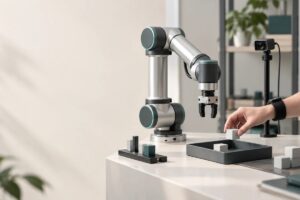
Worker accounts reveal the repetitive labor behind China’s robot-training data, with reported monthly pay of 4,000–6,000 yuan and demanding sample quotas.
Cubic³ argues that shared AI models could coordinate many robot types, while research shows specialized controllers and hardware limits remain essential.
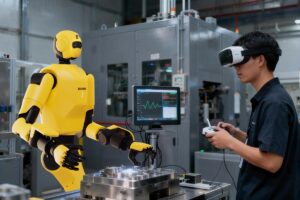
Dexforce is using synthetic scenes to train humanoid robots, betting that simulation can reduce reliance on costly human demonstrations.
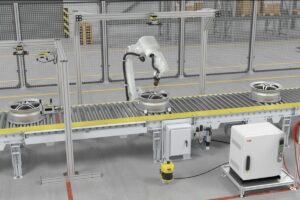
ABB’s new IRB 1700 and IRB 1700ID families combine 6–12 kg payloads with shorter-cycle claims, integrated cable routing and OmniCore control.
Tether’s TranscribePsy brings compact local speech recognition to developers building robot and wearable applications, with distinct phone and laptop builds.
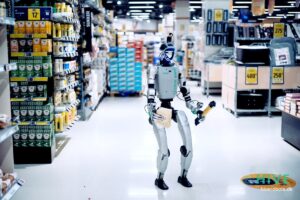
Salling Group and HIVE are training humanoid robots to restock Føtex shelves at night, targeting selected autonomous tasks in early 2027.
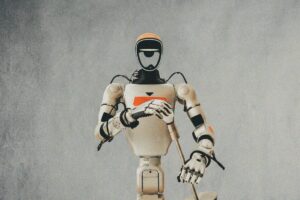
Swedish startup 120ft raises €576,000 to develop container-based robotic factories where brands pay per finished product instead of buying robots.
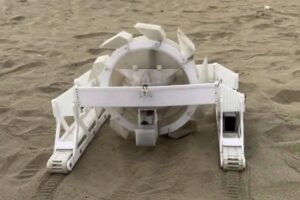
A Tarim University crawler separates iron-bearing particles from Taklamakan sand, offering an early test of mobile mineral collection rather than commercial mining.