AGIBOT Launches Genie Sim 3.0 to Power Embodied AI Development
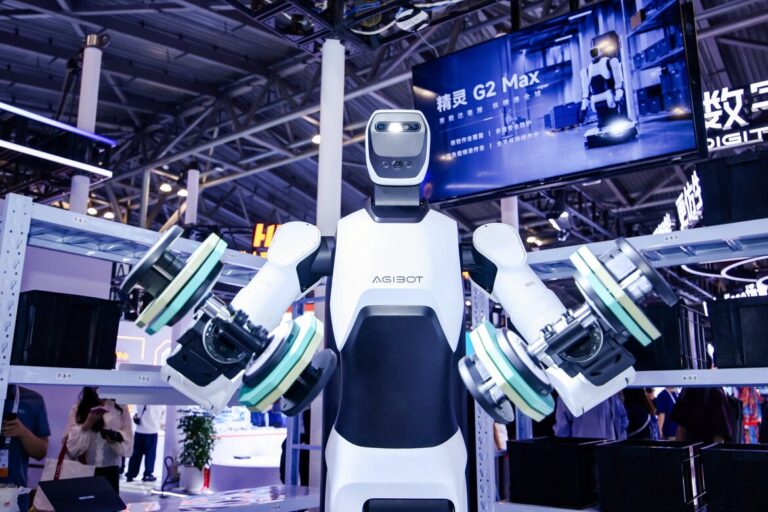
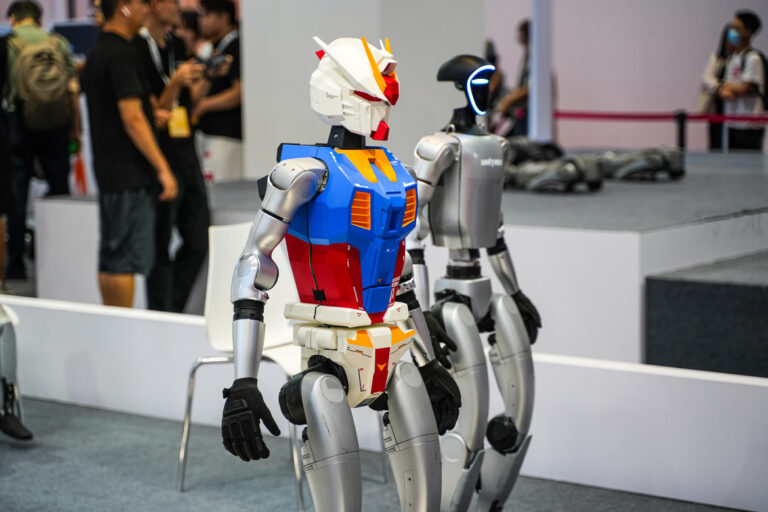
AGIBOT introduced Genie Sim 3.0, a unified platform combining simulation, data generation, and benchmarking to accelerate embodied AI development.
Global shipments of humanoid and quadruped robots are projected to reach 810,000 units by 2030, as enterprise adoption replaces early experimentation.
Gig workers across more than 50 countries are recording household tasks to train humanoid robots, revealing a new data economy behind physical AI.
Researchers have developed a flexible sensor that allows robots to detect gentle touch with high precision, marking a step toward safer human-machine interaction.
BMW has overhauled its Munich plant with an AI-driven production system and thousands of robots, signaling a shift toward software-defined manufacturing for electric vehicles.
Researchers are developing DNA-based nanorobots capable of delivering drugs and targeting viruses, though the technology remains in early experimental stages.
LG CNS has partnered with Silicon Valley robotics startups to strengthen its physical AI capabilities, combining robot foundation models with new hardware platforms.
Unitree Robotics has filed for a Shanghai IPO after becoming the world’s largest humanoid robot seller, signaling a shift from experimentation to early commercialization.
Ubtech reported a 23-fold increase in humanoid robot sales, driven by industrial deployments. The results point to accelerating commercialization of embodied AI in China.
Humanoid robot prices have dropped more than 70% in two years, signaling a shift toward commercialization. The market is now dividing into premium, mid-range, and volume-driven segments.
European companies are accelerating investment in humanoid robotics as the region seeks to regain technological momentum. Industrial expertise and automotive supply chains are emerging as key advantages.
Saronic has raised $1.75 billion to expand autonomous ship production and shipyard infrastructure. The funding highlights a shift toward software-defined maritime manufacturing at industrial scale.
Toyota Material Handling Europe has launched a coordinated AGV system designed to operate across mixed fleets. The platform reflects a shift toward scalable, software-driven warehouse automation.
Florida Polytechnic University has launched autonomous delivery robots integrated with a campus-wide point-of-sale system. The deployment signals a shift toward fully connected service robotics in everyday environments.
SAP, Humanoid, and Martur Fompak have completed a live warehouse trial linking enterprise AI agents to a humanoid robot. The test highlights how software-driven decisions can directly control physical labor systems.