Key Notes
- Juan Enriquez presented near-zero robot labor costs as a future scenario without a timetable.
- Robot taxes and universal basic income were discussion topics rather than announced policies.
- Lute and Volvo’s current deployments still involve human support, task training and validation.
Robots powered by AI could eventually push labor costs close to zero, investor Juan Enriquez argued, according to a November 26 Forbes account by summit moderator and contributor John Werner.
The discussion took place on October 30 at Minds in Motion, a physical AI summit at MIT’s Samberg Conference Center in Cambridge. The event organizers included Imagination in Action, MIT CSAIL, MIT LIDS and MassRobotics. The forecast represents a participant’s view rather than a published MIT research finding.
How the Cost Argument Works
Enriquez envisaged local AI bringing robotic work toward the cost of parts, electricity and materials. His forecast carried no deadline.
For an employer, the relevant calculation is the cost of completing a useful task. A robot that handles more items per hour could spread its purchase and operating expenses across more output. But that calculation also depends on reliability, utilization, integration and the people needed to keep the system working.
Lower production costs can create room for lower prices. How much reaches a shopper depends on what happens elsewhere in the business, including its margins and other expenses. A forecast about automated task costs therefore cannot establish what every product will cost or how every household’s income will change.
Robot Taxes and Basic Income Enter the Debate
Enriquez raised robot taxes and universal basic income as responses to the distribution question. Neither appeared in the report as an enacted policy or funded program.
The underlying economic concern is straightforward: cheaper goods offer limited help to a household that loses its earnings. A society with more productive machines would still face choices about access to that output, ownership of the equipment and support for people whose work changes.
Those choices also need evidence about adoption. RobotsBeat’s earlier coverage of automation economics examined the gap between a machine demonstrating a task and an employer finding it economical to deploy.
Current Deployments Still Require Human Work
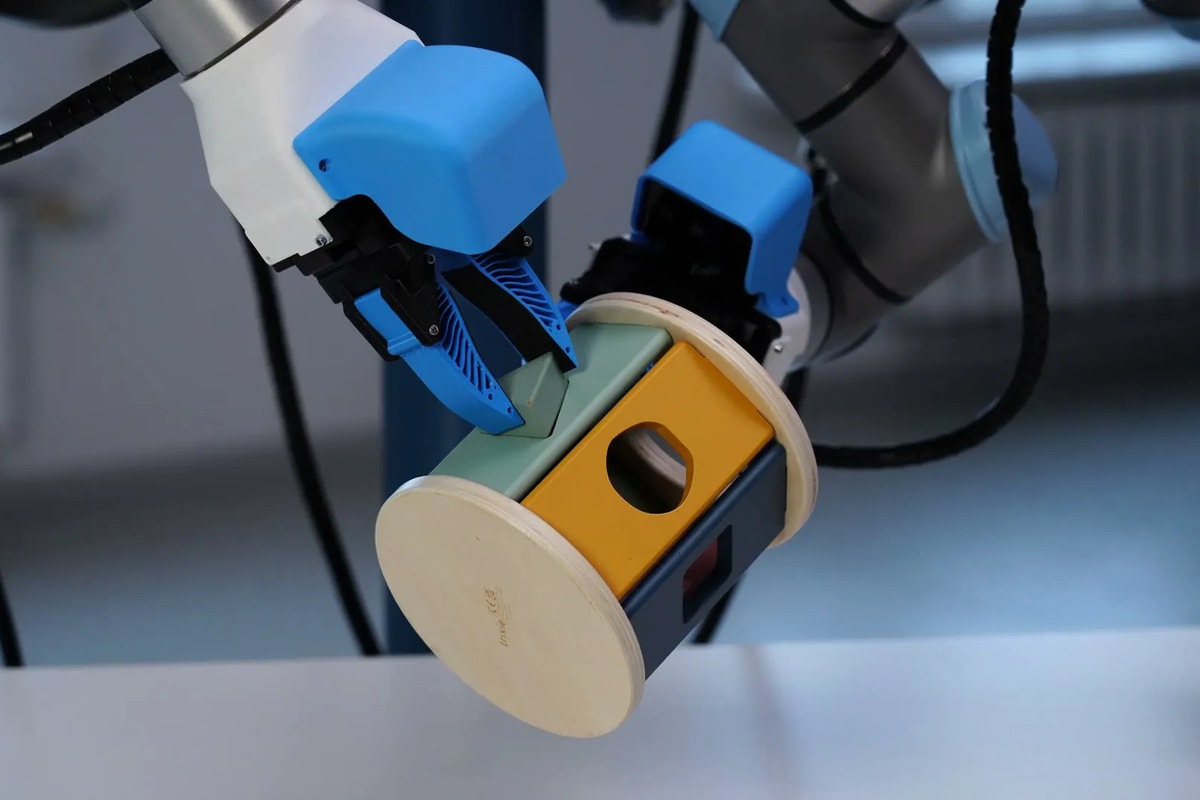
Recent company announcements show what that transition involves. Lute’s November 25 deployment update describes autonomy operating alongside monitoring and remote human assistance when a robot needs help. Failures and interventions feed back into training. Our Lute coverage details the startup’s touch-based models and funding.
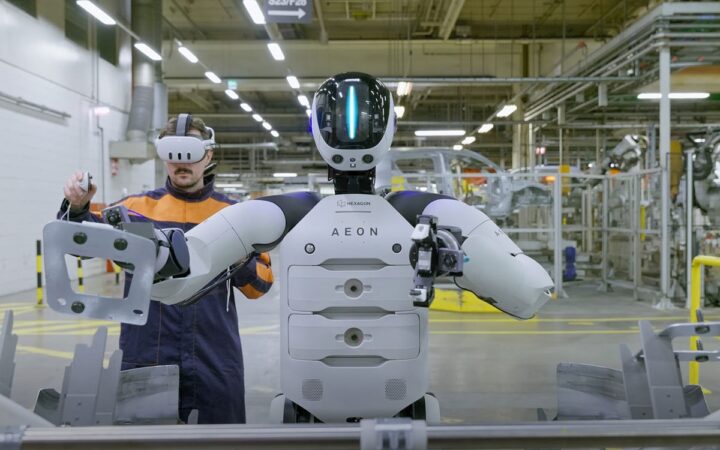
Volvo Cars, meanwhile, says AEON humanoids at its Ghent plant are learning to place components into fixtures. Employees are training them through demonstrations before a pilot planned for the first half of 2027, with production use targeted from midyear. Our AEON report explains the rollout.
These examples point to the practical evidence that matters next: sustained output, intervention frequency and the full cost of a working installation. Measuring those factors will help establish how far cheaper robot labor can spread beyond individual tasks and what that means for the people working alongside it.
Disclaimer: RobotsBeat is an independent media brand owned and operated by NuvexMedia LLC, publishing news, research, and insights on artificial intelligence, emerging technologies, automation, and related industries. NuvexMedia LLC invests in and collaborates with companies across the AI, Robotics, technology, software, and digital innovation sectors. These relationships do not influence RobotsBeat's editorial coverage, and the publication maintains full editorial independence to provide accurate, timely, and objective information. © 2026 NuvexMedia LLC. All rights reserved. This content is for informational purposes only and should not be considered legal, tax, investment, financial, or other professional advice.