Key Notes
- Kawasaki and Beckhoff signed an SPS 2026 memorandum to explore open control technologies for next-generation industrial robot systems.
- The work covers EtherCAT connectivity, PC-based control with TwinCAT, and training and support for system integrators.
- Product timing, compatible robot models and measured integration savings remain undisclosed, and open architecture does not establish an open-source software release.
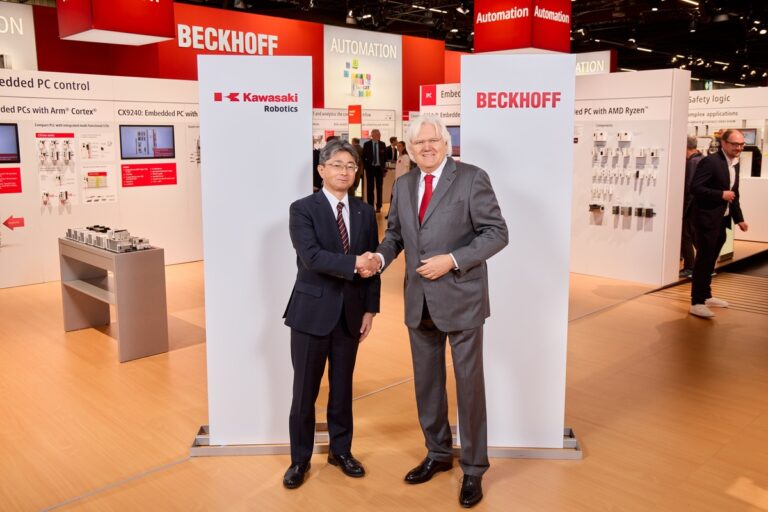
Kawasaki Heavy Industries and Beckhoff Automation have agreed to work together on open control technologies for industrial robots, targeting the connections between robot motion, sensors, machine controls and AI software. The partnership brings one of the sector’s long-established robot manufacturers together with a specialist in PC-based automation.
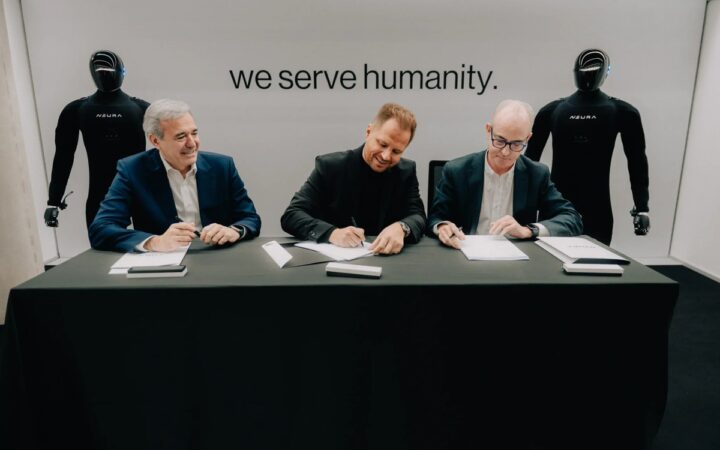
The companies signed a memorandum of understanding at SPS 2026 in Nuremberg. Kawasaki’s November 27 announcement follows Beckhoff’s November 26 release, with both describing development work rather than a finished controller launch.
EtherCAT and TwinCAT Form the Technical Focus
The partners will explore EtherCAT integration into Kawasaki industrial robot systems and the use of Beckhoff’s PC-based control architecture, including TwinCAT. They will also discuss training and support arrangements to help system integrators implement the technology.
EtherCAT provides real-time communication between automation devices. TwinCAT is the software environment that can bring control functions together on an industrial PC. Beckhoff’s platform overview describes modular capabilities spanning machine control, motion, communications, measurement and vision.
Those layers solve different parts of the same factory problem. A camera may detect where an item sits, but the robot, surrounding equipment and control system still need to coordinate the resulting movement. Connecting those elements consistently becomes more important as an application changes from a fixed sequence to decisions informed by sensors or AI.
Reducing the Work Needed to Connect a Robot Cell
Kawasaki says connections between equipment and software from different vendors can make robot-system construction more complex. The intended open environment would give customers more flexibility when choosing components, adding devices or changing production equipment.
The agreement builds on Kawasaki’s EtherCAT-based next-generation controller concept shown at iREX 2025. The Japanese announcement says the partners will establish a joint working group to advance the collaboration.
For a factory buyer, the potential benefit is a system that can be adapted with less application-specific integration work. That remains an intended outcome: the announcements provide no measured reduction in engineering time, controller price or list of supported Kawasaki robot models.
Open Architecture Still Needs a Deployable Product
The term open refers here to connectivity and the choice of compatible hardware and software. It should not be read as a promise to publish the controller’s source code or make every existing robot compatible through a software update.
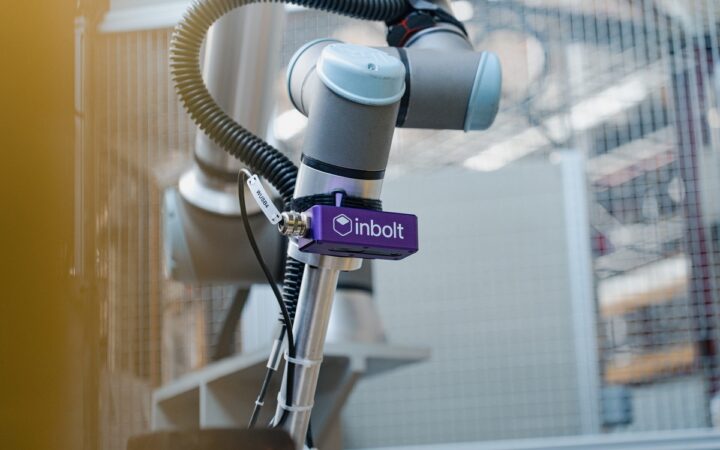
RobotsBeat previously covered Kawasaki’s RL030N platform, another part of its effort to connect robot hardware with external intelligence. Our recent Inbolt integration report examined a separate manufacturer’s approach to bringing vision guidance into a robot controller.
The Kawasaki–Beckhoff agreement addresses the infrastructure beneath those applications. Its commercial significance will become clearer when the partners specify a product timetable, supported configurations and the tools integrators can use in actual installations.
Disclaimer: RobotsBeat is an independent media brand owned and operated by NuvexMedia LLC, publishing news, research, and insights on artificial intelligence, emerging technologies, automation, and related industries. NuvexMedia LLC invests in and collaborates with companies across the AI, Robotics, technology, software, and digital innovation sectors. These relationships do not influence RobotsBeat's editorial coverage, and the publication maintains full editorial independence to provide accurate, timely, and objective information. © 2026 NuvexMedia LLC. All rights reserved. This content is for informational purposes only and should not be considered legal, tax, investment, financial, or other professional advice.