Key Notes
- FLEX turns language corrections into edits to a robot’s task representation, adding missing features, generalizing preferences and masking irrelevant details.
- The research evaluates navigation and tabletop manipulation, with a 12-person study using simulated behavior and physical demonstrations collected separately.
- MIT highlighted the CoRL 2026 work on November 9, while the paper’s research results do not establish a ready-to-use autonomous household robot.
MIT and New York University researchers have developed FLEX, a system that helps robots interpret the broader preference behind a person’s instruction. A warning about carrying coffee near a laptop, for example, can become a rule about avoiding electronics rather than an instruction tied to that single computer.
MIT reported the research on November 9 as the team prepared to present it at the Conference on Robot Learning. The work studies how people can correct a robot through ordinary language, without specifying every mathematical constraint in its motion planner.
Adding, Generalizing and Removing Rules
FLEX uses three operations to edit the features that guide a robot’s behavior. Add introduces a missing concern, Generalize connects a specific correction to a broader category, and Mask removes features that no longer matter. The experiments use GPT-4o to help interpret the language.
The order is important: a robot first identifies what a correction refers to, then considers its wider meaning, and finally checks relevance. Simply accumulating more rules can leave a system avoiding objects that have moved away or missing a new object with the same important property.
The project page separates this representation editing from reward learning. Language helps specify which features matter, while demonstrations help determine their relative importance. This is a structured robot-learning method, rather than a language model directly issuing every low-level motor command.
Testing Coffee, Candles and Fragile Objects
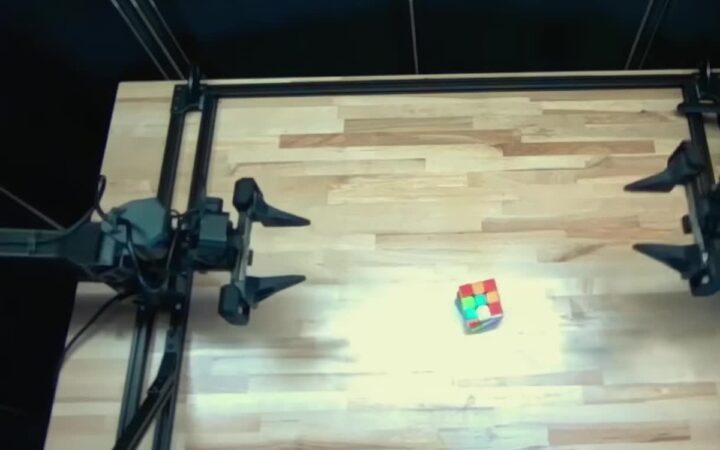
The tabletop scenarios involve carrying coffee, a candle or a bowling ball. They test whether corrections can transfer to concepts such as electronics, flammable objects or fragile items as the scene changes. The accompanying video, published by MIT CLEAR Lab, explains the research setup and comparisons.
The study compares FLEX with methods that only add features, only mask features, or ask the language model to update the representation without the three-part structure. The authors report stronger normalized reward across their sequential tasks. That metric measures alignment with the specified reward; it is not a percentage of household chores completed.
What the Human Study Demonstrates
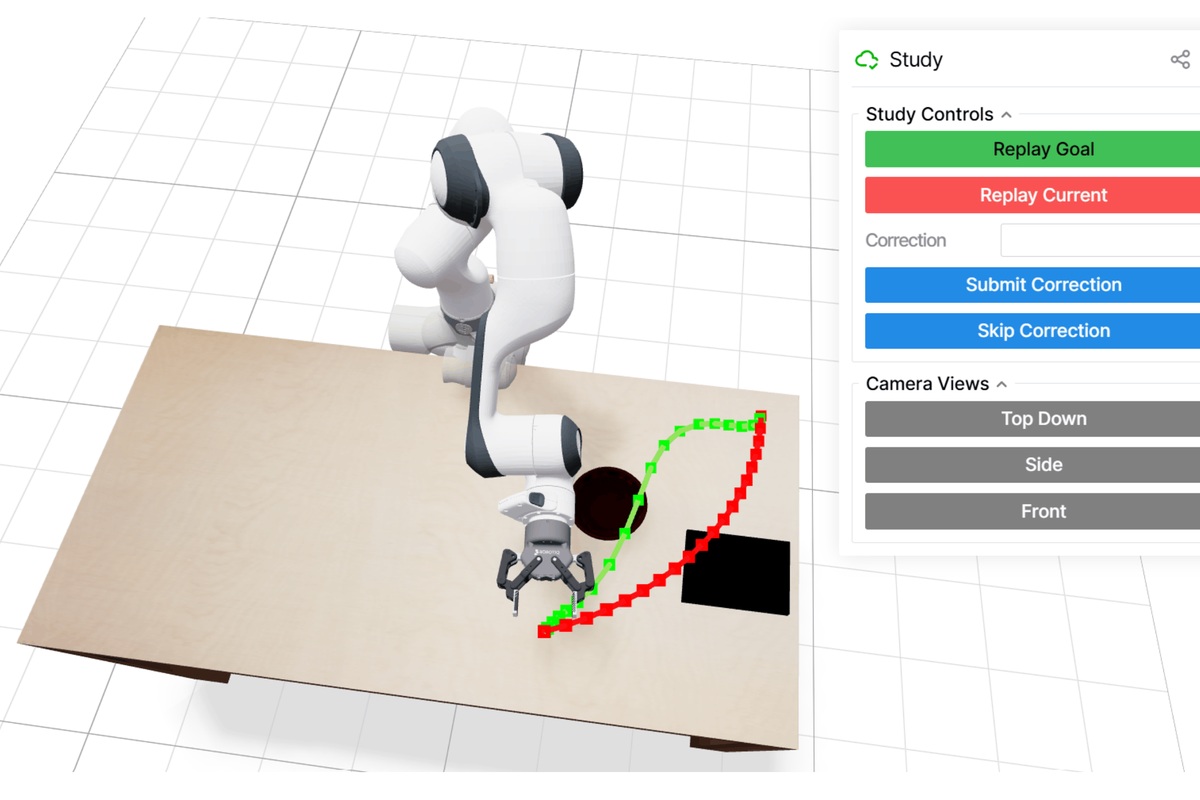
The researchers also ran a 12-person study in which participants typed corrections while viewing robot behavior in simulation. Physical Franka demonstrations were collected separately for offline learning. The project says participants used simulation for safety because some baseline methods produced erratic arm motions.
This distinction limits the result: participants did not test an autonomous home robot operating around them. The paper, first posted on October 20, presents research evaluations and a route toward more adaptable interaction, rather than a consumer product launch.
Making Instructions Easier to Reuse
For developers, the question is whether a correction remains useful when the surroundings change. A system that understands why an object matters could need less repeated instruction, while still requiring checks that its interpretation matches the user’s intention.
Our Claude robotics report covers a different model-control evaluation, and the CoRL overview follows broader training and simulation work. FLEX focuses on the communication between a person’s preference and the robot’s representation of a task; its results should be assessed within that narrower setting.
Disclaimer: RobotsBeat is an independent media brand owned and operated by NuvexMedia LLC, publishing news, research, and insights on artificial intelligence, emerging technologies, automation, and related industries. NuvexMedia LLC invests in and collaborates with companies across the AI, Robotics, technology, software, and digital innovation sectors. These relationships do not influence RobotsBeat's editorial coverage, and the publication maintains full editorial independence to provide accurate, timely, and objective information. © 2026 NuvexMedia LLC. All rights reserved. This content is for informational purposes only and should not be considered legal, tax, investment, financial, or other professional advice.