Key Notes
- Claude Fable 5.2 leads Anthropic’s RoboDojo Sim comparison at 64.9% success, ahead of Opus, Gemini and Astra in the company’s internal runs.
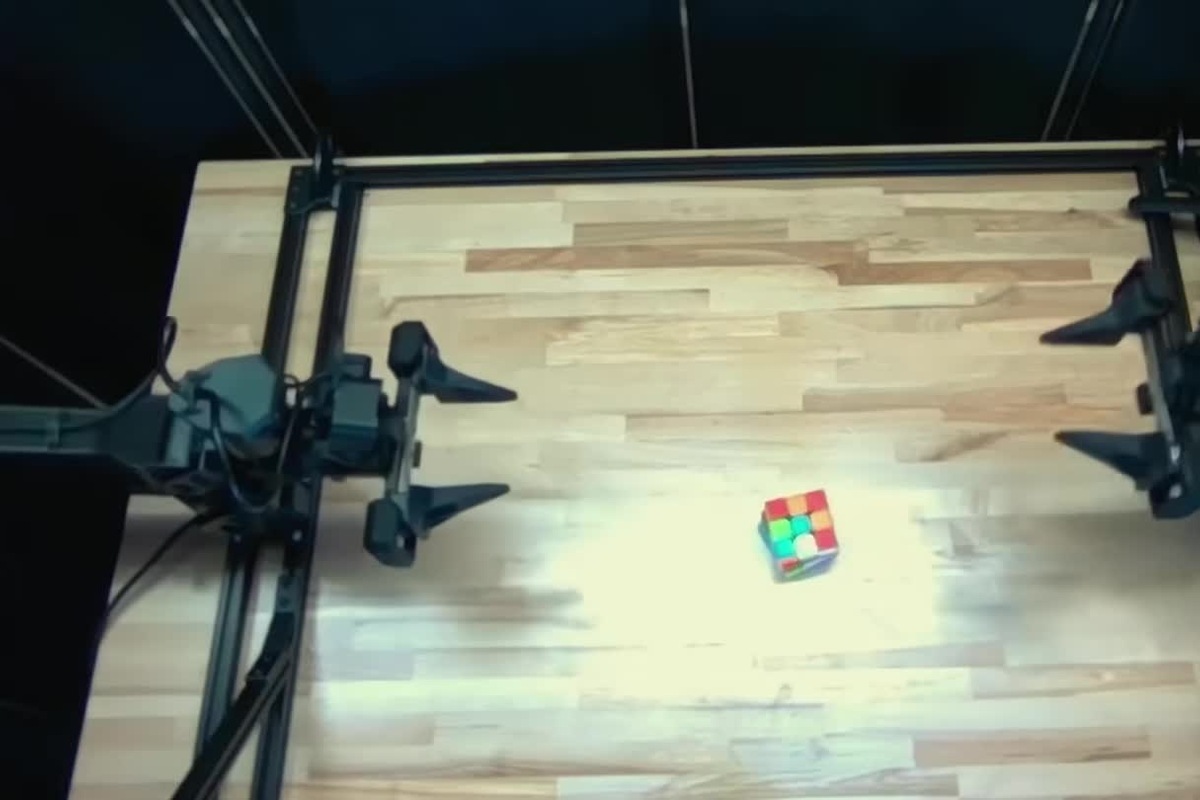
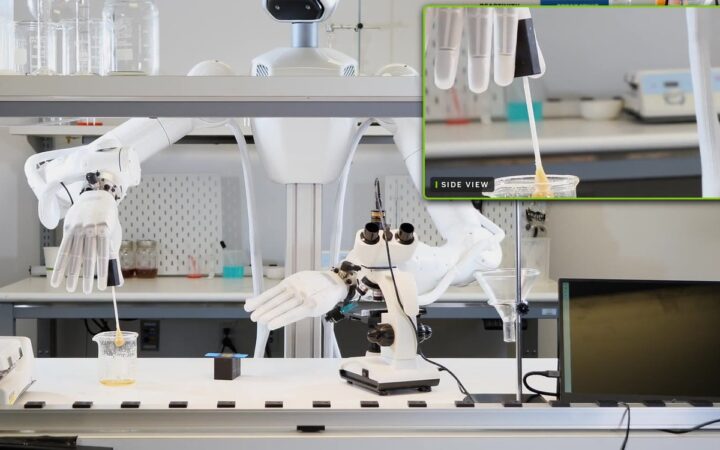
- The official video shows Claude controlling two off-the-shelf robot arms through Claude Code, separately from the simulated benchmark used for model rankings.
- Fable and Mythos share an underlying model, with Fable intended for broader distribution and Mythos restricted to verified research users.
Anthropic’s Claude Fable 5.2 has scored 64.9% average success in a simulated robotics benchmark, ahead of GPT-6 Astra, Gemini 4 Argon and Claude Opus 5.5 in the company’s tests. The November 9 launch also includes a video of Claude controlling physical robot arms, giving the model release a concrete robotics dimension beyond its coding and document capabilities.
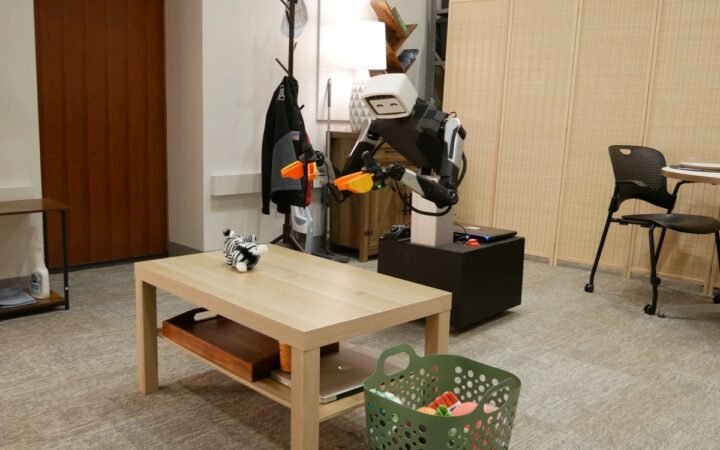
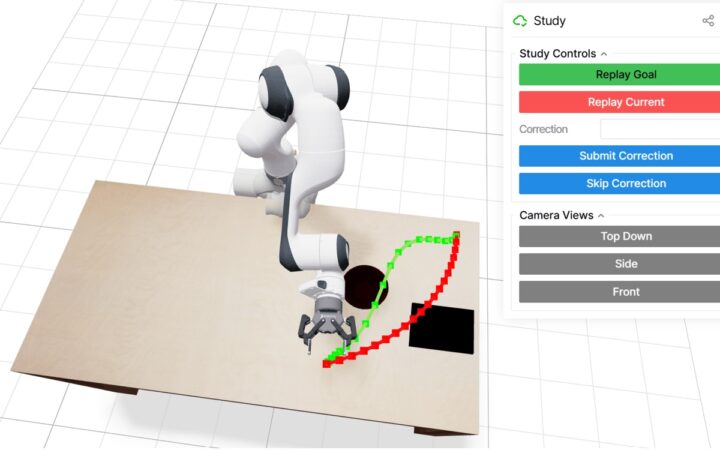
The announcement introduces Fable 5.2 alongside Mythos 5.2. For robotics, the disclosed comparison concerns Fable: Anthropic tested models through the same harness on RoboDojo Sim, where an AI controls a simulated two-arm robot using camera images.
How Fable 5.2 Compares With Rival Models
| Model | Success rate | Effort |
|---|---|---|
| Claude Fable 5.2 | 64.9% | Max |
| Claude Opus 5.5 | 39.4% | Max |
| Gemini 4 Argon | 34.2% | High |
| GPT-6 Astra | 29.8% | Max |
| Claude Fable 5.1 | 27.6% | Max |
Fable’s reported lead is 25.5 percentage points over Opus 5.5, 30.7 points over Gemini 4 Argon and 35.1 points over GPT-6 Astra. It also improves by 37.3 points on Fable 5.1. Its success rate is more than twice Astra’s in this evaluation, a comparison of completed tasks rather than movement speed or factory productivity.
The effort settings matter. Anthropic says it used each model’s highest available level: Max for the Claude models and Astra, and High for Gemini 4 Argon. These are Anthropic’s internal runs on a public benchmark, rather than an independently reproduced head-to-head test by RobotsBeat. The result establishes a lead within that evaluation setup; it does not establish superiority across every robot, task or control system.
Watch Claude Control Physical Robot Arms
The embedded video comes from Claude’s verified YouTube channel and shows two off-the-shelf robot arms controlled through Claude Code. Anthropic describes demonstrations including manipulating a puzzle cube, opening a bottle and drawing a robot. It says the model can handle some robotics tasks on which it was not explicitly trained.
The clip makes the physical interaction visible, but it is an edited demonstration. On-screen labels indicate accelerated footage and removed pauses, so the short runtime should not be treated as a measure of real-time response or task completion speed. The 64.9% figure belongs to the separate simulation benchmark, not to a published reliability study of those physical demonstrations.
Why the Robotics Result Matters
Controlling a robot from images requires a system to connect what it sees with a useful sequence of actions. An instruction that is easy to express in language can still require several adjustments to an object’s position, the gripper’s approach and the next step after contact. A stronger general model could help with that interpretation and sequencing, provided the surrounding robot software can execute its decisions reliably.
That makes the comparison relevant to developers choosing a reasoning component for a manipulation system. It leaves other engineering questions open: reaction time, recovery after a failed grasp, performance on new hardware and the cost of repeated model calls. A benchmark success rate answers a narrower question than sustained operation in a warehouse or home.
RobotsBeat’s CoRL overview examines the complementary work on simulation, robot-specific models and evaluation infrastructure. Our general-purpose physical AI coverage explores the challenge of carrying useful skills between different robot bodies. Those projects use different evaluations, so their scores cannot be ranked directly against Anthropic’s RoboDojo result.
Fable and Mythos Have Different Access Rules
Anthropic says Fable 5.2 and Mythos 5.2 share an underlying model, with stronger cyber and biological safeguards applied to Fable for broader distribution. Mythos access is restricted to verified research users. The robotics scores reported here should therefore remain attributed to Fable 5.2, without assuming an equivalent published Mythos robotics evaluation.
For the wider model launch, AIstify’s launch coverage explains the two versions. The immediate robotics takeaway is a substantial improvement in Anthropic’s controlled comparison, accompanied by a physical demonstration. Repeated testing on hardware will show how much of that advantage carries into practical manipulation systems.
Disclaimer: RobotsBeat is an independent media brand owned and operated by NuvexMedia LLC, publishing news, research, and insights on artificial intelligence, emerging technologies, automation, and related industries. NuvexMedia LLC invests in and collaborates with companies across the AI, Robotics, technology, software, and digital innovation sectors. These relationships do not influence RobotsBeat's editorial coverage, and the publication maintains full editorial independence to provide accurate, timely, and objective information. © 2026 NuvexMedia LLC. All rights reserved. This content is for informational purposes only and should not be considered legal, tax, investment, financial, or other professional advice.