Key Notes
- NXP has launched an open SDK and interoperable robotics reference designs, beginning with drone computing, sensing, flight management and motor control.
- The company’s 30-minute claim concerns initial drone functionality on supported designs, rather than a fully validated autonomous product.
- Additional support for service robots, AMRs and other autonomous systems is expected in the second half of 2027, separate from the launch offering.
NXP has launched a unified robotics platform that brings sensing, AI computing, motor control and communications into a common development system. Announced on November 9, the platform starts with drone reference designs and an open-source software development kit, while additional support for other autonomous machines is planned for the second half of 2027.
The semiconductor company’s announcement addresses a recurring engineering problem: the components needed to perceive an environment, make decisions and drive motors often arrive as separate systems that developers must integrate and validate.
A Shared Foundation for Different Parts of a Robot
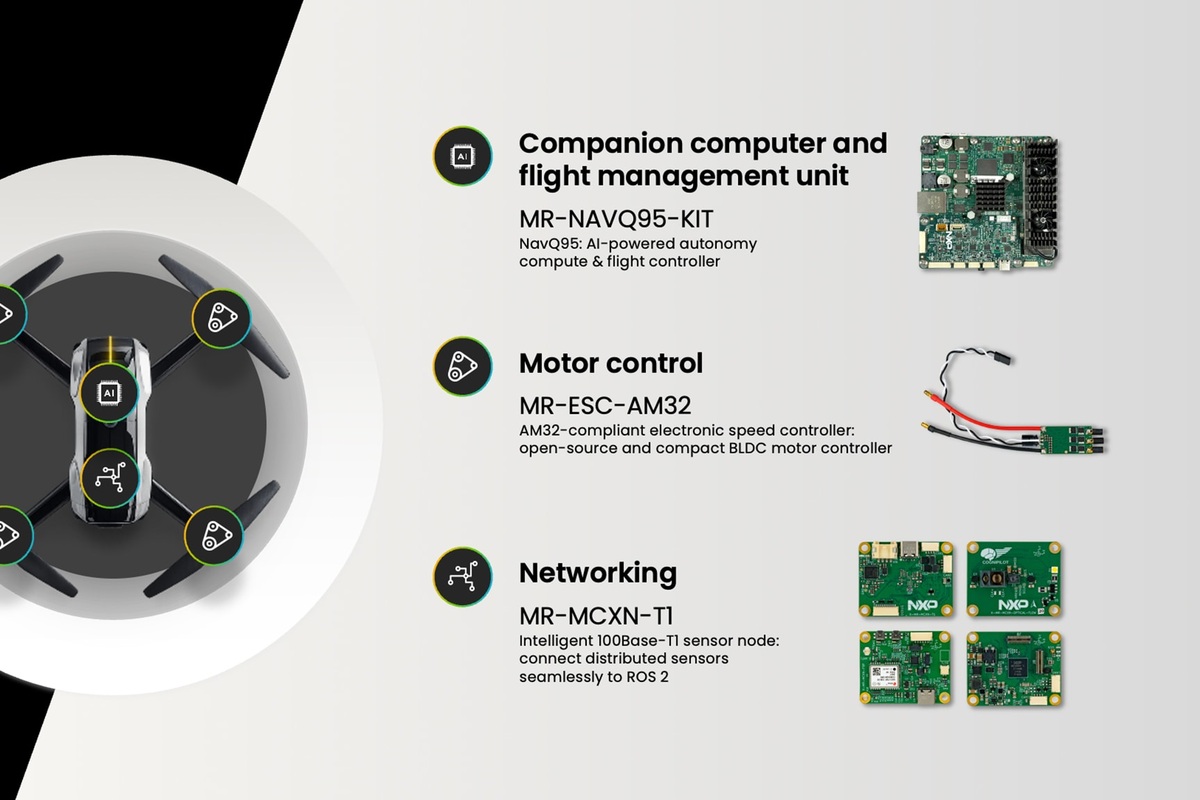
The platform uses NXP’s Neural Axis Architecture to connect distributed computing and control functions. Its initial drone designs cover autonomy computing, flight management, sensor networking and electronic speed control. The components retain distinct jobs, but the development environment is intended to make them work together with less custom integration.
That distinction matters for physical AI. Recognizing an obstacle and applying a timely motor command require different software and timing behavior. A useful platform has to connect those layers while preserving predictable control, rather than relying only on the performance of a large AI model.
Open Software Connects Existing Robotics Frameworks
NXP’s SDK documentation lists integrations with ROS 2, PX4, Zephyr and other established tools. It includes drivers, configuration utilities, reference applications and middleware support, giving developers reusable pieces for evaluating the hardware.
The public GitHub repository describes the SDK as an integration layer that selects compatible upstream software revisions and dispatches builds to the appropriate systems. It does not replace every underlying flight-control or motor-control project with one proprietary application.
What the 30-Minute Claim Actually Covers
NXP says the supported designs can deliver initial drone functionality within 30 minutes out of the box. That is a setup claim for the reference platform, rather than a promise that a complete autonomous aircraft can be engineered, tested and approved for operation in half an hour.
The company also says pre-integrated subsystems can shorten integration from months to days or weeks. Those are vendor claims about development effort, without an independent benchmark in the announcement. Teams still have to validate their own sensors, payloads, operating conditions and failure responses.
Drones First, Other Robots on the Roadmap
The platform and initial drone designs are available now, according to NXP. Future enablement targets service robots, autonomous mobile robots and other autonomous systems. Developers should distinguish that roadmap from the hardware and software supported at launch.
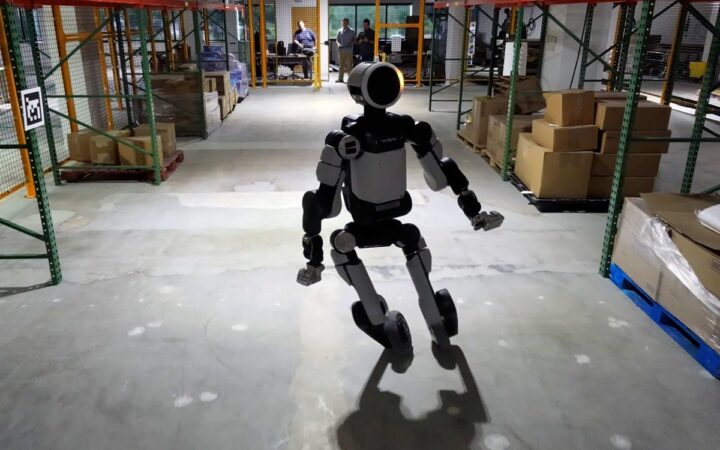
Our coverage of Allegro’s robot chips examines power and sensing at the joint level. The wheeled Atlas experiment shows why accurate actuator behavior remains important even when motion is learned in simulation. NXP’s launch tackles the integration work that connects such components into a functioning machine.
Disclaimer: RobotsBeat is an independent media brand owned and operated by NuvexMedia LLC, publishing news, research, and insights on artificial intelligence, emerging technologies, automation, and related industries. NuvexMedia LLC invests in and collaborates with companies across the AI, Robotics, technology, software, and digital innovation sectors. These relationships do not influence RobotsBeat's editorial coverage, and the publication maintains full editorial independence to provide accurate, timely, and objective information. © 2026 NuvexMedia LLC. All rights reserved. This content is for informational purposes only and should not be considered legal, tax, investment, financial, or other professional advice.