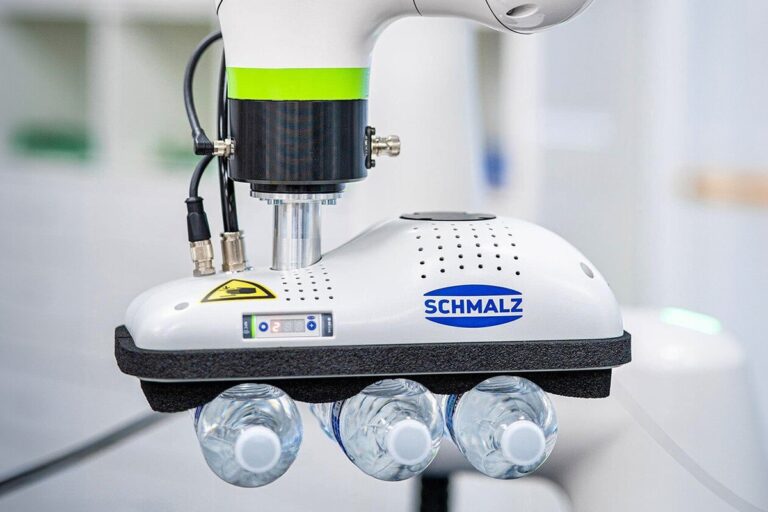
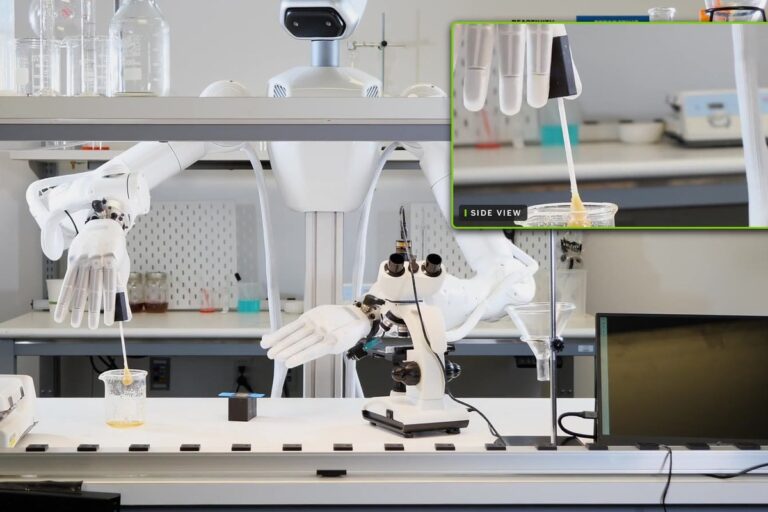
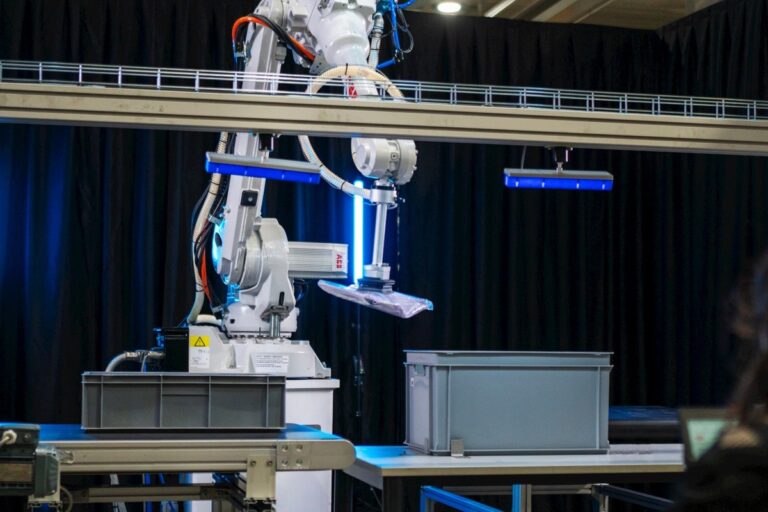
Robot acceptance testing connects agreed requirements with measured output, quality and recovery before an application is handed over to operations. Photo: NIAID
Plan robot acceptance testing with clear pass criteria, representative products, output and quality measurements, recovery checks and documented handover.
Robot acceptance testing establishes whether an integrated robot system meets agreed requirements under defined operating conditions. It connects the original process specification with measured evidence: acceptable parts or deliveries, required output, usable recovery procedures and a documented configuration ready for handover.
This guide continues our coverage of robot integration and offline programming. It explains how to plan factory and site tests, write clear pass criteria and distinguish a successful demonstration from a system that operations can use.
Key Takeaways
Translate each important requirement into a repeatable test with defined inputs, operating conditions, measurements and acceptance criteria, so completion depends on evidence rather than an impressive demonstration.
Evaluate the complete application across representative products, interfaces, interruptions and operating periods, keeping process performance tests separate from the validation of protective functions.
Preserve the tested configuration, unresolved issues, recovery procedures and supporting records at handover, then repeat affected tests when equipment, software or operating conditions change.
Define What Is Being Accepted
A robot arm is only one part of an application. The delivered system may include gripping, vision, fixtures, conveyors, machine interfaces, guarding and task software. A capable robot can still produce an unacceptable result when one of those parts is unsuitable.
Write down the system boundary. Identify which equipment and interfaces are included in the test, which supporting services are supplied by the customer and which conditions must be present for the system to work.
Define a successful physical outcome. For a handling cell, it could be the correct component placed in the correct fixture without damage and acknowledged by the receiving equipment. Reaching a programmed pose would not be sufficient evidence on its own.
Keep acceptance tied to the intended operation. A showroom demonstration may answer whether an action is possible; acceptance asks whether the installed application satisfies a stated set of requirements.
Separate Factory and Site Tests
A factory acceptance test, commonly abbreviated FAT, usually examines the system at the supplier or integrator before shipment. A site acceptance test, or SAT, checks it after installation in the destination facility.
The division depends on the project. Factory testing can establish much of the sequence logic and handling behavior. Site testing can then address installation, local utilities, actual upstream and downstream equipment and the operating conditions that could not be reproduced earlier.
Agree the scope and evidence for each stage before testing begins. Mark any temporary fixture, simulated machine signal or substitute material used at the factory, and specify how the corresponding physical interface will be checked later.
Stage
Typical focus
Evidence to retain
Factory testing
Handling, sequence logic and agreed representative products
Test results and any simulated interfaces
Site testing
Installed equipment, utilities and connected process
Installation checks and complete-cycle results
Operating trial
Sustained service with intended staffing and demand
Output, quality, downtime and interventions
Shipping the machine should not erase open findings. Carry unresolved items into the next stage with an owner and a defined verification method.
Turn Requirements Into Testable Statements
“Reliable picking” is a goal, not a complete test. Specify the part family, presentation range, required outcome, allowed assistance and how attempts will be counted.
A useful test case states the starting condition, action and expected result. For example: given an approved tray containing a defined component, when the cell receives a valid request, it places the component into the receiving fixture and confirms the handoff within the agreed time.
Research on acceptance testing explores this connection between requirements and executable tests using behavior-driven models and simulation for pick-and-place systems. The practical principle is to make the expected behavior explicit enough to check consistently.
Assign every important requirement a test identifier. Record the method, measuring equipment, responsible person and pass criteria so a reviewer can trace a conclusion back to the evidence.
Freeze the Configuration Before the Run
Acceptance results describe the system that was actually tested. Record robot and controller identifiers, software versions, program revision, tool configuration, payload data, calibration, fixtures and relevant machine settings.
Also record the product variant and input material. A test using rigid sample components may not describe behavior with flexible production packaging or a full range of part tolerances.
Control changes during testing. If a program is modified after a failed attempt, preserve the original result and start a clearly identified run for the revised configuration. Mixing both versions into one success figure makes the result difficult to interpret.
Our calibration guide explains why tool and coordinate relationships matter. Include those settings in the release record rather than treating the program file as the entire application.
Test Quality at the Process Level
Define the inspection method for the output. Depending on the job, acceptance may depend on placement, orientation, surface damage, assembly completion or another measurable product characteristic.
Confirm that the inspection can resolve the required difference between an acceptable and unacceptable result. A convenient camera view or controller status bit is useful only if it provides appropriate evidence for that decision.
RoboDK’s performance documentation describes robot position accuracy, repeatability and path accuracy testing. Those characterize aspects of robot performance; they do not by themselves establish finished-part quality for an integrated process.
Separate robot movement errors from fixture, sensing and tool problems during investigation. Our vision guide covers inspection and calibration choices that can affect the measurement itself.
Measure Output With a Clear Time Boundary
Define when the operating clock starts and stops. State whether replenishment, minor interruptions, product changes and ordinary recovery are included. Report exclusions explicitly rather than quietly remove inconvenient periods.
For an illustrative run, suppose a cell produces 420 completed parts in four elapsed hours, of which 12 fail the agreed quality check. That gives 408 accepted parts, or 102 accepted parts per hour over the full run.
If the same four hours include 30 minutes of interruption, dividing by only the remaining 3.5 hours gives about 116.6 accepted parts per running hour. Both calculations can be informative, but they describe different things and must be labeled accordingly.
Use the measure that answers the operating requirement. A business needing 100 accepted parts per elapsed hour cannot rely solely on an attractive cycle time measured while everything is moving.
Make the Denominator Visible
Count all valid attempts in the defined test scope. Identify aborted, rejected, assisted and repeated attempts rather than merge them into a single completion total.
If a hypothetical robot completes 194 of 200 jobs without assistance, the observed unassisted completion rate is 97%. If the other six are later rescued manually, reporting 100% completion would conceal the intervention requirement.
A finite test provides evidence for its conditions and duration. It does not prove a permanent failure rate, and a short run without failures does not establish that failures are impossible.
Report results by important product and condition as well as overall. An average can hide a difficult variant that repeatedly fails. Our gripper guide explains how object variation changes handling performance.
Include Representative Variation
Build a test matrix covering the inputs and conditions the application is expected to handle. Relevant variables may include object size, surface, initial pose, container fill level, fixture position and permitted lighting variation.
Include ordinary replenishment and product transitions. A robot that handles the first component in a carefully prepared tray may behave differently when the tray is nearly empty or a new batch arrives.
Choose combinations deliberately. Testing every possible combination may be impractical, so prioritize critical conditions and document the coverage left untested. Avoid changing several unexplained variables at once when diagnosing a failure.
Where simulation supports preparation, compare its assumptions with the physical test setup. Our simulation guide explains why a model needs validation before its results inform operating decisions.
Check Interfaces and Recovery
Verify the connected workflow from request through physical completion. Test that the cell receives valid work, recognizes unavailable equipment and confirms the destination accepted the result.
Plan approved tests for missing parts, rejected handoffs, communication interruptions and other relevant exceptions. Define the expected state of the robot, held material and connected machines after each interruption.
Recovery must account for what already happened. If a component reached the destination before an acknowledgment was lost, blindly starting another delivery can duplicate work. A clear state check is more useful than a generic instruction to restart.
Record whether recovery is automatic, operator-guided or maintenance-only, and measure the time and labor involved. Procedures should match the intended staffing, not depend on the integrator’s most experienced engineer remaining onsite.
Keep Protective Validation Distinct
Process acceptance and protective-function validation serve different purposes. Meeting an output target does not establish that the integrated application’s protective measures are appropriate or function as required.
Universal Robots’ commissioning instructions require checks of connected safety inputs and outputs and protective devices before first use or following modifications. The exact procedures must match the robot, configuration and application.
Qualified personnel should carry out the relevant assessment and validation using approved procedures. Do not create hazardous conditions or bypass protective devices to make a performance test easier.
Our safety guide explains the wider application assessment. Keep its records available alongside acceptance results while preserving the distinction between those conclusions.
Resolve Findings With Evidence
Use a findings register with a description, affected requirement, observed result, consequence, owner and next action. Distinguish a failed requirement from an improvement suggestion or an incomplete test.
Agree which findings prevent the next project stage and which can be resolved through a documented follow-up. Decisions should remain visible to the people responsible for operating and supporting the system.
After a correction, repeat the failed test and other tests affected by the change. A new gripping motion may fix one pickup problem while creating a clearance issue on a different variant.
Retain the before-and-after configuration and results. A problem is closed when the agreed verification supports closure, rather than when someone reports that the code has been changed.
Hand Over an Operable System
The handover package should include the accepted configuration, test report, outstanding findings, operating envelope, recovery procedures, maintenance instructions and responsible support contacts.
Confirm that operators can perform the ordinary tasks expected of them: start an approved job, replenish material, interpret a relevant alarm and follow the assigned recovery procedure. Observe these activities under the intended working arrangements.
Preserve backups and define how later changes are reviewed. Our maintenance guide connects configuration history with troubleshooting and dependable service.
Good acceptance testing leaves a clear account of what the system can do, under which conditions and with what support. That record gives operations a useful starting point for measuring performance and deciding when a change needs further verification.
Frequently Asked Questions
What is robot acceptance testing?
It is the evaluation of an integrated robot application against agreed requirements, using defined conditions, measurements and recorded results to support handover decisions.
What is the difference between FAT and SAT?
Factory acceptance testing usually takes place before shipment at the supplier or integrator. Site acceptance testing evaluates the installed system and its local interfaces; the detailed division depends on the project.
How many cycles should be tested?
There is no universal count for every application. Define duration and coverage around the requirement, operating variation and consequences of failure, then document what the test can establish.
Should manually rescued jobs count as successful?
They may count toward a clearly labeled total completion measure, but should remain separate from unassisted success and include the associated intervention time.
Does acceptance testing replace safety validation?
No. Process performance and protective-function validation answer different questions. Both need appropriate evidence for the integrated application.
When should acceptance tests be repeated?
Review affected tests after changes to hardware, tooling, fixtures, calibration, software, interfaces or operating conditions, using a controlled change process.
XPENG will demonstrate its latest IRON humanoid at AI Day in Guangzhou on November 25, putting on-device physical AI alongside robotaxi and mobility updates.