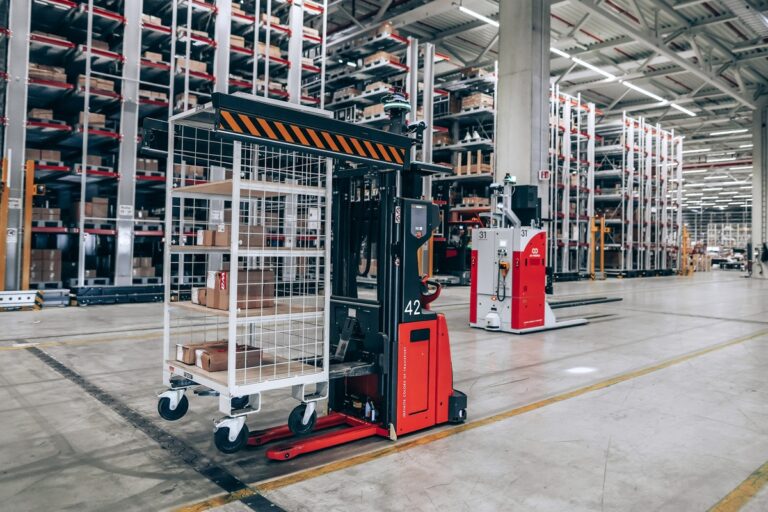
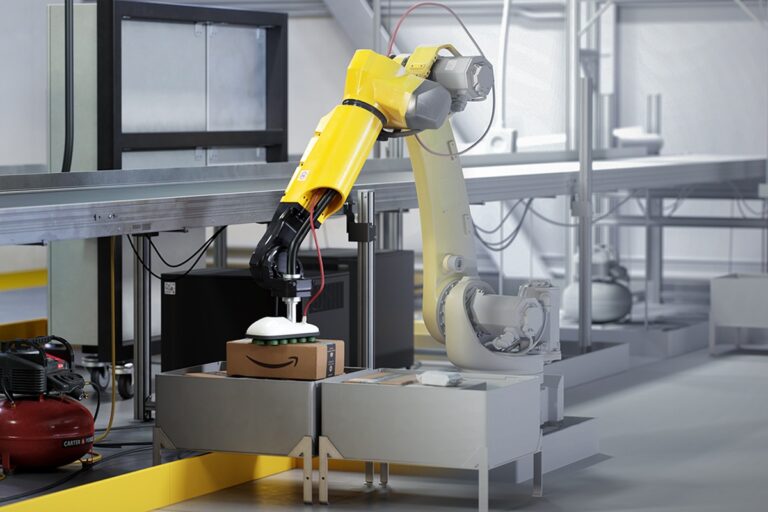
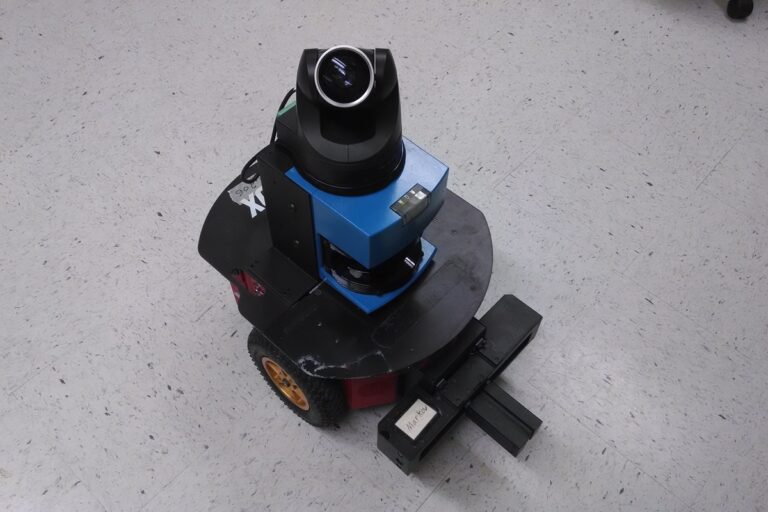
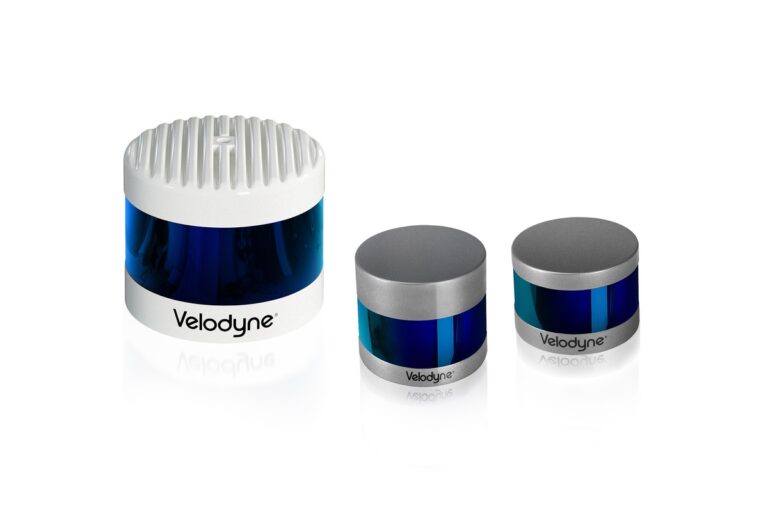
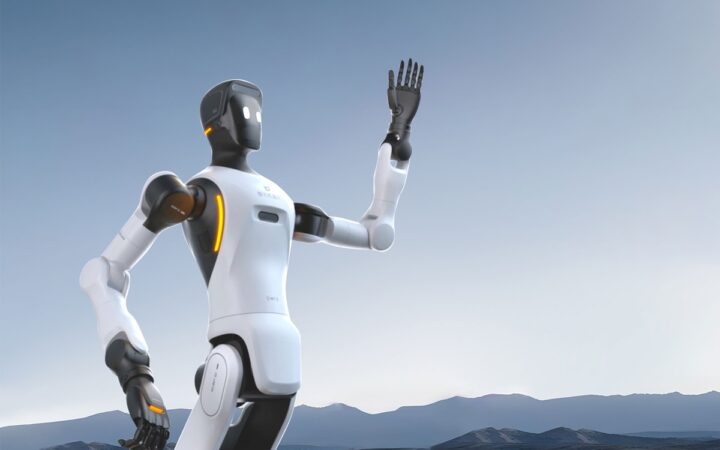
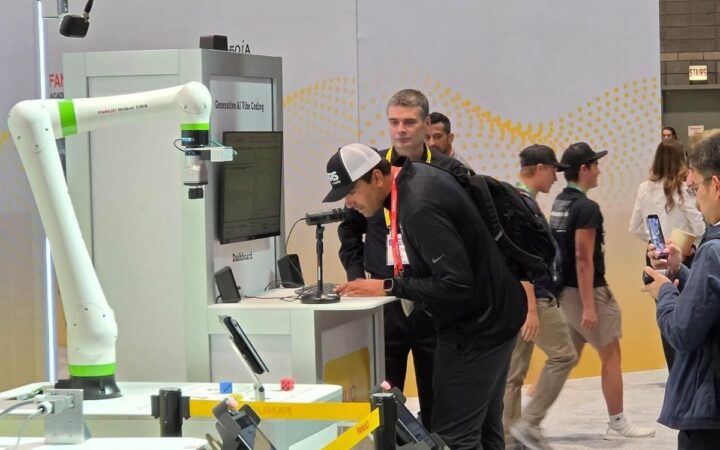
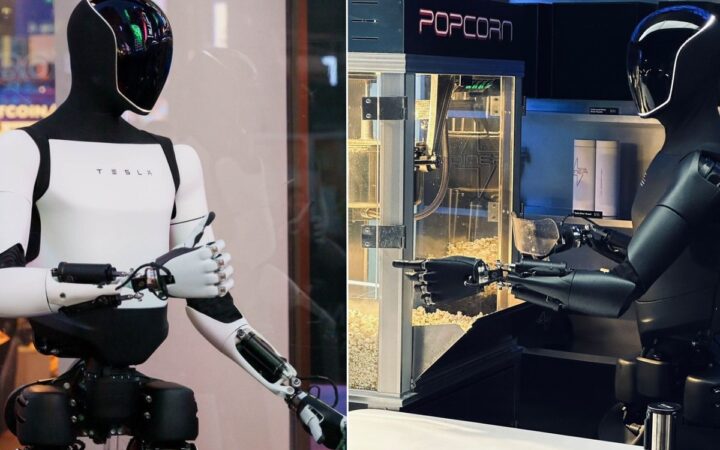
Digital twins support robotics decisions when maintained models, physical-system data and validation evidence remain aligned. Image: Amazon Robotics / NVIDIA
Digital Twins for Robotics: A Practical Guide to Simulation and Validation
By Laura Bennett• 11 mins read
Published:
, Updated:
Learn what makes a robotics digital twin useful, how it differs from a simulation, and how to define data, validate predictions and maintain a trustworthy model.
A digital twin is a digital representation maintained in relation to a physical system so it can support a defined use, such as monitoring, analysis or prediction. In robotics, that system might be a workstation, a mobile-robot fleet or a production process containing several machines.
The value comes from a decision the model can support. A detailed 3D robot on a screen may look convincing without predicting the behavior of the actual installation. This guide explains how digital twins differ from ordinary models and simulations, how to scope one, and how to determine whether its results are trustworthy enough to use.
Key Takeaways
A useful robotics digital twin represents an identified physical system for a defined decision, with documented data connections, update behavior and limits rather than visual detail alone.
Verification, validation and uncertainty address different questions, so compare relevant predictions with independent measurements before using a model to justify an operational change.
Maintain the relationship between physical and digital configurations as tools, programs and layouts change, and expand the model only when another use justifies the added cost.
What Makes a Model a Digital Twin?
Terminology varies across suppliers and research fields. A useful practical distinction is whether the representation is maintained in relation to an identified physical system, with a defined data connection and a documented purpose.
NIST’s manufacturing program describes digital twins as synchronized virtual models and emphasizes trustworthy data, validation and uncertainty. That is a stronger requirement than simply importing a robot’s CAD geometry into a virtual scene.
A model used to explore a hypothetical factory can still be useful simulation work. Calling it a twin should add information: which installation it represents, how it is updated, what behavior it captures and which decisions it is intended to support.
Synchronization need not mean instant updates for every variable. A maintenance analysis and a motion-control task have different timing needs. Specify the update cadence and what happens when information is stale, rather than assume that “live” means sufficiently current.
CAD Models, Simulations and Twins
A CAD model primarily describes geometry and related design information. A simulation computes behavior under selected assumptions. A digital twin connects a maintained representation to the relevant physical system and its state. These tools can overlap within the same project.
Representation
Question it can address
What it does not establish alone
CAD model
Will the proposed equipment fit?
Actual timing, wear or control behavior
Simulation
What happens under these modeled conditions?
That those conditions match the real installation
Digital twin
What does a maintained model imply about this physical system?
Accuracy outside its validated purpose and operating range
The distinction helps set expectations. If the immediate task is checking whether a gripper clears a fixture, a geometry-based simulation may be enough. A full data-connected twin could add cost without improving that particular decision.
Conversely, a production scheduling decision may require observed cycle distributions, downtime and queue behavior that a visually detailed scene does not contain.
Choose the Decision Before Building the Model
Start with a sentence describing the proposed use. Examples include comparing two workstation layouts, estimating how a new product affects cycle time, or identifying whether a change in robot behavior warrants inspection.
Then state the decision threshold. If a layout change is worthwhile only when it saves several seconds per cycle, the model’s uncertainty must be small enough to distinguish that improvement. A model that is accurate within a broad range may still be unable to support the decision.
Define what is outside scope. A model designed to compare travel distance need not simulate every motor’s thermal behavior. A model used to investigate temperature-related interruptions needs different information.
Our automation guide starts deployment with an operational problem and measurable criteria. Apply the same discipline to a digital-twin project: specify the useful answer before selecting the visualization platform.
What a Robot Workstation Model Needs
NIST’s robot-system research examines the components needed to represent a manufacturing robot installation across its lifecycle. The relevant scope extends beyond the arm to the equipment and behavior involved in the application.
For a handling workstation, that may include robot geometry, tool dimensions, fixtures, load properties, motion limits, controller behavior and signals from adjacent machinery. A timing study also needs waits, transfers, inspection and replenishment, not just arm movement.
For a mobile fleet, the useful model may emphasize routes, mission demand, stations, shared aisles and charging. Modeling every bolt on a robot contributes little if the dominant delay is a queue at a receiving point.
Document each input’s origin. Distinguish measured values, manufacturer specifications, estimates and assumptions. That record makes it possible to identify what must change when the physical installation or the question changes.
Data Connections and State
A twin needs a consistent interpretation of the information it receives. Machine identifiers, units, timestamps, job numbers and operating modes must agree across sources. A correct value associated with the wrong workstation can produce a wrong conclusion.
Consider an illustrative cycle-time record. It should identify the machine, product or recipe, start and completion times, outcome and relevant interruptions. A single number labeled “cycle time” may mix successful production with aborted attempts unless the definition is explicit.
Decide how missing data is represented. A disconnected sensor is not the same as a measured zero. A robot that has stopped reporting is not necessarily idle. The model should expose uncertainty or unavailable state rather than silently substitute a convenient value.
Also define the direction of the connection. A twin can support analysis without directly commanding machinery. If results are later used to change control settings, that introduces additional engineering, approval and validation requirements.
Verification, Validation and Uncertainty
Verification asks whether the model and software implement the intended design. Validation asks whether the representation is adequate for its intended use when compared with the physical system. Uncertainty describes limits in inputs, measurements and predictions.
These are separate questions. A simulation can run without software errors and still use an unrealistic friction value. A model can match one recorded cycle and fail when the payload or product changes.
NIST’s digital-twin overview identifies validation and lifecycle integration among the challenges of dependable twins. For an operating team, this means retaining evidence of where the model works, rather than accepting visual similarity as validation.
Set comparison measures appropriate to the decision: cycle-time error, position error, throughput, queue length or another relevant quantity. Evaluate more than one operating condition and preserve some measured cases for independent checks.
When the result is close to the decision threshold, show the uncertainty. A prediction reported to several decimal places is not necessarily a precise estimate of reality.
A Worked Workstation Example
Suppose a robot loads a test fixture. The measured baseline cycle is 32 seconds, including robot motion, gripping, fixture confirmation and testing. The team wants to assess a new fixture location before moving equipment.
An initial simulation predicts a 28-second cycle. Inspection shows that the model shortened robot travel but omitted a two-second confirmation wait and underestimated settling time. The attractive result came partly from missing process behavior.
The team adds the missing states and compares the revised baseline model with measured runs across several approved parts. It records the remaining difference and investigates its causes before evaluating the new location again.
If the revised proposal predicts only a small improvement within the model’s observed uncertainty, it is not strong evidence for a costly move. The team might collect better timing data, run a limited physical trial or reject the change.
This example is hypothetical, but the reasoning is general: calibrate the baseline, preserve the relevant process behavior and judge the predicted change against the model’s demonstrated limits.
Virtual Commissioning
Virtual commissioning tests parts of the control sequence against a virtual representation before the physical installation is fully available. It can help reveal missing signals, incorrect sequencing and failure-handling gaps earlier in a project.
Begin with the interface contract. If the real machine reports “ready,” “busy” and “fault,” the simulated machine should implement the agreed meaning and timing of those states. Otherwise, the control software is being tested against a more convenient partner than the one it will encounter.
Introduce delayed responses, an occupied fixture and an interrupted transfer. Verify that the application does not mark a task complete merely because a movement command was issued.
Keep the test’s limits explicit. Virtual commissioning does not replace validation of the physical safety system, actual wiring, mechanical behavior or production performance. It is an earlier opportunity to find some classes of error.
Simulation for AI Training Is a Different Use
Simulation can also generate observations and interactions for training or evaluating robot policies. That use may emphasize scene variation, sensor appearance and contact behavior rather than a maintained representation of one factory.
Our coverage of synthetic training data describes the interest in virtual scenes for robot learning. Such scenes do not automatically become digital twins merely because they look realistic.
For training, ask which variations the model includes and which real-world effects remain absent. Changing lighting or object placement can broaden a training set, but the chosen range must still relate to the deployment task.
Test the resulting policy on independent, controlled physical trials. A policy that exploits a simulator’s assumptions may perform well virtually while failing on real surfaces or sensor inputs. Keep training performance separate from demonstrated deployment capability.
Model Maintenance and Change Control
A useful twin can drift away from its physical counterpart. A new tool, replacement sensor, modified program or moved station can invalidate an old assumption without making the visualization obviously wrong.
Maintain an asset record linking the physical configuration to the model version. Identify who approves updates and which changes require renewed comparison with measured behavior. Preserve previous versions so a past prediction can be reproduced.
Automated data updates do not remove this responsibility. A sensor can stream current measurements while the model still uses an obsolete tool geometry or an old definition of a machine state.
Schedule checks around the decisions the twin supports. A model used occasionally for layout planning needs a confirmed configuration before each study; one used for ongoing monitoring needs a defined process for detecting missing or inconsistent inputs.
Costs, Benefits and a Small First Project
The budget includes model creation, data integration, software, computing, validation and ongoing maintenance. Internal work often spans controls engineering, operations and information technology. Assigning those responsibilities is part of the project cost.
NIST’s economics work examines the business case for digital twins. For a specific installation, distinguish an expected benefit from a result already measured.
For example, predicting that a study might avoid a $40,000 retrofit does not mean $40,000 has been saved. The value depends on whether that retrofit would otherwise have occurred and whether the model supports a better decision. Retain the counterfactual and the evidence behind it.
A sensible first project answers one valuable question using an existing workstation and available data. Build the smallest model capable of supporting that question, compare it with reality and document the limits. Expand only when another use justifies the added detail and maintenance.
A Digital-Twin Acceptance Checklist
Purpose: Name the physical system, intended decision and operating range.
Inputs: Record data sources, units, update cadence and treatment of missing values.
Evidence: Compare relevant predictions with independent measured cases.
Limits: State uncertainty and conditions for which the model has not been validated.
Ownership: Assign responsibility for configuration changes, maintenance and retirement.
A useful digital twin helps people decide what to do with a real system. Judge it by the evidence behind those decisions, not by the detail of its graphics. The same principle applies to the robot itself, as our collaborative robots guide explains.
For two applications with different modeling needs, compare our mobile robots guide with the gripper guide: transport queues and physical contact require different evidence.
Frequently Asked Questions
Is every 3D robot model a digital twin? No. A geometric model can be useful without being maintained in relation to a particular physical installation. Specify the data connection, purpose and update process behind the term.
Does a digital twin need real-time data? The required update rate depends on its purpose. Information must be current enough for the decision it supports, and stale or missing data should be explicit.
Can a digital twin control a robot? Some architectures connect model results to control, while others only support analysis or monitoring. Direct control adds requirements that are not satisfied merely by building a twin.
What is the difference between validation and calibration? Calibration adjusts relevant model or system parameters using evidence. Validation assesses whether the representation is adequate for its intended use, ideally with independent comparison cases.
Does virtual commissioning replace physical testing? No. It can reveal sequencing and interface problems early, but the installed equipment, protective systems and production behavior still require appropriate testing and validation.
What is a good first digital-twin project? Choose one decision with measurable value, an identified physical system and accessible data. Establish that a small model answers the question reliably before adding more scope.