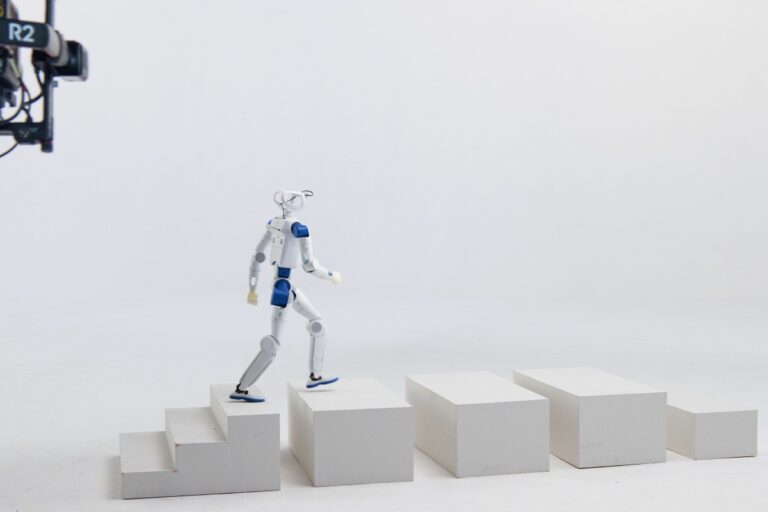
RoboParty Opens RP1 Humanoid Hardware and Software to Researchers
RoboParty’s RP1 release opens humanoid designs, control software and learning tools, with modular configurations built for research rather than household deployment.
Humanoid robots are robotic systems designed with a human-like form factor, enabling them to move, manipulate objects, and operate in environments built for people. Unlike traditional industrial machines, humanoids aim to combine mobility, dexterity, and embodied intelligence to perform a wide range of physical tasks. This topic covers advances in locomotion, balance, manipulation, perception, and AI-driven control systems, as well as real-world deployment in manufacturing, logistics, healthcare, and service roles. It also examines the technical, economic, and safety challenges of scaling humanoid platforms beyond research and pilot programs. As hardware matures and AI models improve, humanoid robots are increasingly positioned as general-purpose systems for complex, unstructured environments.
RoboParty’s RP1 release opens humanoid designs, control software and learning tools, with modular configurations built for research rather than household deployment.

Tesla’s new Roadster pairs SpaceX-derived thrusters with reported Optimus hardware, targets 2028 production and demonstrates flight in a restricted configuration.
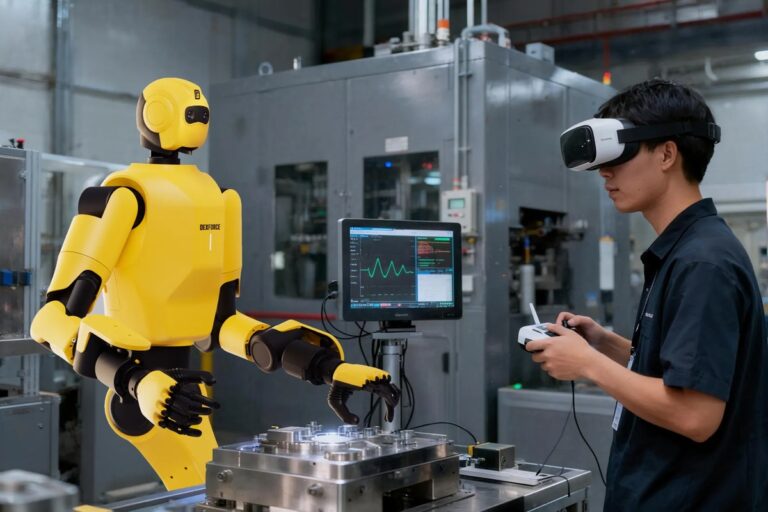
Dexforce is using synthetic scenes to train humanoid robots, betting that simulation can reduce reliance on costly human demonstrations.

Tether’s TranscribePsy brings compact local speech recognition to developers building robot and wearable applications, with distinct phone and laptop builds.
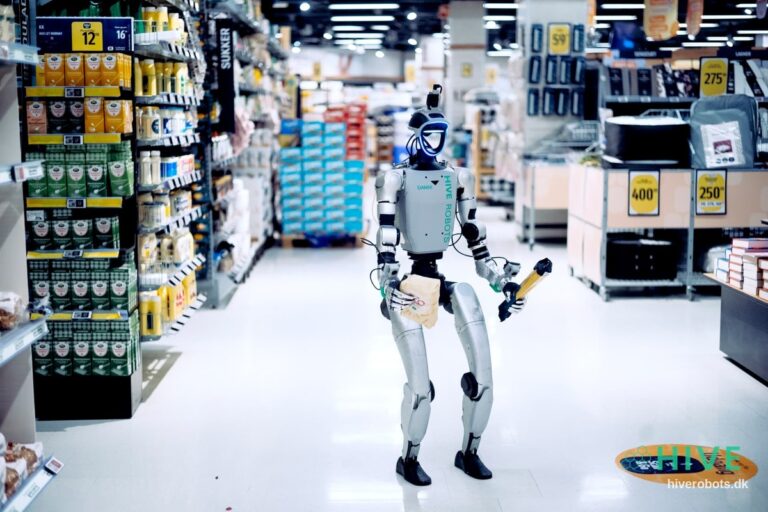
Salling Group and HIVE are training humanoid robots to restock Føtex shelves at night, targeting selected autonomous tasks in early 2027.

Swedish startup 120ft raises €576,000 to develop container-based robotic factories where brands pay per finished product instead of buying robots.
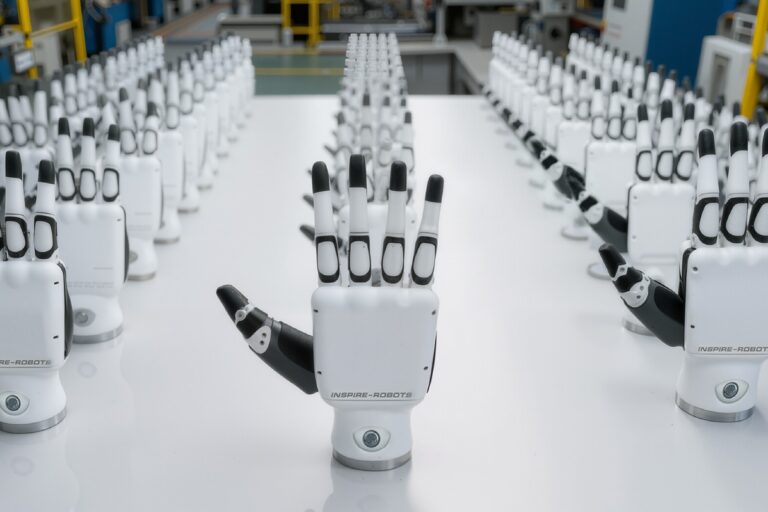
China’s robotic-hand suppliers are gaining importance in the humanoid race, as shipment growth meets the harder test of reliable manipulation.
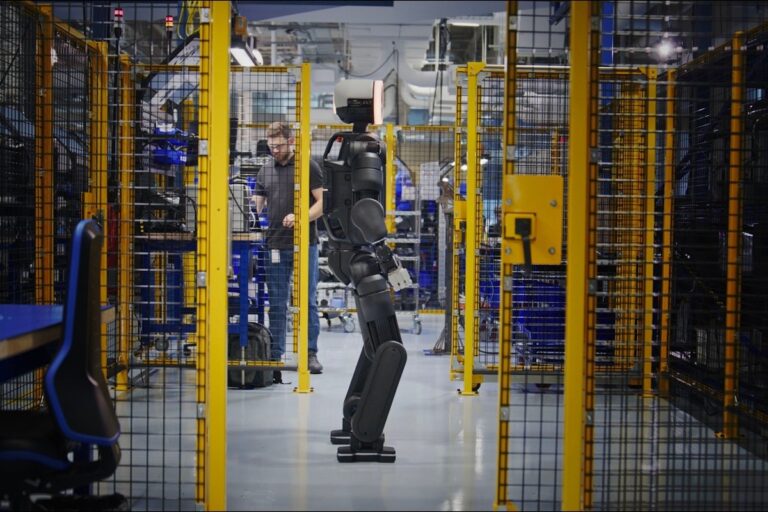
Boston Dynamics shows how machining, assembly and repair support Atlas development, with a goal of cutting robot build time from a day to an hour.

Alex Zhou’s Linkerbot pairs dexterous robotic hands with skills software, targeting the manipulation challenge behind useful humanoid robots.
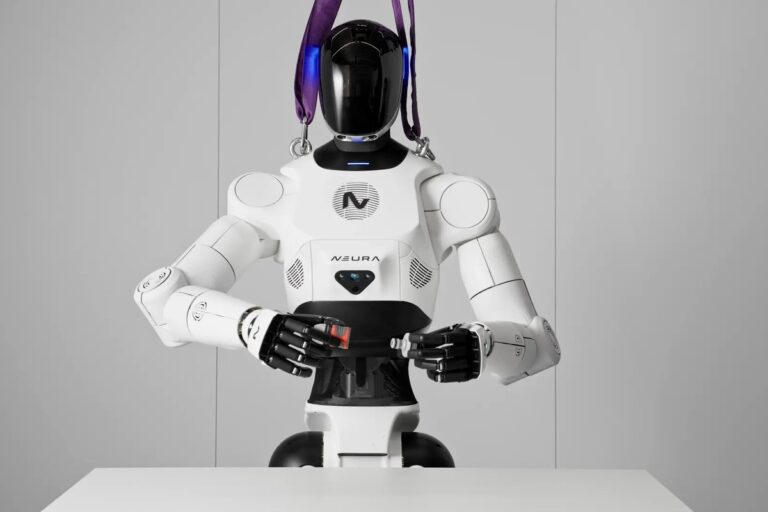
NEURA’s Neuron AI combines vision, touch, sound and memory across its robot family, with a 4NE1 laundry demonstration planned for GTC Berlin.